I remember sitting down with someone recently who was ready to quit their office job and jump into skincare, but they were hesitant. They wanted to know if they were making a smart move or just following a trend. In 2026, the answer is pretty clear: skincare has moved beyond being just a beauty service. It is still a beauty career, but it now sits much closer to wellness, prevention, and long-term skin health than it used to. If you are at that same crossroads, figuring out the right path starts with understanding your potential return on investment. I always suggest that people read up on the realistic path to becoming an esthetician to see exactly how the schooling and licensing work before diving in.
Quick Overview of the Industry
- Fast-Paced Growth: Data from the U.S. Bureau of Labor Statistics shows that jobs for skincare specialists should grow by 7% between 2024 and 2034, which is a lot faster than most other fields.
- Workplace Variety: You can find a career in local spas, medical clinics, high-end retail, luxury hotels, and even on cruise ships.
- Earning Potential: The BLS reported a median wage of $19.98 per hour in 2024. For skincare specialists working in offices of physicians, that number was $23.40 per hour. While top earners can reach the $70,000 to $100,000 range, I like to tell people that this usually happens with specialization, strong client retention, commission, tips, or owning a business.
- Business Ownership: Being self-employed is very common in this niche, but you have to make sure any home-based setup follows local zoning, business-license, sanitation, insurance, and state board rules.
- New Opportunities: I am seeing more RNs and cosmetologists looking to transition into aesthetics, though these paths are strictly governed by state medical, delegation, and licensing rules.
The Professional Scope: What an Esthetician Actually Does
To really grasp your value as a professional, you have to look at your scope of practice. This legal term basically sets the boundaries for what jobs can you do with an esthetician license. By 2026 standards, a pro is much more than a “beautician.” You are a specialist trained in sanitation, product chemistry, skin analysis, product selection, and knowing when to refer a client to a medical provider.
The BLS notes that skincare specialists are responsible for face and body treatments that improve a client’s appearance. On a daily basis, this means evaluating skin conditions, disinfecting your space, giving facials, recommending products, and removing hair. I often find that the most important part of the job is knowing when a client’s issue is beyond your help and needs a referral to a dermatologist.
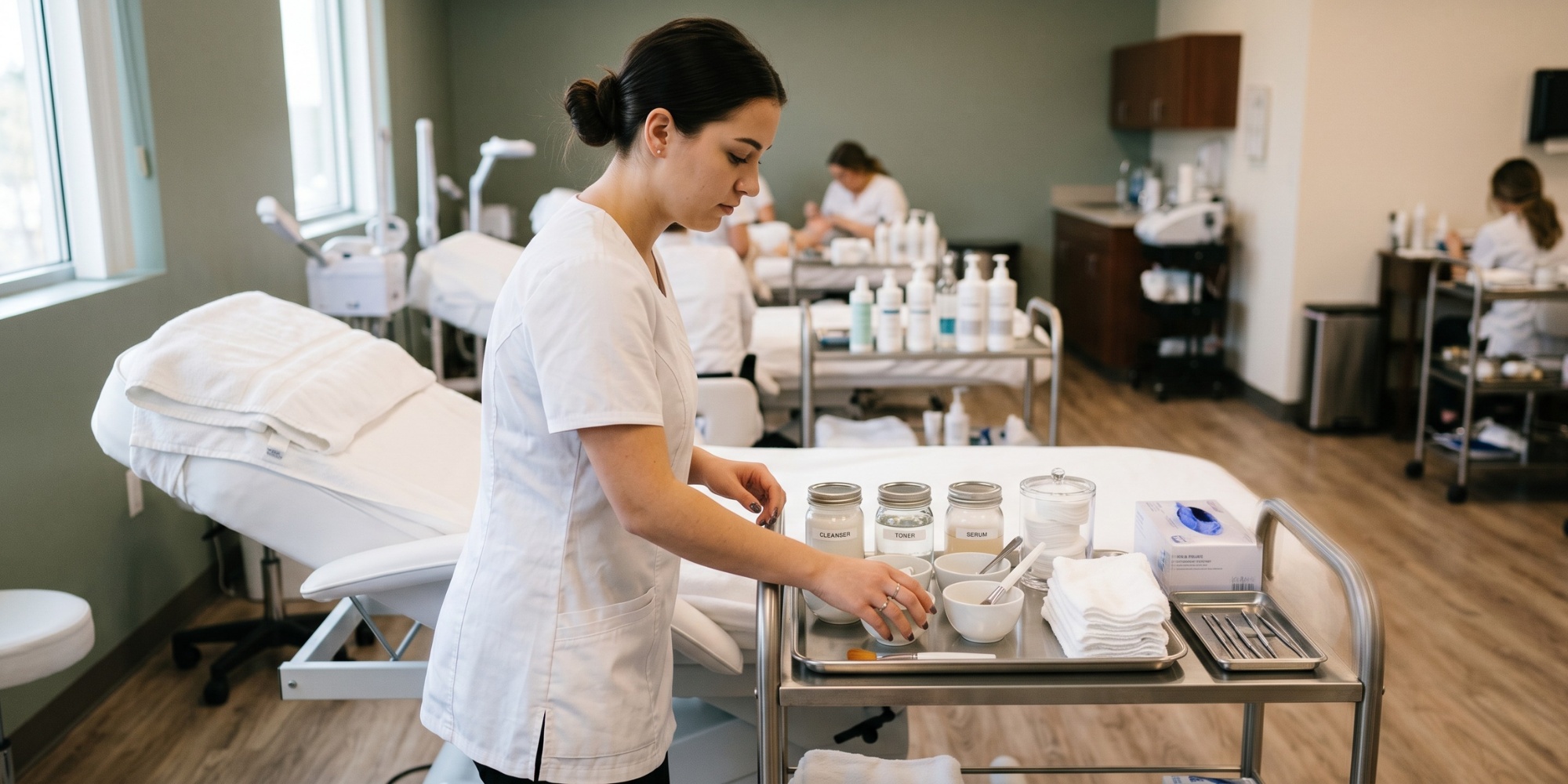
Depending on where you live, the rules might change a bit. For instance, what you can do with an esthetician license in California might differ from what you can do with an esthetician license in Texas or Georgia. Georgia law, for example, includes things like brow shaping, massage, waxing, threading, cleansing, cosmetic skin care, and lash services, but it specifically says that esthetics does not cover medical diagnoses, treatment of dermatological conditions, medical aesthetics, or laser treatments. If you want to visualize the day-to-day life of a student learning these skills, you can read more about what esthetician school is actually like.
The Rise of “Bio-Aesthetics”
Modern skincare is not just about a relaxing 60-minute massage anymore. The market is shifting toward what I call “Bio-Aesthetics”—a focus on long-term skin quality, barrier support, product education, age-prevention conversations, safe exfoliation, and realistic routines. This is not a separate legal license category. It is just a useful way to describe where the market is heading. As a professional, you act as the link between basic retail products and medically directed skin environments. The best estheticians know how to make a client feel cared for while staying strictly within the legal limits of their license.
The Shift Toward Healthy Aging
Research from McKinsey’s wellness reports shows that around 60% of consumers now view healthy aging as a top priority. This is great for your career because it means clients are looking for routines, prevention-focused conversations, and long-term skin support rather than just one-off fixes. I believe building a career in this industry requires trust and the ability to guide someone on a realistic skin journey.
Where Do Estheticians Work?
One of the best things about getting your license is that it doesn’t limit you to just one type of environment. Your options for where to work as an esthetician are quite broad.
According to the BLS work-environment data, skincare specialists are employed across personal care services, self-employment, offices of physicians, health and personal care retailers, and traveler accommodations. That means your first job might be in a spa, retail setting, medical-adjacent office, resort, or even your own business once you meet the legal requirements.
1. Retail and Beauty Leaders
Big names like Sephora and Ulta are huge players in beauty retail. You might wonder does Ulta hire estheticians or does Sephora hire estheticians. Ulta’s career page focuses on salon and beauty services, while Sephora lists store roles where beauty professionals and advisors help clients understand products and routines. Depending on the role and location, a license may be especially useful for skin-focused consultations, salon services, brow services, and beauty-service roles. These can be excellent esthetician jobs for beginners because they provide steady client interaction and a lot of practice helping diverse customers.
2. The Clinical Side: Medical Esthetics
Working alongside a dermatologist or plastic surgeon is a popular goal. While many people use the term medical esthetician, it is usually just a job title or workplace label rather than a different legal license. Your actual services still depend on your state license, employer protocols, and medical supervision rules. In these settings, you focus on sequential treatment planning. A 2026 Allergan Aesthetics survey found that 78% of beauty-involved consumers said they would feel more satisfied with their aesthetic journey if they worked with a practitioner toward an agreed long-term plan. This means your job is about careful planning rather than just doing random services.
3. Travel and Luxury Resorts
If you love the idea of traveling, look into esthetician jobs on a cruise ship. Companies like OneSpaWorld recruit pros for shipboard spa roles. It is a fast-paced way to get experience with people from all over the world. Just be sure to check the details on housing, meals, commissions, sales expectations, travel arrangements, and time off before you sign up.
Salary Expectations and Earning Potential
I think it is important to be realistic about what to do after getting esthetician license when it comes to pay. The average salary for an esthetician is often just a baseline. Your actual esthetician yearly salary depends on your state, city, employer type, schedule, commission, tips, repeat clients, and whether you eventually work for yourself.
According to the BLS profiles, the median esthetician hourly pay was $19.98 as of 2024. The top 10% of the field earned more than $37.18 an hour. For skincare specialists working in offices of physicians, the median was $23.40 per hour, compared with $18.55 per hour in personal care services. If you specialize in medical-adjacent work, that physician-office median may be more aligned with your goals, but it should not be confused with an esthetics nurse salary or RN compensation.
When you look at how much does an esthetician make on a cruise ship or in a high-end spa, remember to factor in tips and product commissions. Industry salary guides sometimes describe experienced medical estheticians or advanced specialists as reaching the $70,000 to $100,000 range, but that should be treated as an upper-tier possibility rather than a guaranteed salary. I have found that specialization—like becoming a master esthetician, focusing on corrective facials, building strong client retention, or moving into a well-supervised medical-adjacent setting—is one of the most reliable ways to increase your pay rate over time.
Career Growth: Transitioners and Specialization
Your career does not have to stop at graduation. In 2026, there are several ways to grow, but every step depends on your license type, your state, and the services you want to perform.
From RN to Esthetics Nurse
One growing area of interest is the medical crossover. Registered Nurses are increasingly interested in aesthetics-focused work, including med spas, dermatology offices, plastic surgery offices, and cosmetic-treatment settings. This path can allow a higher level of clinical involvement than a standard esthetician license, but it is still controlled by medical rules.
In Georgia, for example, the Georgia Board of Nursing position statement on cosmetic/aesthetic procedures says an RN—not an LPN—may perform cosmetic/aesthetic procedures such as neuromodulator and dermal filler injections only when authorized by a valid individualized order from a physician, nurse practitioner, or physician assistant with prescriptive authority. It also says a history and physical examination must be performed by the physician, NP, or PA, and standing orders are not an appropriate substitute. In other words, the RN route can open more clinical doors, but it is not an independent shortcut around medical rules.
Master Esthetician and Instructor Options
Some states offer a master esthetician, advanced esthetician, or similar higher-tier license. These credentials are state-specific. For example, Washington law includes master esthetics and allows certain expanded services, including medium-depth peels and specified medical devices for skin care and permanent hair reduction. That does not mean every state allows the same services, and it does not mean a standard esthetician license allows lasers or medical procedures.
If you enjoy teaching, you can also look into becoming an instructor. Teaching at a beauty school can let you guide new students while sharpening your own technical knowledge and professional habits.
Starting an Esthetics Business from Home
Can you run an esthetician business from home? Many of my peers ask this because they want more control. While about 26% of skincare specialists are self-employed, you have to be careful. An esthetician license doesn’t automatically mean you can work out of your house legally.
In states like Georgia, the Secretary of State explains that a salon or shop license is not the same as a local business license. You also have to check with your local city or county for the right business license, occupational tax certificate, and zoning rules. If you want to offer advanced services like microneedling, you have to follow FDA guidance regarding microneedling products and medical-device regulation. FDA regulations also classify microneedling devices for aesthetic use as Class II devices. Before offering anything like microneedling, you need to verify your state scope rules, supervision requirements, device status, sanitation protocols, and insurance coverage. Starting an esthetics business from home gives you freedom, but you also take on all the costs for supplies, taxes, insurance, booking software, marketing, licensing, sanitation, and payment processing.
Landing Your First Job
If you are currently looking for a job as an esthetician with no experience, I suggest focusing on your clinic hours and your “Salon Ready” mindset. When I see an esthetician resume with no experience, I look for someone who understands sanitation, client consultation, retail knowledge, client retention, and professional boundaries.
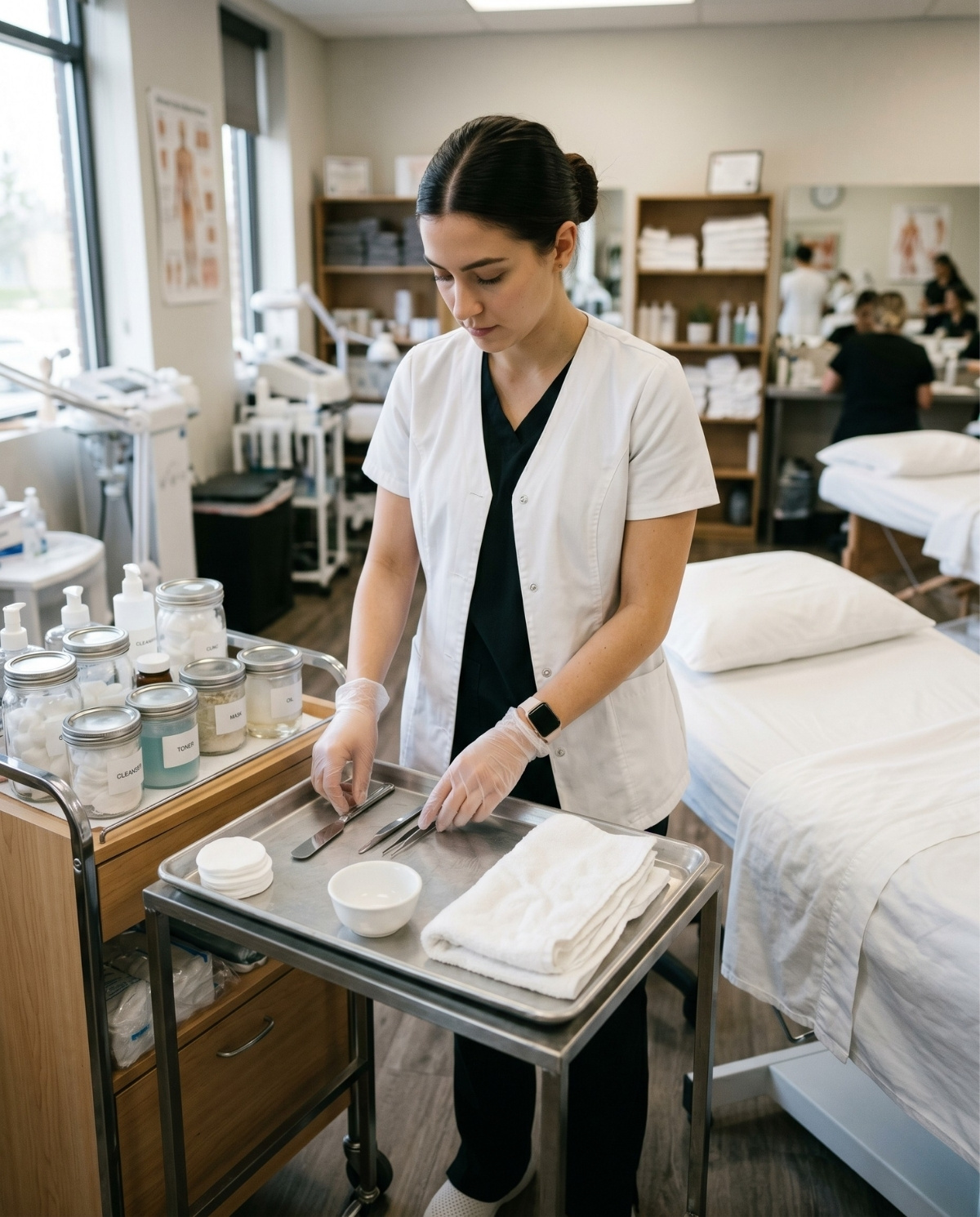
During a professional interview, you might be asked to do a practical exam. A manager might watch how you set up a clean station, analyze skin, explain contraindications, recommend a basic routine, or respond when a client’s skin reacts poorly to a product. They want to see that you stay professional under pressure and that you know how to stay inside your scope while protecting client safety.
Ready to Start Your Career?
The data is clear: the industry is growing and the opportunities are real. Whether you want to work in a clinical setting, a spa, a resort, a retail environment, or eventually go solo, your success depends on having a solid foundation. If you want to learn more about how to get started, I recommend that you explore our enrollment options here.
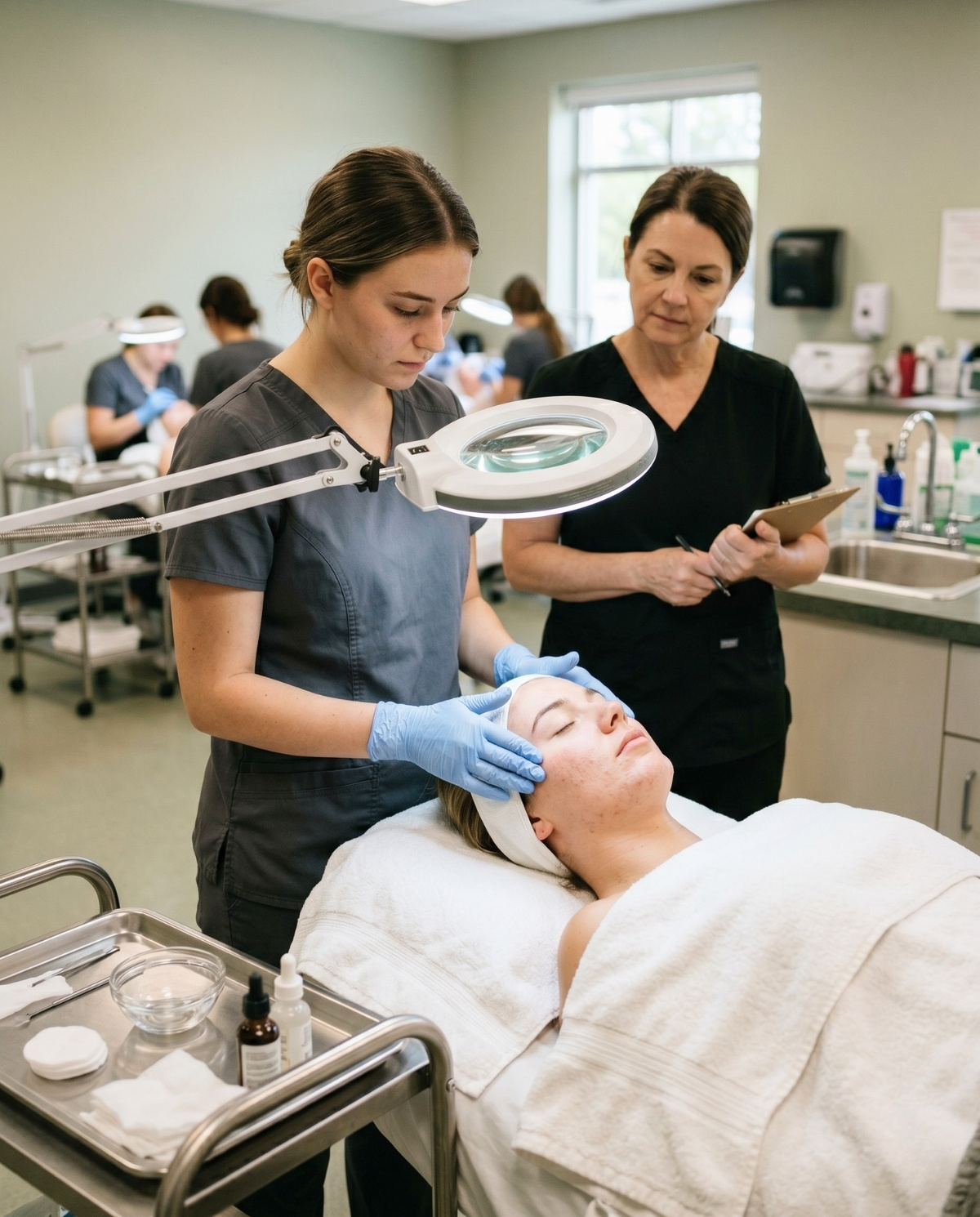
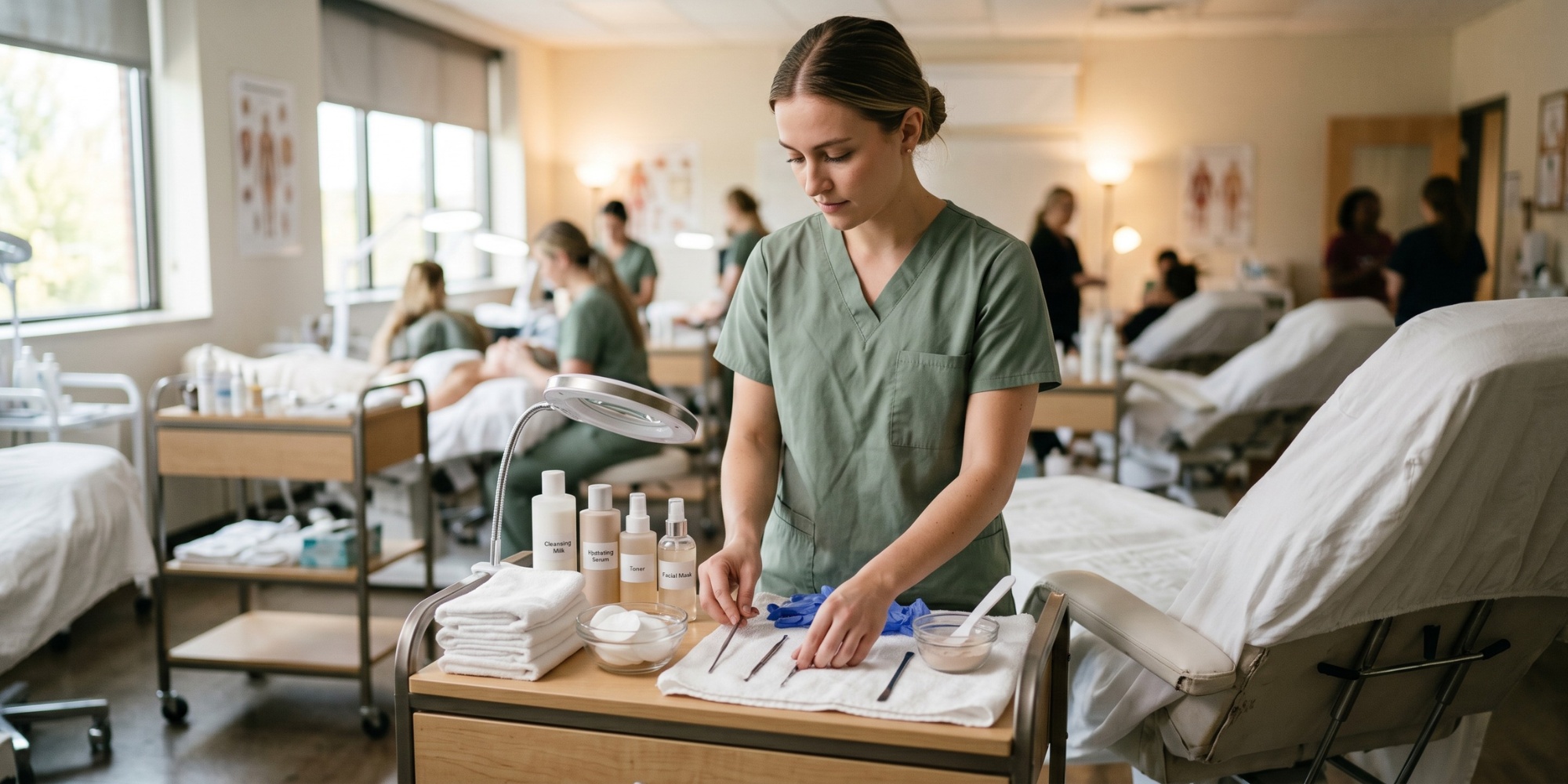
At Dalton Institute, the goal is to help students become confident, professional, and “Salon Ready”. Our esthetician training is built around hands-on experience, client care, sanitation, salon business, client retention, resume writing, and job-seeking skills, so you can start building the habits employers look for from the beginning.
I would love to help you figure out which path is the best fit for your goals. We have a contact form on the site—feel free to fill it out, and we can talk about your future in this industry.
FAQ
Is it hard to get a job after esthetician school?
The outlook is very positive with 7% growth expected from 2024 to 2034. While entry-level jobs are available in spas, salons, retailers, and specialty studios, medical-adjacent roles often require a stronger portfolio, safety knowledge, professionalism, and sometimes additional training.
What career cluster does esthetician fall under?
It is usually placed under Human Services or Healthcare & Human Services. While it involves wellness and client care, it is not automatically a medical license, and medical services remain controlled by state scope-of-practice rules.
Can I move my license to another state?
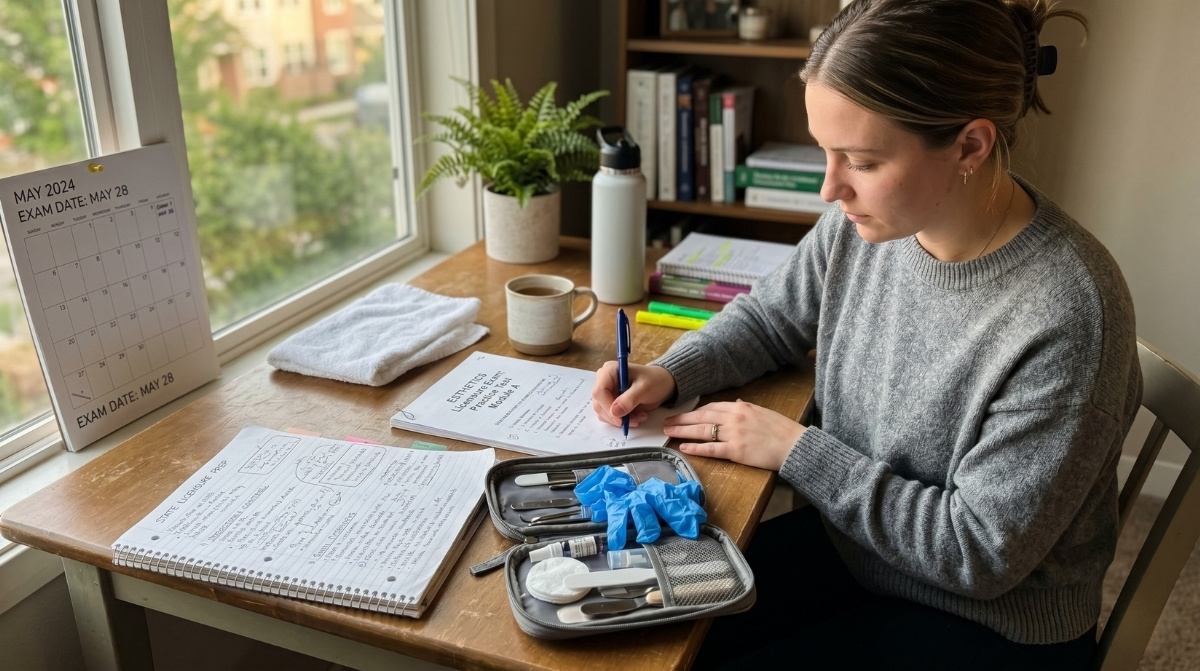
Many states have reciprocity, endorsement, or license-transfer rules, but it varies. Some states may accept your hours and exam history, while others may require extra hours, testing, or documentation. You can read more about state requirements and exams here to see how the transfer process might work for you.
Do I need a degree to be a medical esthetician?
You generally do not need a four-year degree to become an esthetician, but you do need the license required by your state. The term “medical esthetician” is often a workplace or specialty term, not always a separate license. A standard esthetician license does not automatically allow medical procedures, injectables, diagnosis, treatment of disease, lasers, or services outside your state’s scope.