How to Get Your Esthetician License: A Guide to State Requirements and the Board Exam

Getting ready to start a career in the beauty industry is a huge step. Figuring out the exact requirements to legally practice skin care can feel overwhelming because every location handles things differently. I want to guide you through the process of securing your credentials, covering everything from finding the right school to sitting for your final exams, so you know exactly what to expect when you apply for your esthetician license.

Key Takeaways

  • Hours Vary Sharply by State: The required esthetician hours for a license can be as low as 220 hours in Florida for a Facial Specialist registration or jump up to 1,000 hours in Alabama and Georgia.
  • Online Theory Exists, But Hands-On Training Still Matters: Distance learning might cover textbook chapters, but getting approved to take your state board exam for esthetics still requires supervised, in-person clinical practice.
  • NIC Exam Prep Centers on Safety: The national theory test includes 110 items, with 100 scored, and the NIC is rolling out updated blood exposure procedures starting in March 2026.
  • Transferring Credentials Requires Research: Moving your career across state lines is totally possible, but the Cosmetology Licensure Compact is not fully active yet, meaning you still have to navigate specific endorsement rules for your new home state.

What Does It Actually Take to Become a Licensed Professional?

Required Training Hours and Why They Vary

You cannot legally perform professional skin care services without official schooling. When you look up the esthetician license requirements by state, the first thing that stands out is the huge difference in required training hours. These numbers are determined by local regulatory boards based on their specific safety standards and approved scope of practice.

If you are trying to figure out how many hours you need for esthetician training, you have to look directly at your local regulations. Here is a verified look at the state-by-state school hours required to sit for the exams in several popular areas:

The Truth About Distance Learning and Tuition

Many students who are balancing full-time jobs ask me if they can become a licensed esthetician online. The most realistic answer is that you can often complete your theory hours digitally, but you cannot bypass the hands-on clinical work. Some schools follow modern distance learning standards for the classroom portion of the curriculum. However, passing your practical exam for esthetics requires real-world experience that only happens in a physical student salon.

When planning your career, you will also need to know how much it costs to get an esthetician license. Tuition typically ranges between $4,000 and $12,000. If you want a deeper dive into financial planning, check out our breakdown on the realistic path to becoming an esthetician, including schooling costs and getting your license. Viewing your education as a professional investment helps you choose a program that provides excellent equipment and thorough clinical supervision.

Passing the State Board: Practice Tests and Exam Preparation

Surviving the Written Theory Exam

The esthetician written exam focuses heavily on microbiology, infection control, and product chemistry. Students constantly worry about how many questions are on the esthetician state board test. If your region uses the NIC theory format, the current bulletin notes the exam contains 110 items, with 100 questions actively scored.

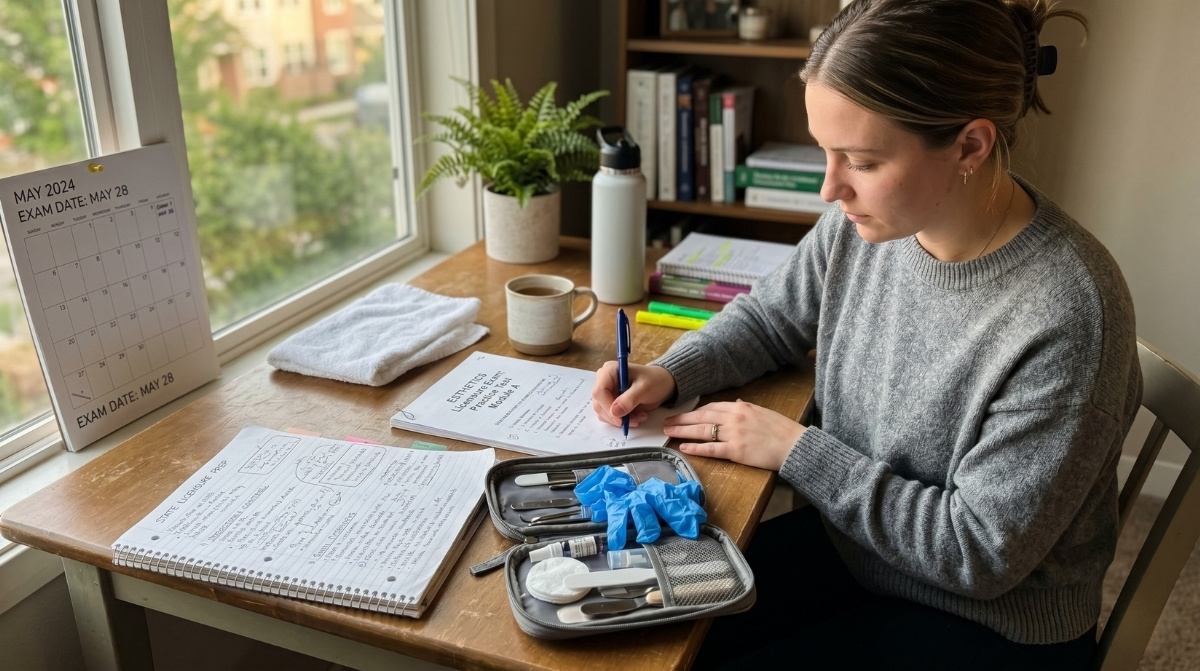
Using an updated esthetician written exam practice test is an absolute must. I highly suggest studying your state laws carefully alongside your standard textbook materials, as regulations are frequently updated.

The Hands-On Practical Exam

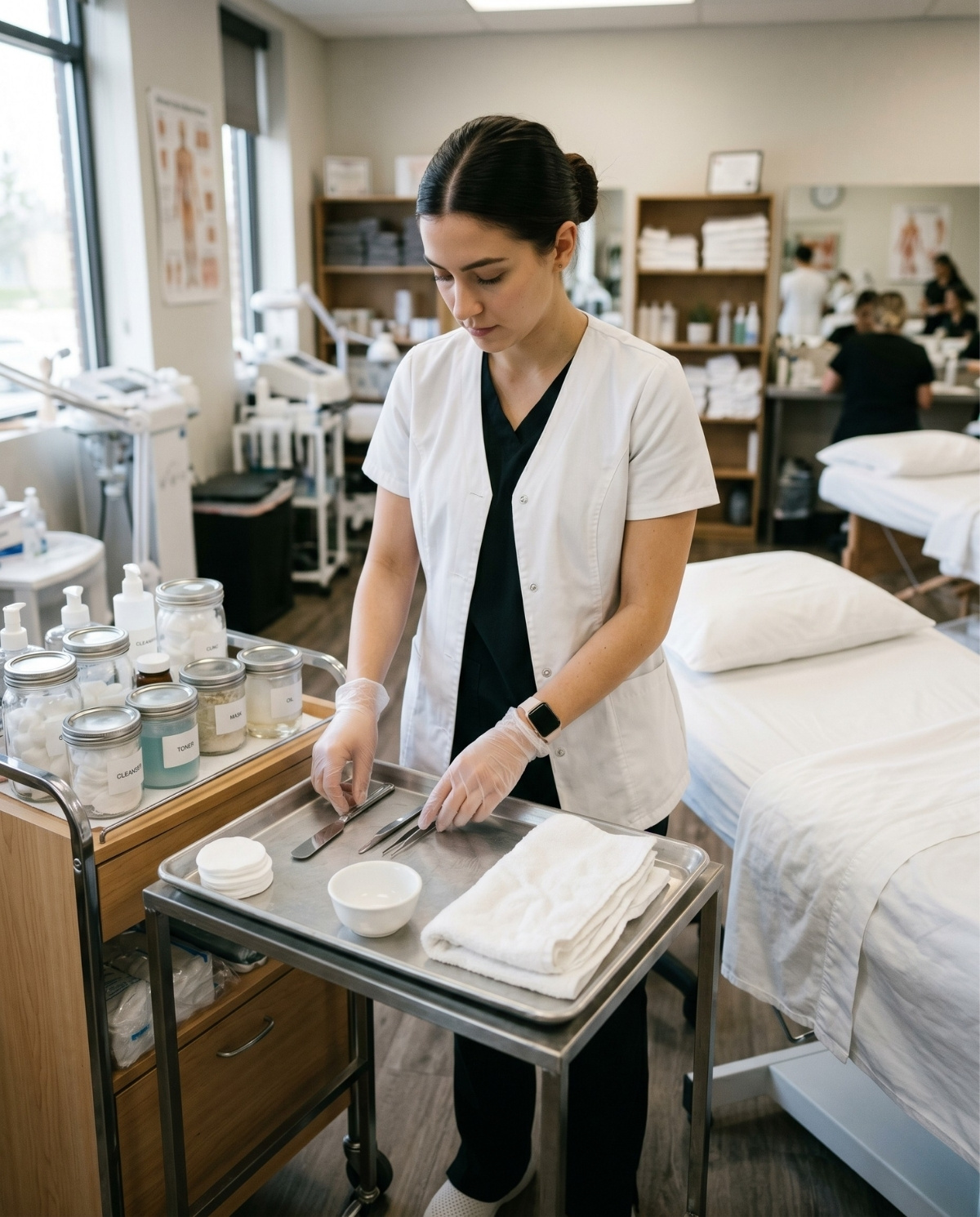
The practical exam for esthetics requires you to prove you can work safely. Graders are not judging your ability to give a relaxing massage. They want to see flawless sanitation discipline, proper organization, and safe handling of simulated blood exposure.

To help ease the anxiety of testing, I recommend reading about what esthetician school is really like and how to prepare. Building strong habits on the clinic floor ensures you perform the right steps naturally during your exam.

Expert Insight: 2026 NIC Practical Exam Updates – The official NIC exam resources state that new blood exposure protocols are taking effect in March 2026. This highlights exactly why practicing strict infection control daily during your schooling is the best way to prepare for any practical testing changes.

Submitting Your Application and Background Checks

How to Apply After Passing Your Exams

Once you successfully pass your tests, you still need to know how to apply for an esthetician license officially. Your beauty school usually assists with submitting your final training transcripts.

The application portals vary. For instance, you can handle your application and schedule tests through the New York licensing system, whereas Florida manages all specialty registrations via the DBPR portal.

Navigating Criminal History

A very common question is whether you can get an esthetician license with a felony. Many states review backgrounds on a case-by-case basis. Texas, for example, evaluates past convictions individually and even offers a criminal history evaluation process before you enroll in school. Disclosing everything honestly is crucial. If you have concerns, speak directly to your state board before spending money on tuition.

Moving States and Building an Independent Career

Understanding Reciprocity and Transfers

If you plan to move, figuring out how to transfer an esthetician license to another state requires some research. Most professionals refer to this as esthetician license by reciprocity, but state boards typically call it licensure by endorsement.

For example, New York offers an endorsement pathway for out-of-state professionals. Virginia provides options through endorsement and universal recognition, as outlined in its licensing requirement summary. Because the Cosmetology Licensure Compact is currently focused on cosmetologists and is still building its active infrastructure, estheticians must still follow individual state transfer guidelines.

Renewing Your Credentials

Once you are licensed, you must keep your credentials current. Florida requires renewals every two years for facial specialists. If your personal details change, such as needing to update the name on an esthetician license after marriage, you can submit the proper forms through official channels, like California’s name change process.

Holding this credential gives you incredible freedom. The Bureau of Labor Statistics highlights that while many skin care specialists work in established spas or medical offices, a significant number choose to be completely self-employed.

Ready to Start Your Skincare Journey?

Navigating all these state requirements takes a little patience, but the final reward of a creative and flexible career is totally worth the effort. Choosing a supportive school makes the entire application and testing process feel seamless.

At Dalton Institute, we provide the comprehensive education you need to excel in the treatment room and pass your board exams with absolute confidence. We want to see you thrive as a sought-after professional in this amazing industry.

To explore how our curriculum aligns with your career goals, please visit our Enrollment page. I highly recommend filling out the contact form at the bottom of the page so our team can personally answer your questions and help you take the very first step toward your new career.

Frequently Asked Questions

Do you need a license to be an esthetician?
Yes, performing professional skin care services legally requires state approval. The specific title can change depending on your location, such as a Facial Specialist registration in Florida.

How many questions are on the esthetician state board exam?
If your state utilizes the standard NIC theory format, the exam generally includes 110 items, with 100 scored. You should always check your local candidate testing bulletin to confirm the current layout.

How do I look up where to get my esthetician license testing done?
Your state regulatory website will point you to the correct testing vendor. New York handles all exam scheduling directly through its own licensing system, while Georgia directs candidates to an external provider like PSI.

How do I find specific esthetician license requirements by state?
Always bypass third-party blogs and go straight to the official state board. For instance, to review the rules for New York, visit the New York Department of State. If you are looking to work in Virginia, verify the details on the Virginia Board for Barbers and Cosmetology site.

Beyond the Glow: What Is Esthetician School Like and How to Prepare

Starting a professional journey in the beauty industry is a significant transition. I remember the shift from simply enjoying skincare products at home to actually understanding the clinical side of the business. Moving from the bathroom mirror to a professional treatment room requires a mix of passion and technical discipline. Many people worry about whether they can handle the anatomy lessons or the high standards for sanitation, but a good program helps you build that confidence step-by-step.

The following breakdown explains what you should expect from a modern education in esthetics and how to navigate the process of becoming licensed.

Key Takeaways

  • Career Outlook: Employment for skincare specialists is projected to grow 7% from 2024 to 2034, faster than average for all occupations.
  • Theory and Practice: Modern training focuses on the skin barrier, product safety, and proper sanitation just as much as it focuses on specific facial techniques.
  • Regulations: New standards like MoCRA have placed a bigger emphasis on cosmetic safety, meaning professionals must stay updated on labeling and safety rules.
  • Variable Timelines: Training requirements are set by individual states. You might see 220 hours for a specialty in Florida, while Georgia requires 1,000 hours for esthetician training.
  • Financial Potential: While the median wage sits around $19.98 per hour, many professionals in high-end spas or those who start their own businesses can earn significantly more.

What Is Esthetician School Like?

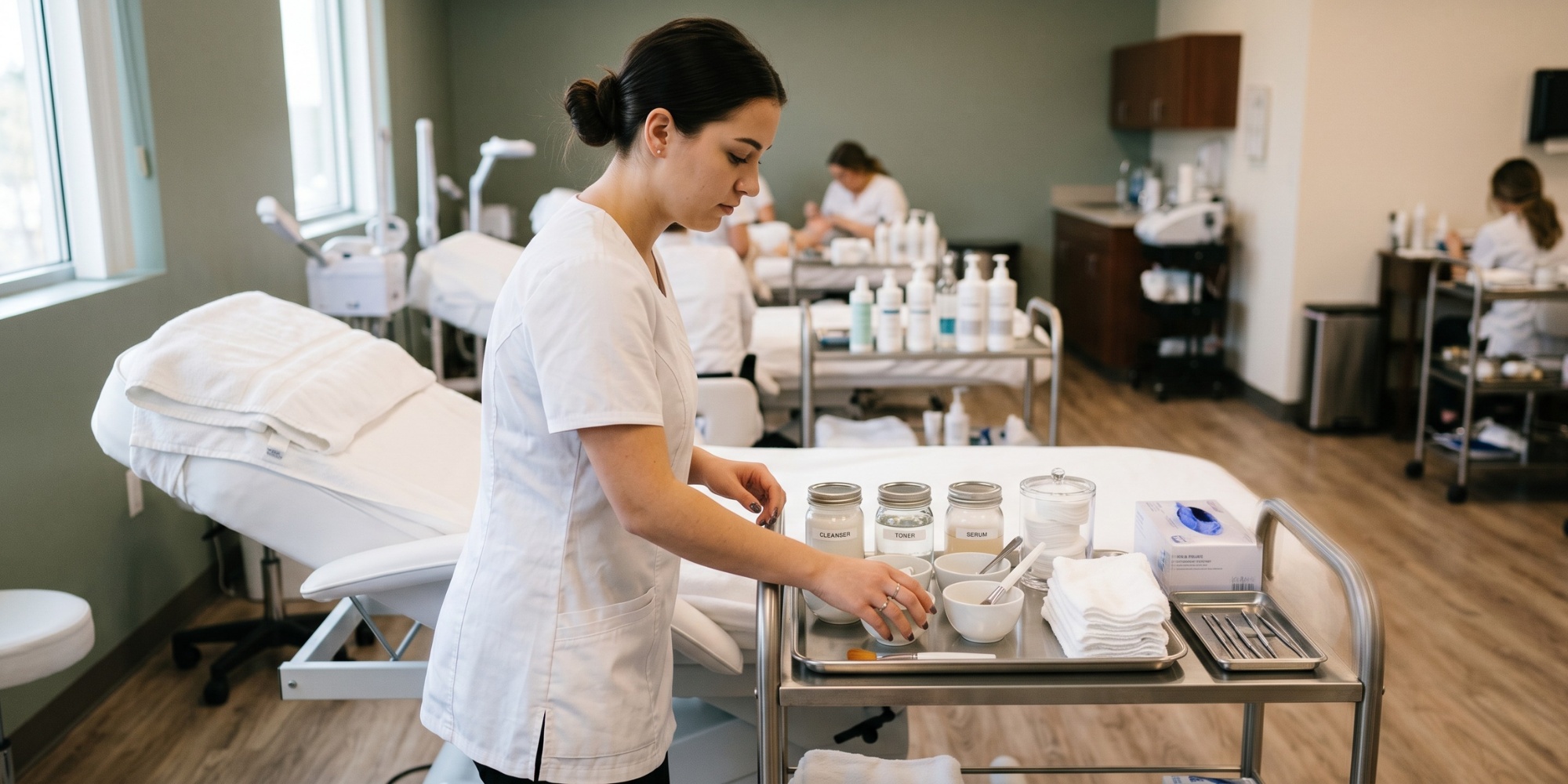
I found that the atmosphere of a beauty program feels much more like a working clinic than a standard classroom. You generally spend your time alternating between lectures and hands-on practice. You start by learning the theory behind skin structure and infection control before you ever pick up a tool. Once you understand the basics, you move into supervised practice in a student clinic.

During your training, you will learn how to conduct professional consultations and perform services safely. Most programs cover the essentials, such as hair removal, lash and brow services, and various cleansing protocols. You also learn how to manage a professional workspace, which includes everything from room setup to keeping detailed treatment records for your clients.

Expert Insight: Growth in the Skincare Market

Data from the U.S. Bureau of Labor Statistics shows that employment for skincare specialists is projected to grow 7% from 2024 to 2034. They also note that demand is supported in part by affordable, quick options like mini-sessions and mobile facials.

The Scientific Foundation of Professional Skincare

Many students feel intimidated by the science involved in beauty school. However, I believe this is what gives us our professional edge. Knowing why a specific ingredient works is what allows you to provide real results for your clients.

Biology, Chemistry, and Sanitation

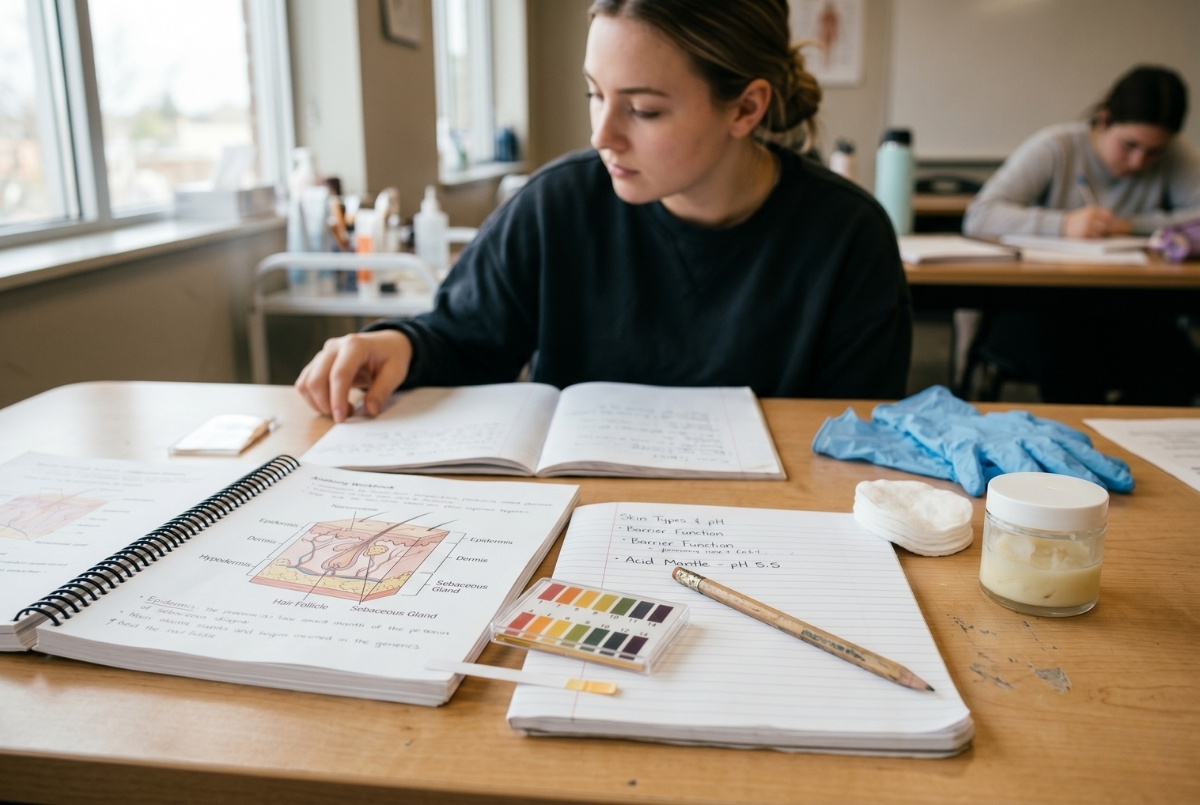
You will spend a significant amount of time studying skin anatomy and the importance of pH levels. Understanding pH is important for the esthetician because it affects how the skin reacts to different products and treatments. You will also learn to identify various conditions and understand why knowledge of diseases and disorders is valuable for an esthetician. Knowing when to treat someone and when to refer them to a medical professional is a core part of your responsibility.

Developing Your Practical Skills

Most of your esthetician training will focus on the actual application of services. You will learn specific facial steps for estheticians and various cleansing methods. If you are looking for an esthetician school for skin care or waxing, you will spend hours practicing these movements to ensure you don’t cause skin trauma. You will also learn how do estheticians clear pores and the proper way to perform extractions. Mastering these techniques ensures you can provide a high-quality service while keeping the client’s skin integrity intact.

Logistics: Hours, Schedules, and State Rules

The path you take depends largely on where you live. Every state has different requirements for how many hours you need for esthetician licensure.

  • California: Esthetics remains a separate category with a 600-hour requirement under current state law.
  • Texas: 750 hours for a license.
  • Florida: 220 hours for a facial specialty; 400 hours for a full specialty.
  • Georgia: 1,000 hours of training.
  • Arizona: 600 hours under current state laws.

If you are looking for the quickest way to become an esthetician, a full-time program might be your best bet, as it can often be finished in a few months. However, many people prefer an esthetician school with night classes or one that offers hours on weekends to balance their current jobs. While some theory can be learned through an online format, the practical work always has to be done in person.

Expert Insight: Regulation and Safety Standards

The Modernization of Cosmetics Regulation Act (MoCRA) has increased the focus on safety and recordkeeping within the industry. As a professional, I make sure to document any adverse reactions appropriately and follow all state board rules to ensure client safety. This level of professional responsibility is a major focus in modern beauty programs.

Financial Planning for Your Education

The price for esthetician school varies depending on the location and the length of the program. I suggest checking whether your tuition includes the cost of your kit and textbooks. If you are concerned about the budget, look for an esthetician school with financial aid eligibility or schools that offer internal payment plans. Some students find that a community college with esthetician program options can be a way to find a school under 10k.

Professional Prep: Your First Day and Beyond

Before you enroll, make sure you understand the requirements to get into esthetician school in your state. Most places require you to meet minimum age and education standards, but the exact rules vary by school and by state. If you do not have a high school diploma, you should check whether a GED is accepted, since many schools do allow this.

Once you start, you will receive an esthetician kit for school. This usually includes the practical tools you need for extractions and facials. You might start by practicing on a mannequin head before you move on to real people in the student clinic. The State Board: Your Final Hurdle

After you finish your hours, you have to pass the state board. Depending on the state, this may include a written exam, a practical exam, or both. Many students use an esthetician written exam practice test or other study tools to help them prepare. I recommend looking at sample state board questions for esthetician exams early in your program so you know what to focus on.

According to the U.S. Bureau of Labor Statistics, the median wage for this role was $19.98 per hour in 2025. However, Beauty Insurance Plus notes that those in specialized roles or medical settings often earn much more. If you want to see a more detailed breakdown of the career path, you can read more about the realistic path to becoming an esthetician.

Ready to Start Your Career?

Choosing a school is about finding the right environment to grow your skills. At Dalton Institute of Esthetics and Cosmetology, we focus on making sure our students are ready for the daily rhythm of a professional salon.

Proper training is what separates a hobby from a long-term career. According to the school’s published information, Dalton Institute brings 20+ years in business and 80+ years of combined experience to its training programs.

If you want to learn more about our upcoming start dates or how to get started, you can find more information under Enrollment. Please feel free to fill out the contact form at the bottom of this page if you would like to speak with an admissions coordinator or schedule a visit to our campus.

FAQ: Common Questions

Can I attend school while working full-time? Many students choose a program with night classes or weekend hours to make it work with their current schedule.

Is it difficult to get into beauty school? Usually, it is not. Admission is typically based on meeting age and basic education requirements rather than a competitive application process.

Can a nurse go to esthetician school? Yes, many nurses choose to become licensed estheticians to move into the medical spa industry. This is a common path for those who want to specialize in clinical skincare.

Do I need a license to work from home? In most states, you must have a license to perform skincare services for money, even in a home setting. You also need to ensure your home space meets local health and sanitation laws.

What is the difference between a basic and a master esthetician? This depends on your state. Some states have a two-tier licensing system where a master esthetician has more hours of training and can perform more advanced services.

The Realistic Path to Becoming an Esthetician: Schooling, Costs, and Getting Your License

I’ve always found that the most fulfilling careers are the ones where you get to help people feel confident every single day. Stepping into the world of professional skincare is a big move, and I want to make sure you have a clear map of what to expect before you dive in. Transitioning from a beauty enthusiast to a skin health professional requires a solid grasp of the biology and chemistry that make this trade work.

If you are curious about how to become an esthetician, the path involves much more than just a love for products. I’ve put together this guide to walk you through the education for an esthetician, the requirements for an esthetician license, and the reality of the average esthetician school cost.

Key Takeaways

  • Speed to Career: In Georgia, students in a state-approved esthetician program complete 1,000 hours of training, and some schools structure that timeline in about 9 months.
  • Job Growth: The Bureau of Labor Statistics projects a 7% growth rate through 2034, showing strong demand for new pros.
  • Income Potential: While the average salary is around $45,374, Master Estheticians can often earn over $66,900.
  • New Standards: The Modernization of Cosmetics Regulation Act (MoCRA) has recently raised the bar for professional accountability in the industry.

Defining the Modern Professional: Scope of Practice

The beauty industry in 2026 has shifted toward what Mintel analysts call “Metabolic Beauty.” This means clients expect you to understand how their internal health reflects on their skin. As a professional, your legal scope of practice centers on the lipid barrier, which acts as the skin’s natural shield.

You will use clinical-grade exfoliation and advanced technology to support cellular repair. Understanding this chemistry is what separates a hobbyist from a pro. Modern clients are moving toward “Bio-intelligent actives,” which are ingredients that react to the skin’s metabolic state in real-time. Choosing a program that emphasizes skin biotechnology will help you stay ahead of the curve.

The Academic Path to be an Esthetician

You need to check off a few boxes before you can enroll. At Dalton Institute, applicants must be at least 18 years old and hold a high school diploma or GED. If you have ever wondered, “can you be an esthetician with a GED?” you will be happy to know that this credential is accepted for enrollment.

The path for how to become an esthetician after high school is fairly straightforward:

  1. Research reputable schools with esthetician programs.
  2. Complete your required training for an esthetician.
  3. Pass your state board exams.
  4. Apply for your official license.
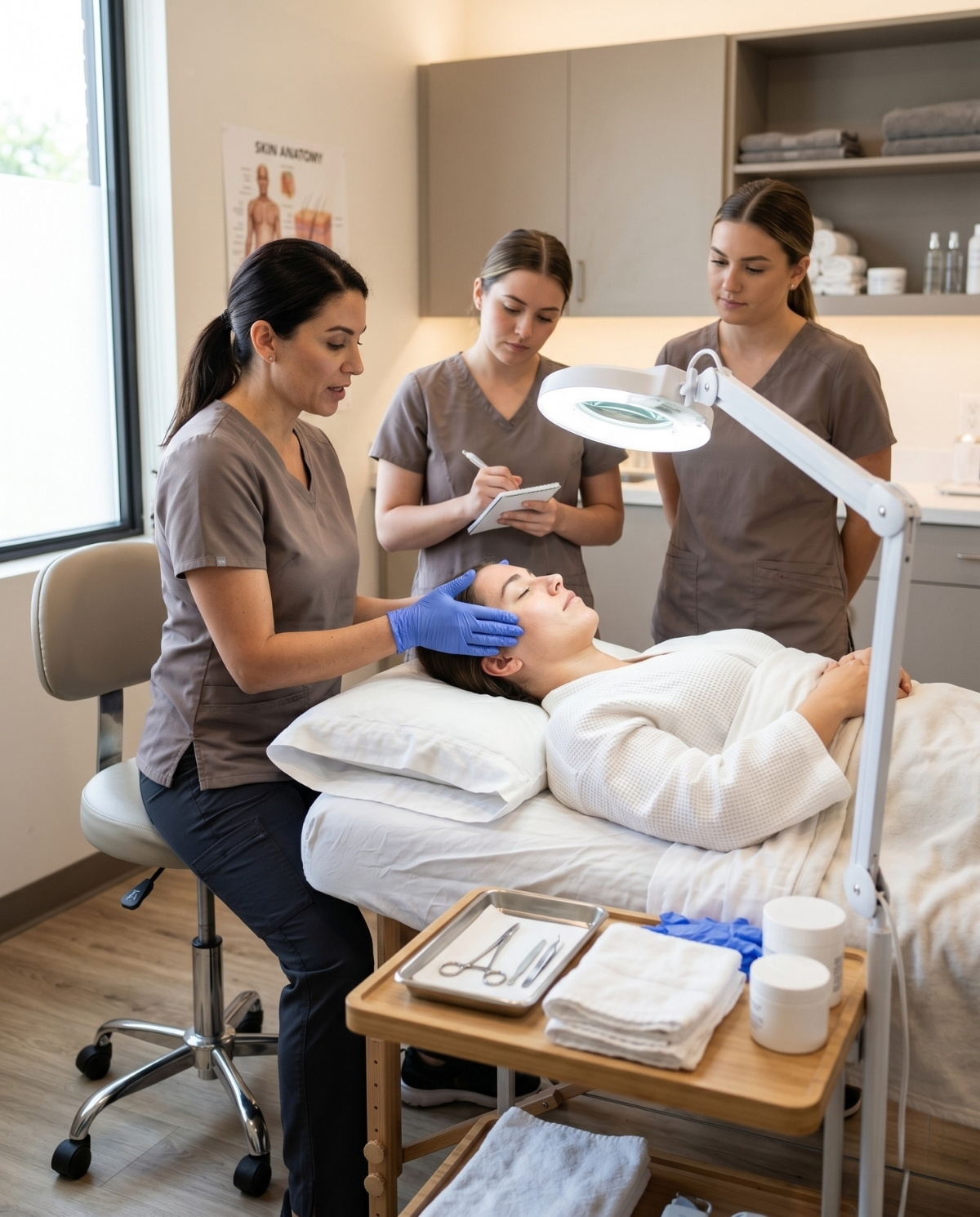
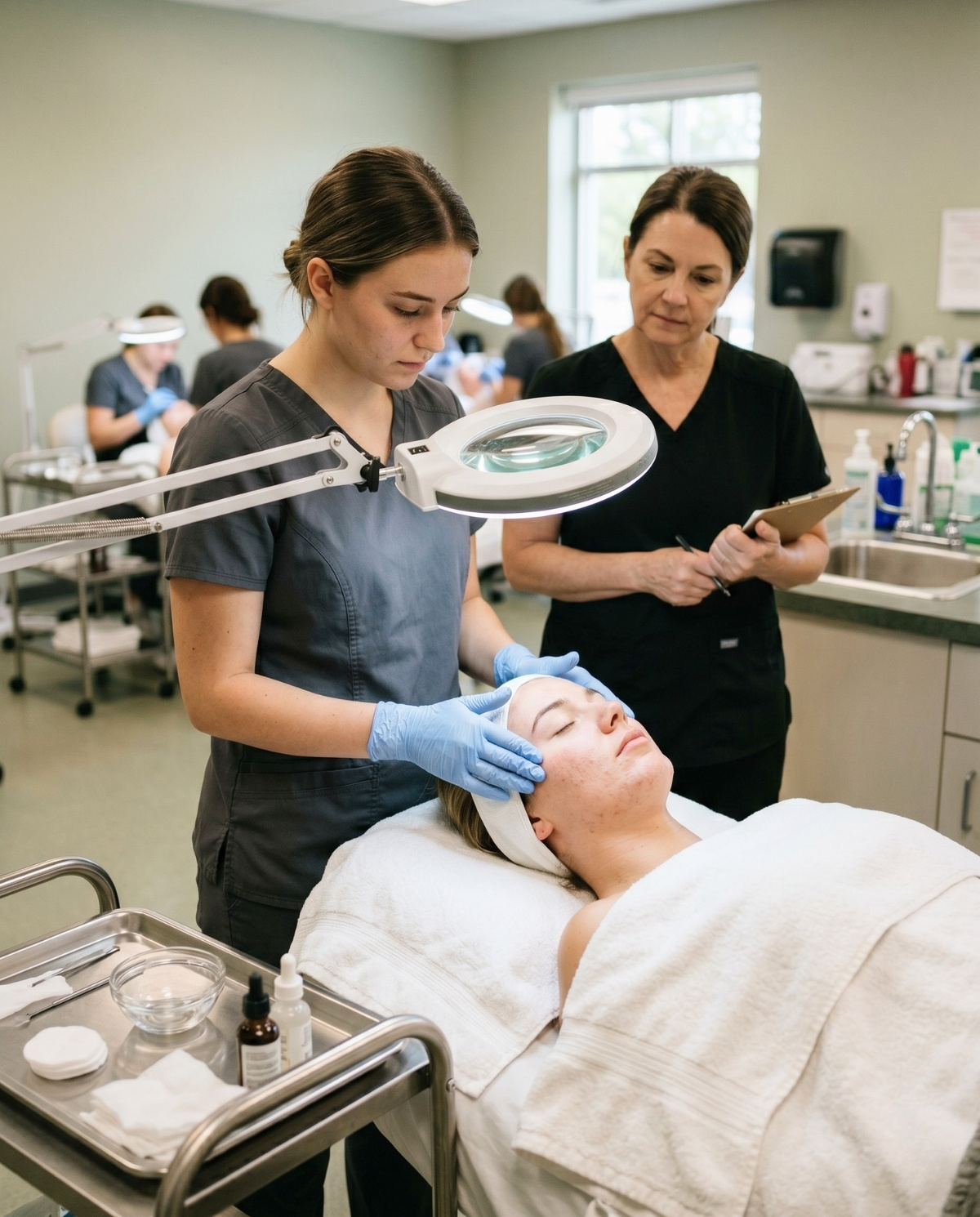
  5. A student esthetician in grey scrubs analyzes a client's skin under a magnifying lamp while an instructor observes in a classroom setting.

The Reality of Esthetician School: Online vs. In-Person

When you search for the quickest way to become an esthetician, you might see ads for an online esthetician course. I want to be realistic here. You can take online classes for an esthetician to learn anatomy or chemistry, but you cannot learn how to safely perform a chemical peel through a screen.

Most states require hundreds of hands-on hours in a supervised student clinic. If a program claims you can do esthetician school online without any in-person training, they are likely not accredited. A lack of accreditation would prevent you from getting a license for an esthetician, making that “quick” route a dead end.

How Long to Become an Esthetician?

If you are wondering how many years of school for an esthetician are required, the answer is usually measured in months. While the Bureau of Labor Statistics highlights that you must complete a state-approved program, the specific hour requirements are set by your local state board.

In Georgia, you are required to complete 1,000 hours of documented training. At Dalton Institute, the esthetician program is structured around 1,000 hours / 9 months. Here is how that usually looks in practice:

  • Program requirement: Georgia esthetician licensure requires 1,000 hours of approved training.
  • Dalton Institute timeline: Dalton Institute lists its esthetician program as a 9-month program.

This fast-paced schedule allows for a rapid transition into a new career. You spend less time in a classroom and more time building the hands-on confidence you need to be “Salon Ready” by graduation.

Price for Esthetician School and Financial Planning

The esthetician school cost is a major investment in your professional future. You should expect to see tuition range from $3,000 at a community college with an esthetician program to over $15,000 at specialized private institutions.

Many students worry about the upfront cost, but there are several ways to manage this:

  • FAFSA for esthetician school: You can apply for federal student aid through FAFSA if your school participates in Title IV programs.
  • Grants for esthetician school: Some schools provide money that does not need to be paid back.
  • VA Benefits: If you or a family member served in the military, the VA pays for esthetician school at many qualifying locations.

When calculating the cost to become an esthetician, remember to include “kit fees.” These are the professional tools and products you will use during your training and often take with you into your first job.

A student workspace featuring an open budget notebook, esthetician tools in a clear tray, skincare textbooks, and a calculator on a wooden table.

How to Get Your Esthetician License

Once you finish your esthetician program, you enter the final phase before starting your career. This is the official recognition of your skills by the state board.

Licensing exams vary by state, and many require both a written and a practical exam. In states that utilize the two-part system, the process looks like this:

  • Theory Exam: A written test that covers skin biology, sanitation protocols, and state laws.
  • Practical Exam: A hands-on demonstration where you perform services on a model or mannequin to prove your technique is safe.

While states like California have recently moved away from the practical portion to simplify the process, Georgia still maintains rigorous testing standards to ensure every licensed esthetician is prepared for the field.

How much does it cost to get an esthetician license? You will need to pay for the application and the testing fees, which usually total between $100 and $250 depending on your state.

Careers After Esthetician School: Where Can You Work?

The question “what can you do with an esthetician license?” has many answers today. Common workplaces include:

  • Medical Spas: Performing advanced treatments like micro-needling alongside doctors.
  • Resort Spas: Working in high-end luxury environments.
  • Freelance/Self-Employment: Managing your own books and specializing in niche services like lash extensions.

Data from ZipRecruiter in early 2026 shows the average salary for an esthetician is currently around $45,374. Focusing on a specialty can increase your earning potential significantly. For example, a Master Esthetician averages over $66,900 annually. Your esthetician yearly salary will grow as you build a loyal client base and master high-ticket services.

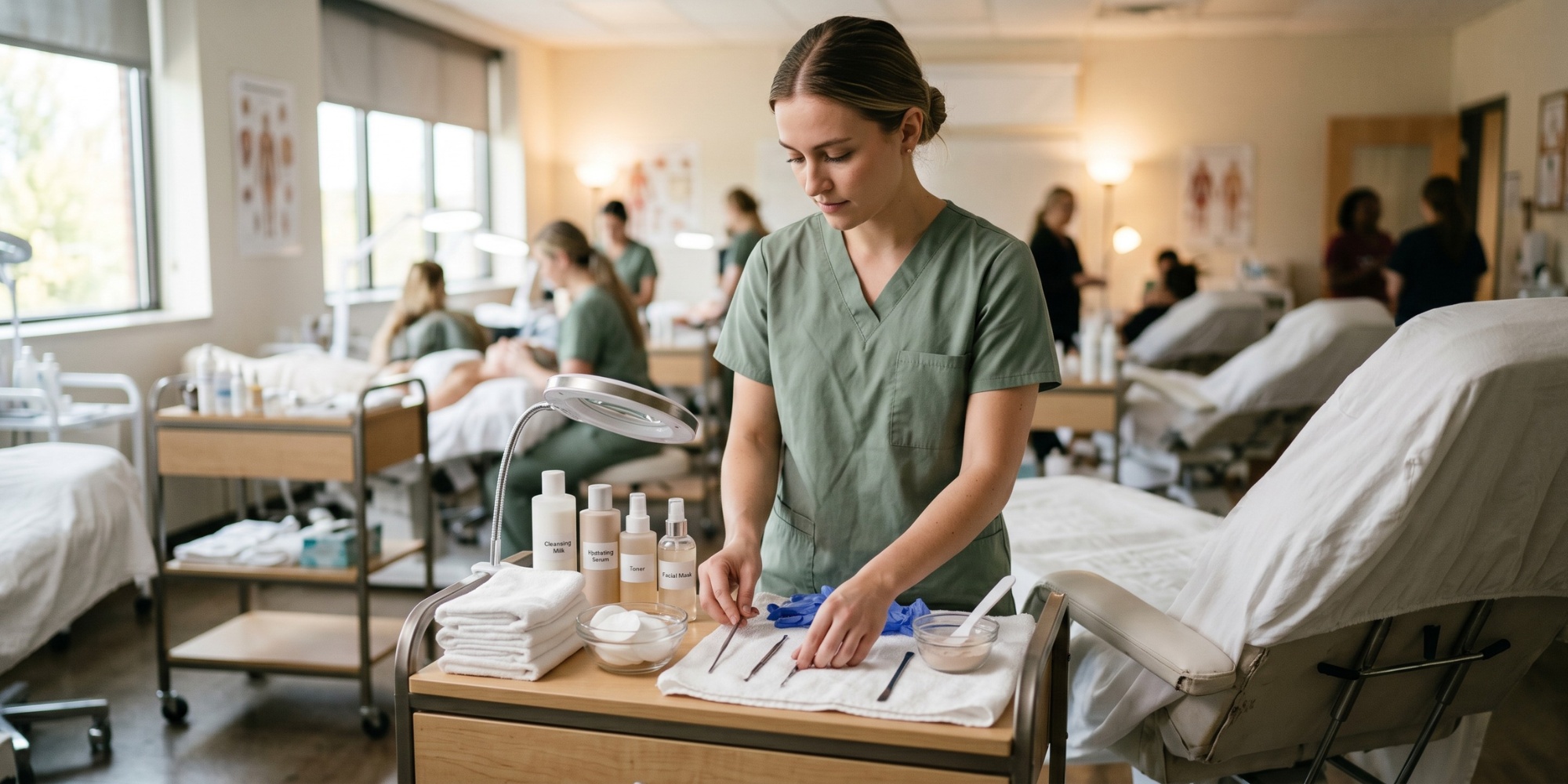
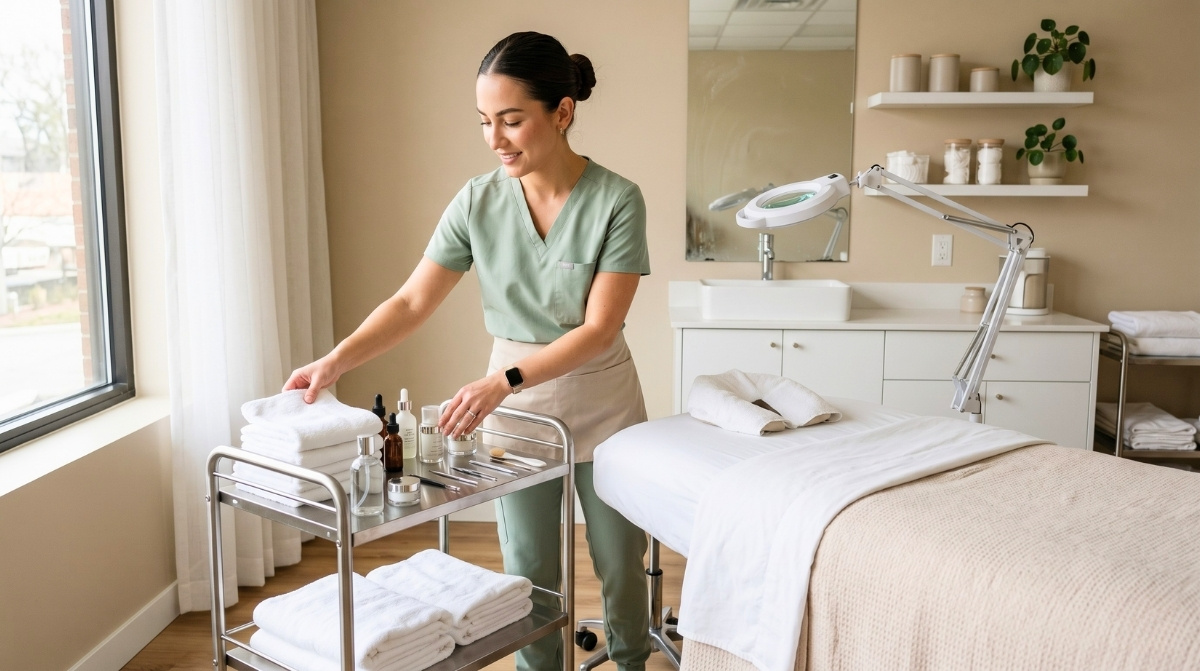
A smiling skincare professional in sage green scrubs prepares a treatment bed and organizes supplies on a rolling metal cart in a bright room.

Ready to Master Your Craft?

I truly believe that choosing where you learn is just as important as what you learn. Finding a school that takes a “Salon Ready” approach ensures that your first day on the job feels like your hundredth. You want to learn from instructors who can guide you from beginner to professional while helping you build confidence, teamwork, and career-ready skills.

I encourage you to find out more on our Enrollment page. Our goal is to help you take the next step toward becoming a trained, professional esthetician in Georgia.

Your future in skin health is waiting, and I am here to help you navigate every step of the journey. Please fill out the contact form below this article to learn more about how we can help you start building your own legacy.

FAQ: What You Need to Know Before Starting

Is it hard to get a job as an esthetician? The demand for skin health experts is high. Employers are looking for graduates who understand modern safety regulations and have strong hands-on skills. Choosing a reputable school makes the job hunt much easier.

Can you be an esthetician without going to school? No. Every state requires a specific number of educational hours from an approved school before you can sit for the licensing exam.

Do you need a degree to be an esthetician? You do not need a college degree. You need a diploma or GED and the completion of a state-approved esthetician course.