

Beyond the Glow: What Is Esthetician School Like and How to Prepare

Starting a professional journey in the beauty industry is a significant transition. I remember the shift from simply enjoying skincare products at home to actually understanding the clinical side of the business. Moving from the bathroom mirror to a professional treatment room requires a mix of passion and technical discipline. Many people worry about whether they can handle the anatomy lessons or the high standards for sanitation, but a good program helps you build that confidence step-by-step.
The following breakdown explains what you should expect from a modern education in esthetics and how to navigate the process of becoming licensed.
Key Takeaways
- Career Outlook: Employment for skincare specialists is projected to grow 7% from 2024 to 2034, faster than average for all occupations.
- Theory and Practice: Modern training focuses on the skin barrier, product safety, and proper sanitation just as much as it focuses on specific facial techniques.
- Regulations: New standards like MoCRA have placed a bigger emphasis on cosmetic safety, meaning professionals must stay updated on labeling and safety rules.
- Variable Timelines: Training requirements are set by individual states. You might see 220 hours for a specialty in Florida, while Georgia requires 1,000 hours for esthetician training.
- Financial Potential: While the median wage sits around $19.98 per hour, many professionals in high-end spas or those who start their own businesses can earn significantly more.
What Is Esthetician School Like?
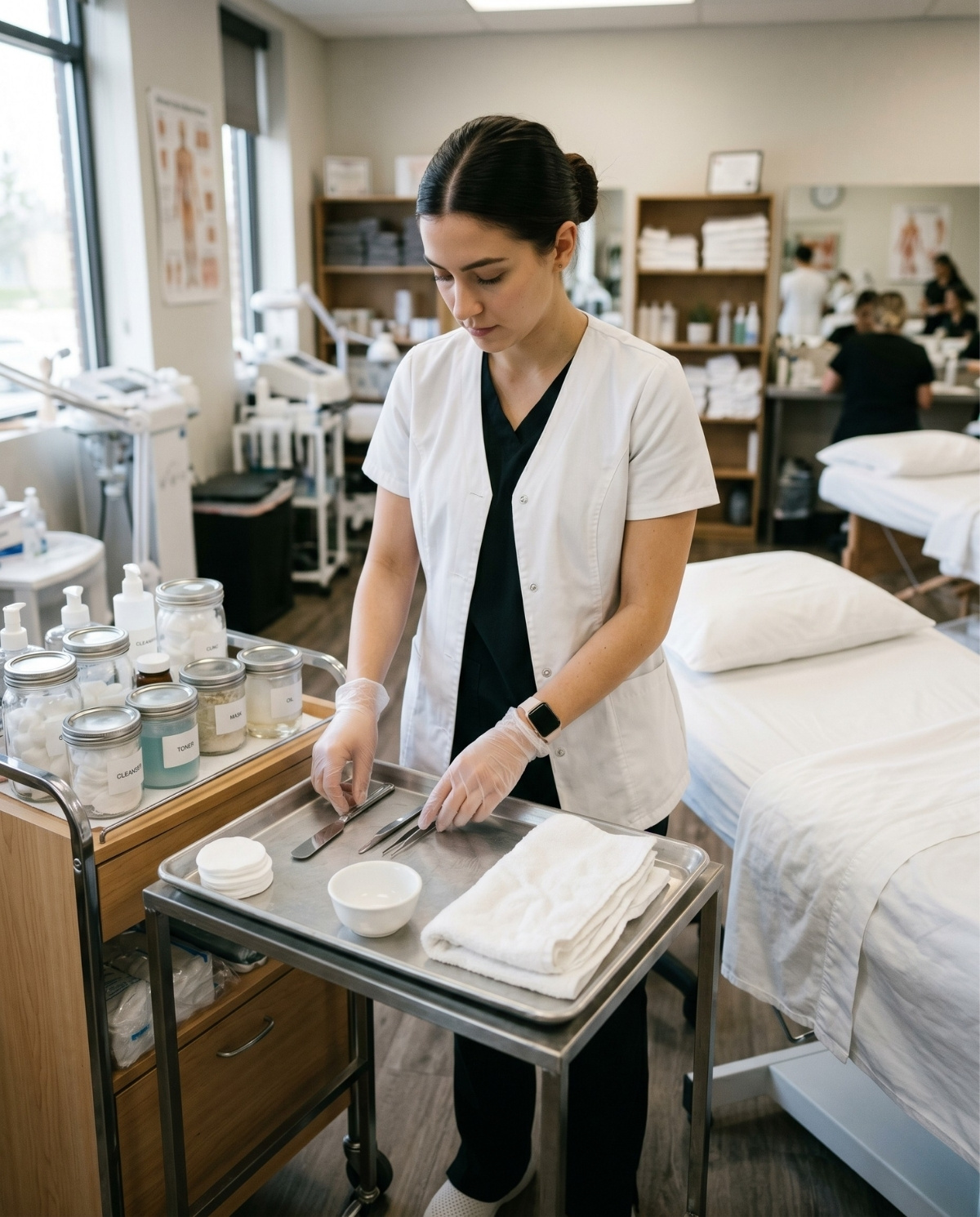
I found that the atmosphere of a beauty program feels much more like a working clinic than a standard classroom. You generally spend your time alternating between lectures and hands-on practice. You start by learning the theory behind skin structure and infection control before you ever pick up a tool. Once you understand the basics, you move into supervised practice in a student clinic.
During your training, you will learn how to conduct professional consultations and perform services safely. Most programs cover the essentials, such as hair removal, lash and brow services, and various cleansing protocols. You also learn how to manage a professional workspace, which includes everything from room setup to keeping detailed treatment records for your clients.
Expert Insight: Growth in the Skincare Market
Data from the U.S. Bureau of Labor Statistics shows that employment for skincare specialists is projected to grow 7% from 2024 to 2034. They also note that demand is supported in part by affordable, quick options like mini-sessions and mobile facials.
The Scientific Foundation of Professional Skincare
Many students feel intimidated by the science involved in beauty school. However, I believe this is what gives us our professional edge. Knowing why a specific ingredient works is what allows you to provide real results for your clients.
Biology, Chemistry, and Sanitation
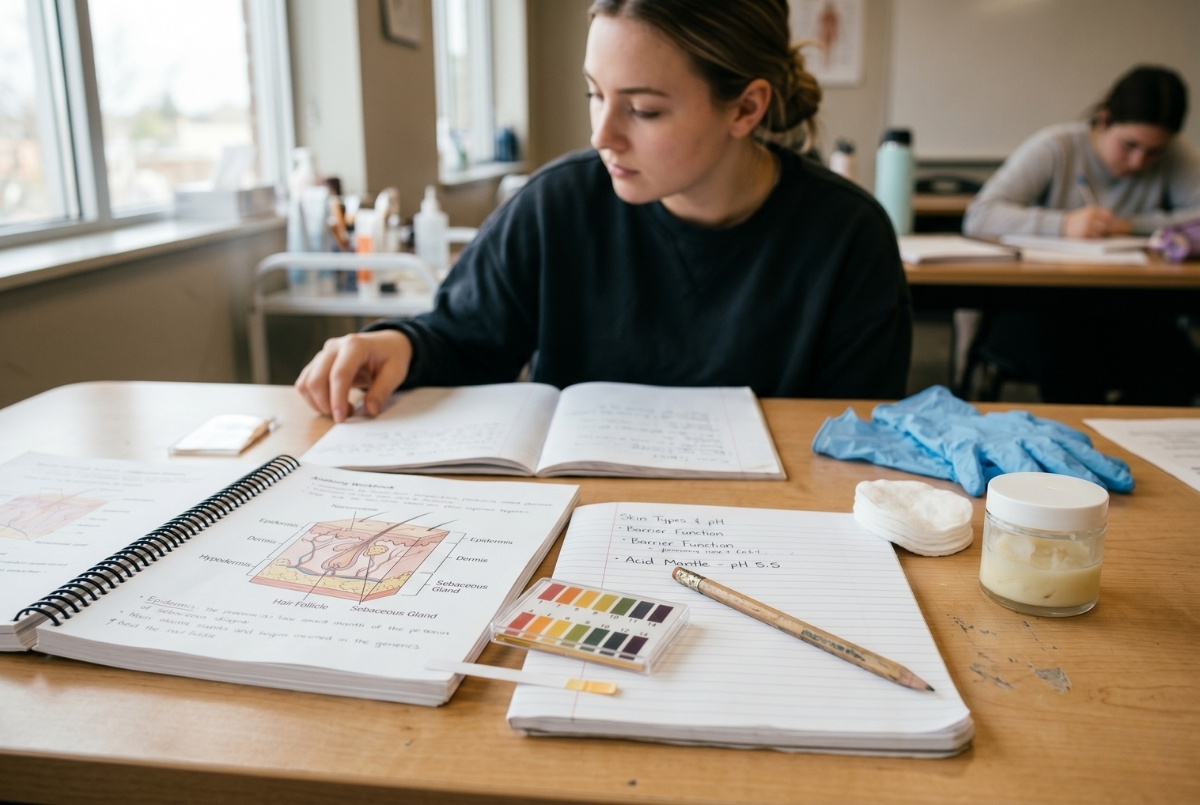
You will spend a significant amount of time studying skin anatomy and the importance of pH levels. Understanding pH is important for the esthetician because it affects how the skin reacts to different products and treatments. You will also learn to identify various conditions and understand why knowledge of diseases and disorders is valuable for an esthetician. Knowing when to treat someone and when to refer them to a medical professional is a core part of your responsibility.
Developing Your Practical Skills
Most of your esthetician training will focus on the actual application of services. You will learn specific facial steps for estheticians and various cleansing methods. If you are looking for an esthetician school for skin care or waxing, you will spend hours practicing these movements to ensure you don't cause skin trauma. You will also learn how do estheticians clear pores and the proper way to perform extractions. Mastering these techniques ensures you can provide a high-quality service while keeping the client’s skin integrity intact.
Logistics: Hours, Schedules, and State Rules
The path you take depends largely on where you live. Every state has different requirements for how many hours you need for esthetician licensure.
- California: Esthetics remains a separate category with a 600-hour requirement under current state law.
- Texas: 750 hours for a license.
- Florida: 220 hours for a facial specialty; 400 hours for a full specialty.
- Georgia: 1,000 hours of training.
- Arizona: 600 hours under current state laws.
If you are looking for the quickest way to become an esthetician, a full-time program might be your best bet, as it can often be finished in a few months. However, many people prefer an esthetician school with night classes or one that offers hours on weekends to balance their current jobs. While some theory can be learned through an online format, the practical work always has to be done in person.
Expert Insight: Regulation and Safety Standards
The Modernization of Cosmetics Regulation Act (MoCRA) has increased the focus on safety and recordkeeping within the industry. As a professional, I make sure to document any adverse reactions appropriately and follow all state board rules to ensure client safety. This level of professional responsibility is a major focus in modern beauty programs.
Financial Planning for Your Education
The price for esthetician school varies depending on the location and the length of the program. I suggest checking whether your tuition includes the cost of your kit and textbooks. If you are concerned about the budget, look for an esthetician school with financial aid eligibility or schools that offer internal payment plans. Some students find that a community college with esthetician program options can be a way to find a school under 10k.
Professional Prep: Your First Day and Beyond
Before you enroll, make sure you understand the requirements to get into esthetician school in your state. Most places require you to meet minimum age and education standards, but the exact rules vary by school and by state. If you do not have a high school diploma, you should check whether a GED is accepted, since many schools do allow this.
Once you start, you will receive an esthetician kit for school. This usually includes the practical tools you need for extractions and facials. You might start by practicing on a mannequin head before you move on to real people in the student clinic.
The State Board: Your Final Hurdle
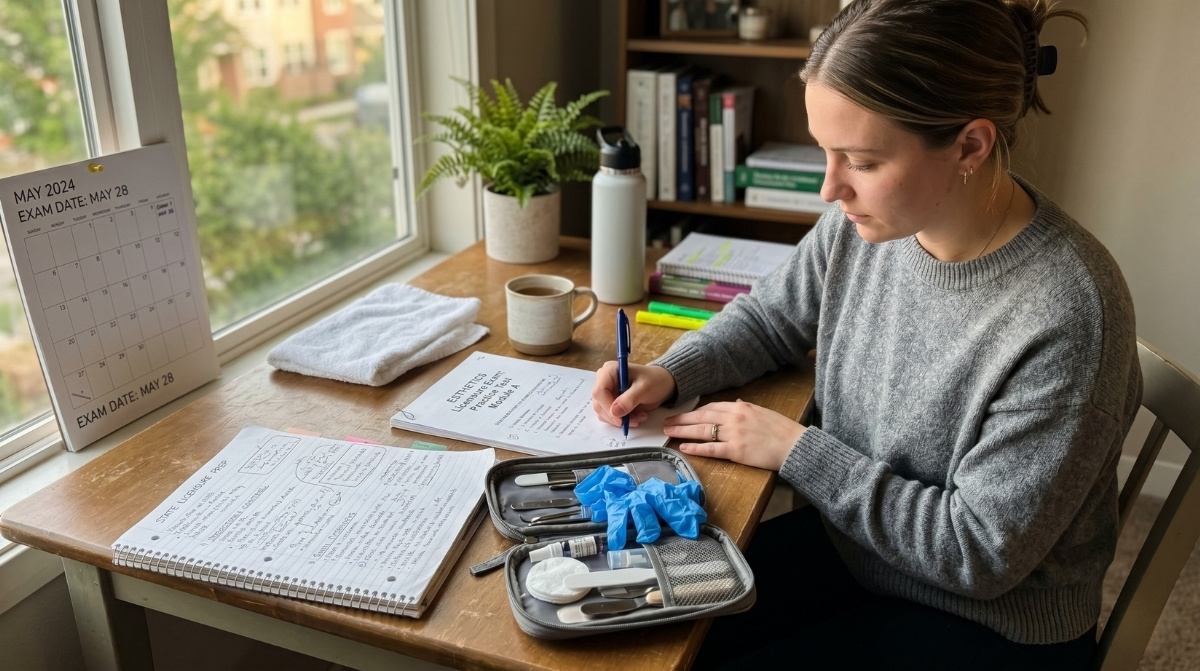
After you finish your hours, you have to pass the state board. Depending on the state, this may include a written exam, a practical exam, or both. Many students use an esthetician written exam practice test or other study tools to help them prepare. I recommend looking at sample state board questions for esthetician exams early in your program so you know what to focus on.
According to the U.S. Bureau of Labor Statistics, the median wage for this role was $19.98 per hour in 2025. However, Beauty Insurance Plus notes that those in specialized roles or medical settings often earn much more. If you want to see a more detailed breakdown of the career path, you can read more about the realistic path to becoming an esthetician.
Ready to Start Your Career?
Choosing a school is about finding the right environment to grow your skills. At Dalton Institute of Esthetics and Cosmetology, we focus on making sure our students are ready for the daily rhythm of a professional salon.
Proper training is what separates a hobby from a long-term career. According to the school’s published information, Dalton Institute brings 20+ years in business and 80+ years of combined experience to its training programs.
If you want to learn more about our upcoming start dates or how to get started, you can find more information under Enrollment. Please feel free to fill out the contact form at the bottom of this page if you would like to speak with an admissions coordinator or schedule a visit to our campus.
FAQ: Common Questions
Can I attend school while working full-time? Many students choose a program with night classes or weekend hours to make it work with their current schedule.
Is it difficult to get into beauty school? Usually, it is not. Admission is typically based on meeting age and basic education requirements rather than a competitive application process.
Can a nurse go to esthetician school? Yes, many nurses choose to become licensed estheticians to move into the medical spa industry. This is a common path for those who want to specialize in clinical skincare.
Do I need a license to work from home? In most states, you must have a license to perform skincare services for money, even in a home setting. You also need to ensure your home space meets local health and sanitation laws.
What is the difference between a basic and a master esthetician? This depends on your state. Some states have a two-tier licensing system where a master esthetician has more hours of training and can perform more advanced services.