

Esthetician Vs Medical Esthetician: Breaking Through The Professional Plateau
Professional stagnation is a common hurdle in the beauty industry. I often talk to practitioners who feel trapped in a cycle of standard facials and routine extractions, sensing they have reached a limit in what they can offer. This feeling usually suggests that your professional curiosity and financial goals are ready for a shift. Deciding between a basic esthetician vs master esthetician career path or moving into a medical-level role is the first step toward securing a place in clinical skin health.
Main Takeaways for 2026
- Market Expansion: Data from Research and Markets suggests the medical aesthetics sector will grow from $14.93 billion in 2025 to $16.79 billion by 2026, with steady growth through 2030.
- Legal Definitions: Master Esthetician is a specific legal license in states like Virginia. In contrast, "Medical Esthetician" is generally a job title rather than a distinct state-issued license.
- Earning Power: Advanced services can create stronger earning potential, but your total compensation depends on your location, license type, employer, commission structure, and whether you hold other medical credentials like an RN, NP, or PA license.
- Safety Awareness: Proper education is vital for safety. A 2025 FDA Safety Communication highlighted risks like nerve damage and scarring with RF microneedling, emphasizing the need for strict scope-of-practice compliance.
Differentiating Between Basic, Master, and Advanced Practice Esthetics
Most introductory programs prioritize the lipid barrier and surface-level skin health. While this foundation is necessary, I recommend looking at the realistic path to becoming an esthetician including schooling costs and getting your license before you pick a specialty.
The 2026 beauty landscape is moving toward advanced practice and clinical esthetics. I always tell my readers that advanced certificates might build your knowledge, but they do not legally change your scope of practice. Before you offer services like chemical peels, lasers, microneedling, IPL, RF treatments, or injectables, you must check with your state cosmetology or esthetics board and, when medical procedures are involved, your state medical or nursing board.
To define what is a master esthetician, we can look at the legal framework in Virginia. According to the Virginia Administrative Code, practitioners must complete a 600-hour basic program followed by a 600-hour master program. This means a professional completes 1,200 hours of training to reach that level.
This training involves a deep dive into anatomy, lymphatic drainage, and advanced modalities. Under the Virginia scope of practice, these professionals can perform advanced exfoliation, including modified Jessner’s solutions. These services require a much more technical understanding of skin chemistry than a standard spa menu.
Entering the Medical Side of Skincare
I often get questions about what is a medical esthetician vs esthetician. In the United States, a medical esthetician usually refers to a professional working in a clinical setting like a dermatology office or a medical spa.
The Research and Markets report confirms that this sector is expanding as more people choose minimally invasive aesthetic procedures. This trend is very visible in physician-directed clinics. When you are an esthetician working under a doctor, you must still follow state board rules. A medical director can set protocols, but they cannot give you permission to perform services that fall outside your legal license.
For example, you might help with patient care for those with PCOS where laser hair reduction is used. However, because PCOS is a medical condition, the diagnosis and treatment plan must come from a doctor. If you are curious about these roles, I suggest researching exploring your beauty career paths to see how clinical roles affect your salary and daily tasks.
Transitioning from Nursing to Aesthetics
A major trend I am seeing in 2026 is the growth of medical aesthetics for nurses. Many registered nurses are moving from RN to esthetician work to avoid hospital burnout while still using their clinical skills.
If you are an esthetician with RN license credentials, you can often bridge the gap between skincare and medicine. In many states, injections like Botox and dermal fillers are performed by licensed medical professionals such as RNs, NPs, PAs, physicians, or other providers allowed by state law. This authority comes from the nursing or medical license, not the esthetics registration. This is one reason why an esthetician nurse salary can be significantly higher than a standard skin specialist role. The Bureau of Labor Statistics noted that skincare specialists had a $19.98 median hourly wage in 2024, but medical-aesthetic roles often have much higher earning caps.
Variations in State Licensing Rules
Your geography determines your path to an advanced license. Every state has a different rulebook, and private certifications do not override these laws:
- Virginia: If you want to know how to become a master esthetician in virginia, the process involves 1,200 total hours of training. This includes advanced anatomy and chemical exfoliation according to the Virginia Administrative Code.
- Florida: If you are looking at how to become a medical esthetician in florida, you need to understand the split between beauty and medical services. The Florida Department of Health explains that laser hair removal is often regulated via electrology and requires medical supervision.
- California: This state does not have a formal master license and sets strict boundaries. The California Board of Barbering and Cosmetology states that estheticians cannot use lasers for treatment even with a doctor’s supervision.
- Pennsylvania: There is no master license here. The Pennsylvania licensure snapshot requires 300 hours for a basic license. You should check with the state board before you start any medical-aesthetic training there.
Understanding these details is much easier when you have a guide for getting your esthetician license and navigating state requirements.
High-Intensity Services: Botox, Lasers, and Microneedling
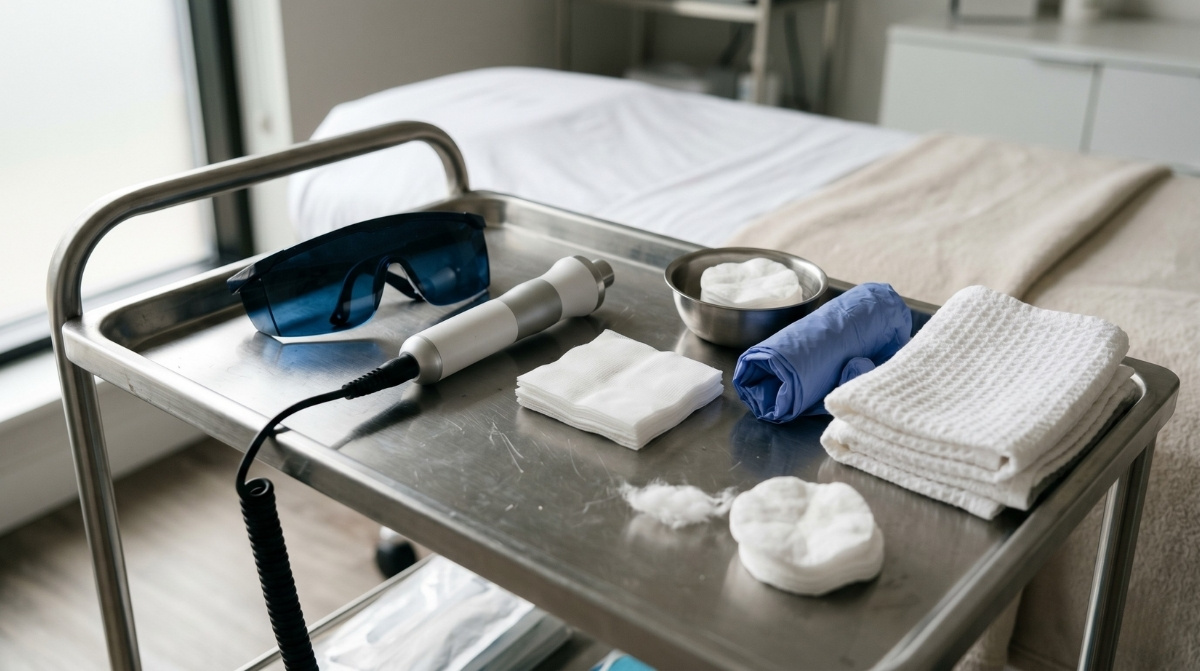
As you move into medical aesthetics, your menu will likely include more complex tools. This is where staying compliant is essential.
- Injectables: Most estheticians cannot perform Botox or filler injections under their skincare license alone. These are medical procedures and usually require an appropriate medical license, such as RN, NP, PA, physician, or another credential allowed by state law. However, an esthetician is often vital for patient education and post-treatment care.
- Microneedling: Rules for this service vary. In some regions, estheticians can perform it if they stay within a certain depth, while others view it as a medical treatment. This is especially true for microneedling with esthetician services that involve radiofrequency.
- Lasers: To become a laser esthetician, you have to master the science of light and how it interacts with the skin. You must verify if your state allows estheticians to use these devices or if it requires a separate credential.
Safety Standards for RF Microneedling
The 2025 FDA Safety Communication was a reminder that RF microneedling is a medical procedure. They warned of risks like fat loss and burns. This highlights why high-quality training is not negotiable. You need to understand device physics and tissue response before moving into advanced services.
Global Credentials and Future Tech
If you want to be at the top of the field, consider the CIDESCO Diploma. It is a globally recognized beauty qualification that sets a very high bar for professional standards.
I also suggest staying informed about regenerative topics like exosomes and polynucleotides. These are often called next-generation skin repair. While they are usually medical-grade, understanding the science makes you a better professional.
Your Path to Professional Mastery
The industry is clearly moving toward clinical results. There is a massive demand for specialists who have a deep understanding of their craft. Your future success is based on the foundation you build today.
I believe that the best way to grow is to find an environment that offers hands-on experience and professional discipline. If you are ready to take the next step in your career and want to see what is possible, you can find more information in our Enrollment section. I also encourage you to reach out through the contact form at the end of this article to start a conversation with our team about your goals.
FAQ
What qualifications do you need to be a medical esthetician?
You generally need a standard license followed by advanced training in chemical peels, device safety, and clinical protocols. "Medical esthetician" is typically a job title, so your exact scope depends on your state, your employer, your license, and whether the service is cosmetic or medical.
How do you become a medical esthetician without a university degree?
A four-year degree is not required. You need to graduate from a state-approved esthetics program and earn your license. After that, you can focus on continuing education and seeking roles in dermatology offices or medical spas.
Can an esthetician do microneedling in Michigan or Massachusetts?
Microneedling is often considered a medical-adjacent procedure, especially when it reaches the dermis or uses RF energy. These rules change often, so I always recommend checking with your specific state board and any applicable medical or nursing board rather than relying on a private certificate alone.