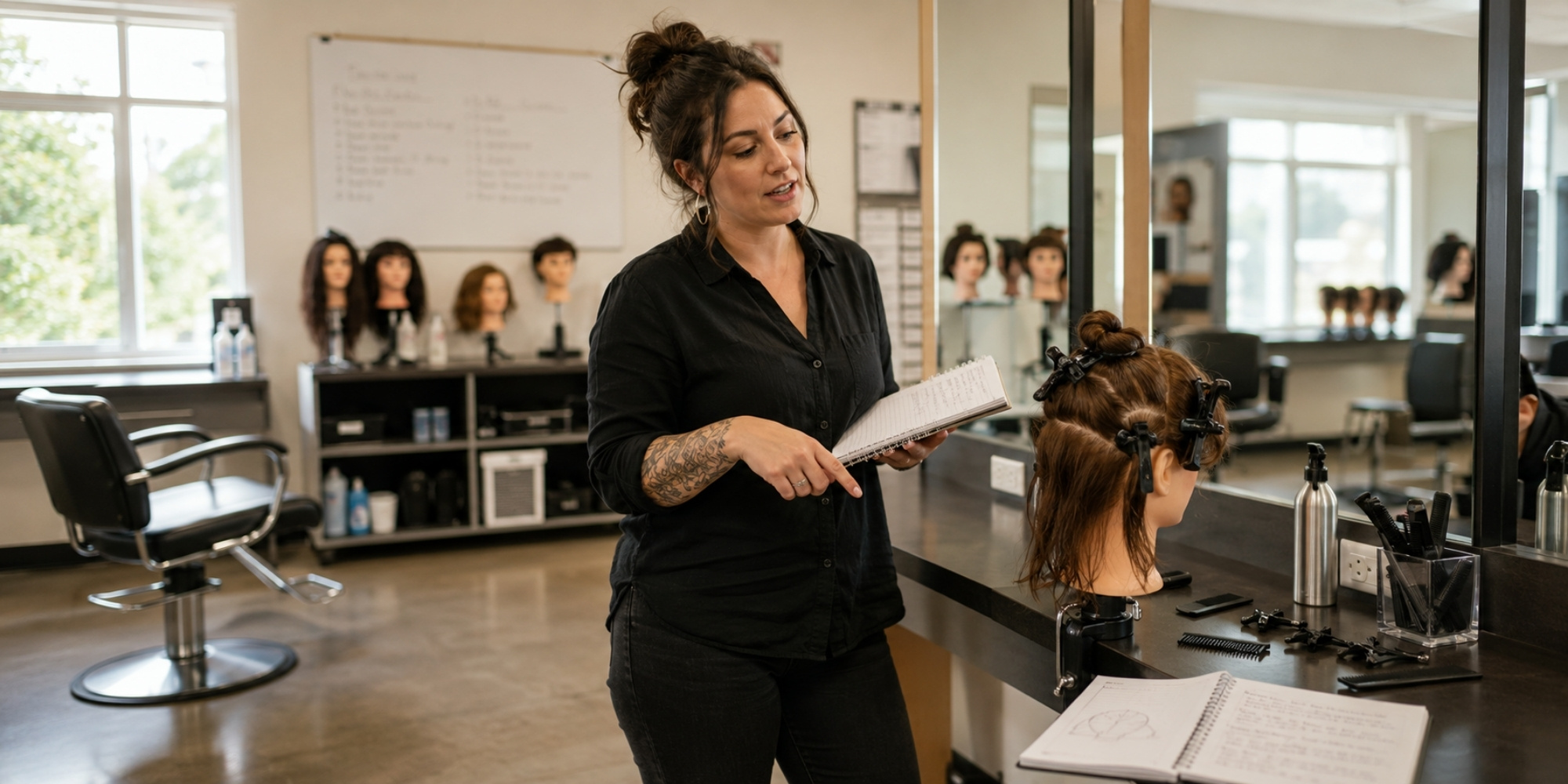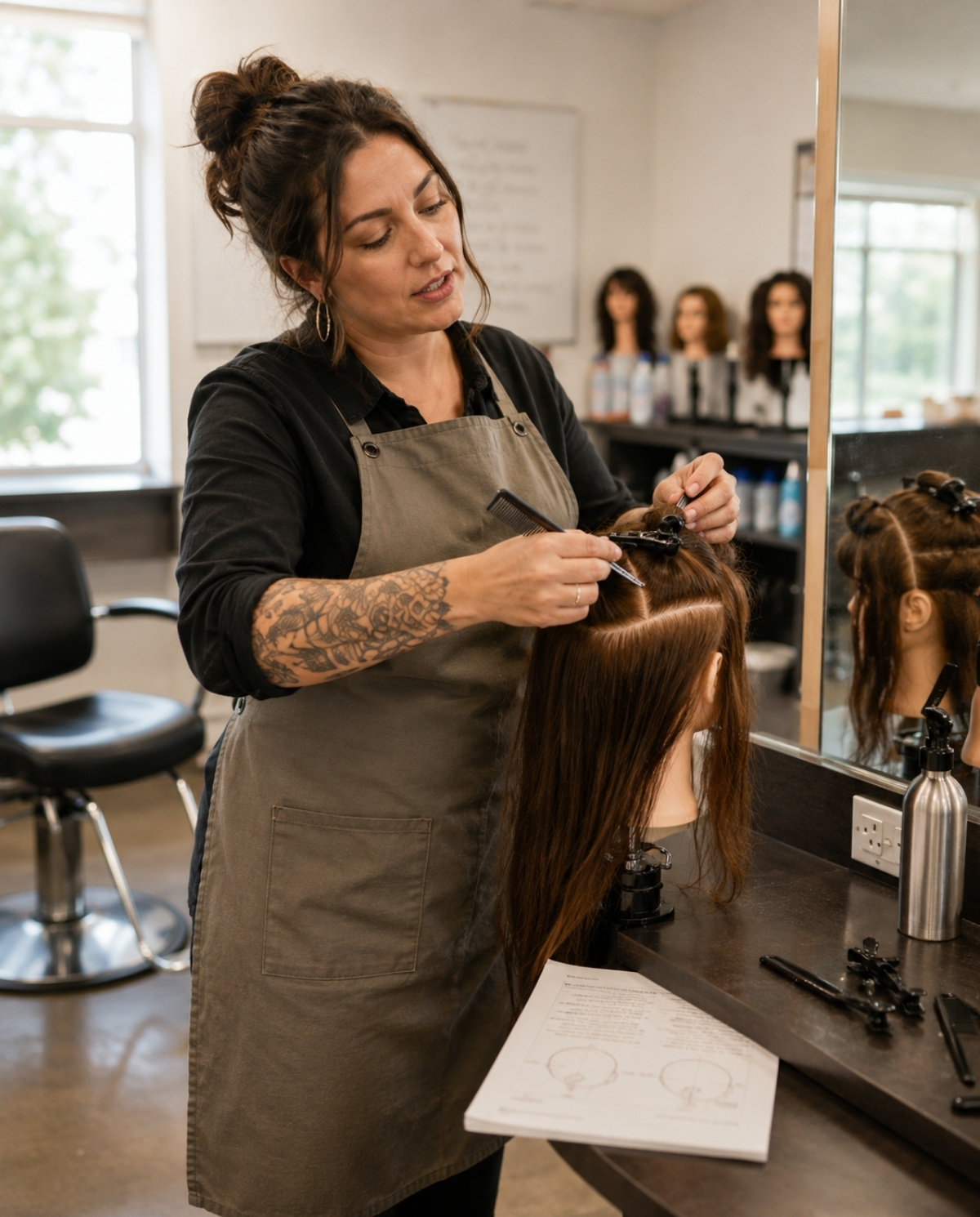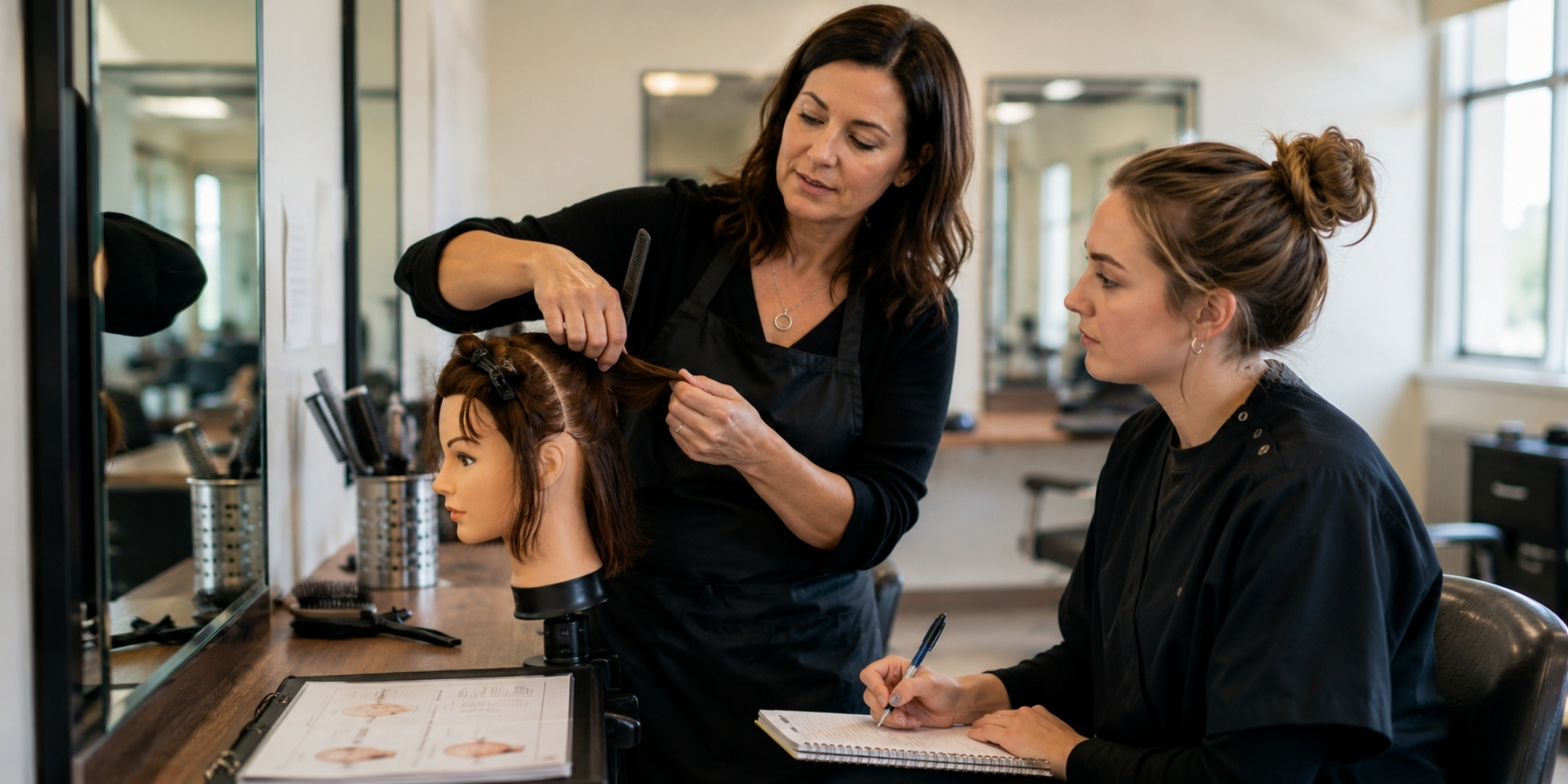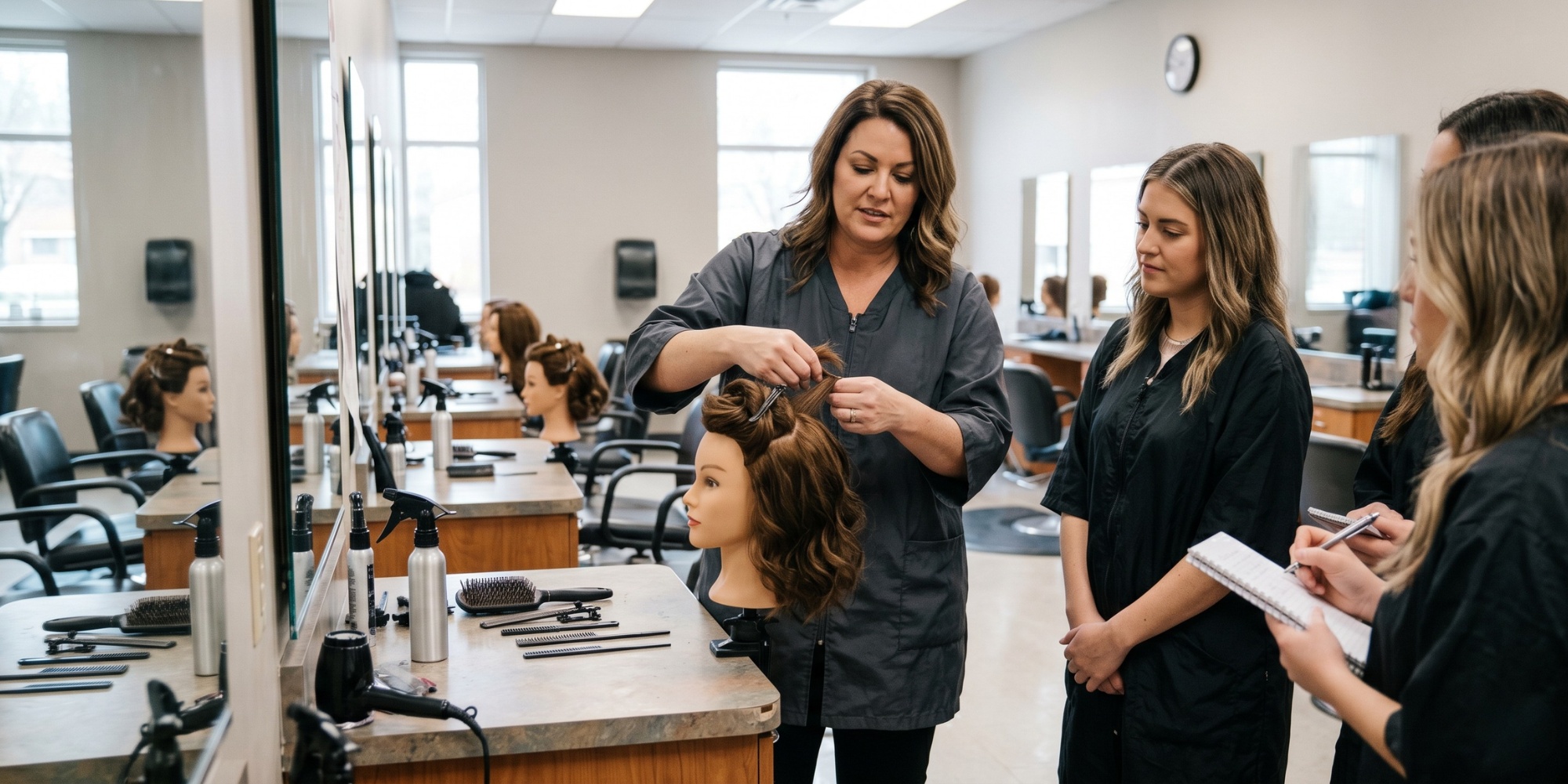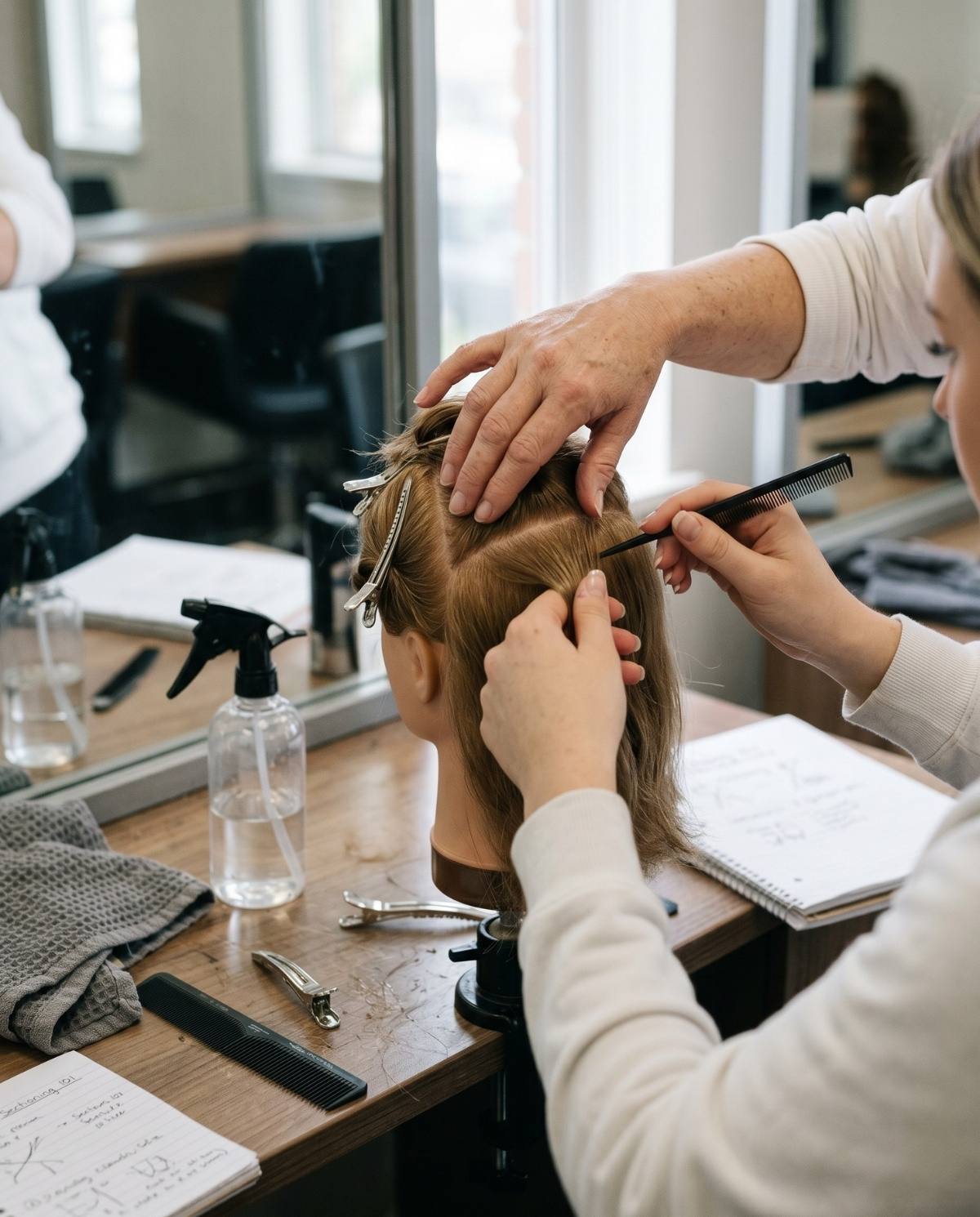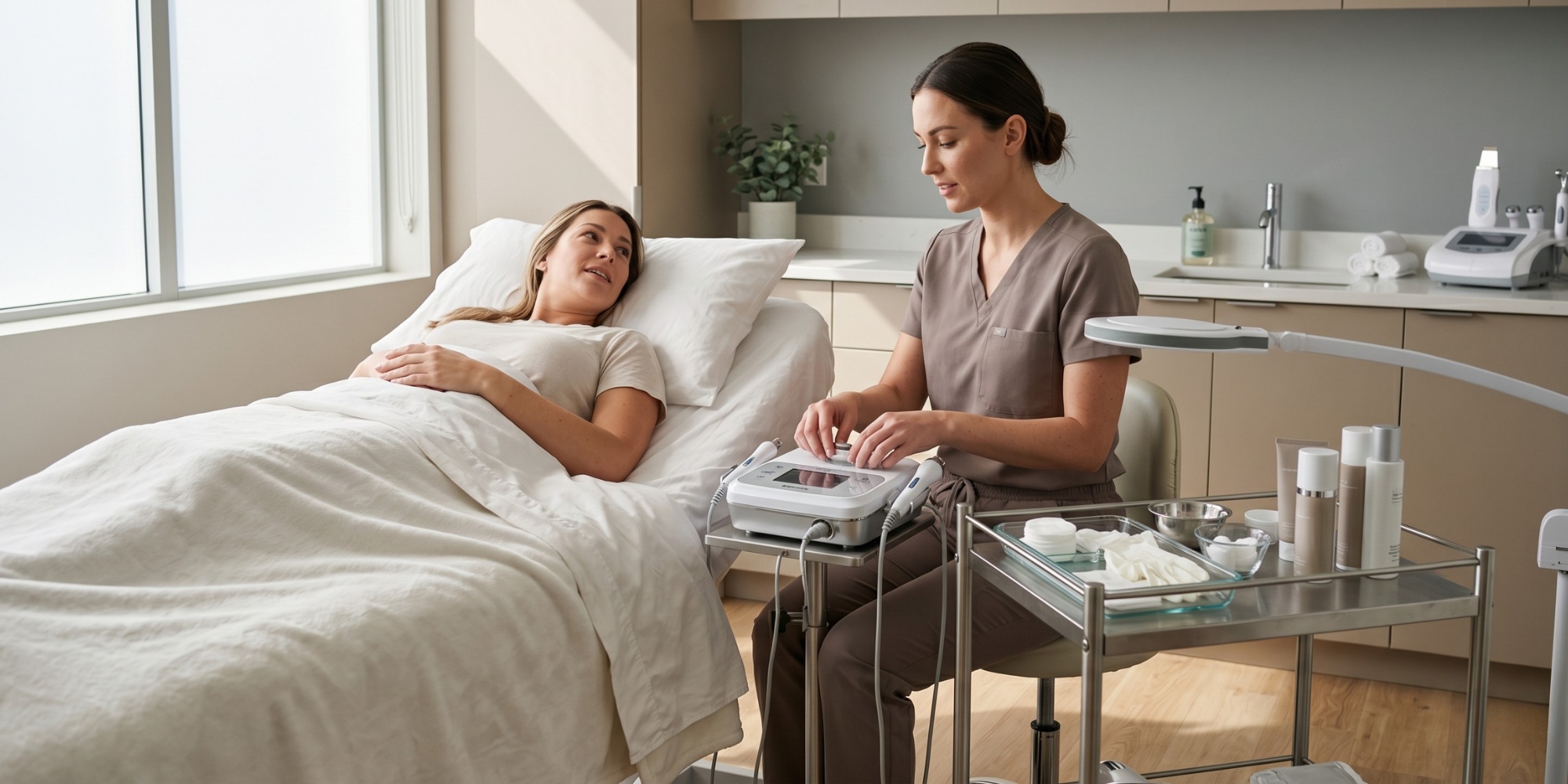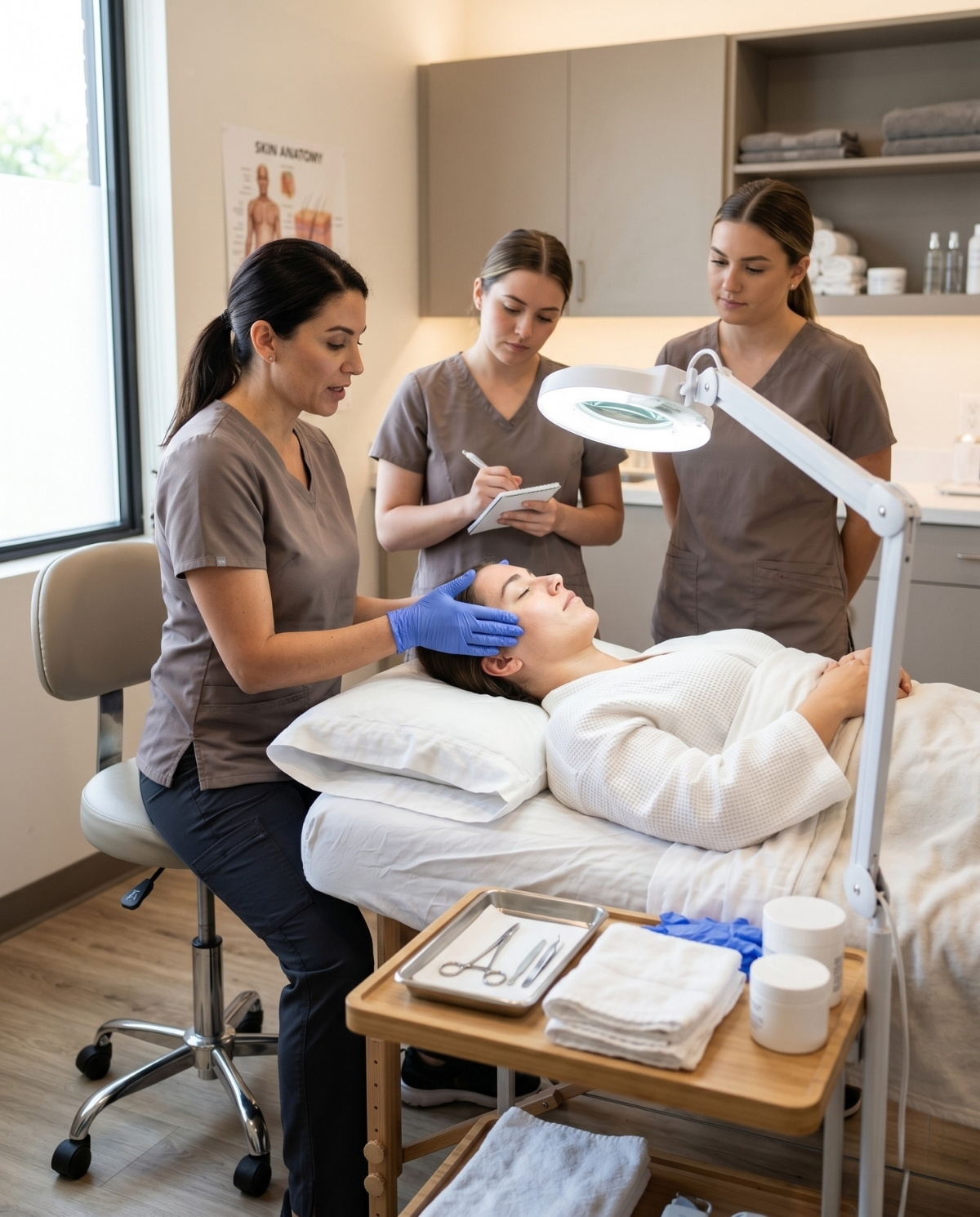

Stepping into the beauty industry usually means devoting years to perfecting your craft behind a styling chair, manicure desk, or treatment bed. Over time, you build a loyal following, master complex chemical formulations, and learn to manage every client personality that walks through the door. However, many experienced professionals eventually face a physical bottleneck. Dealing with constant back strain or early signs of wrist fatigue makes it clear that your earning potential is completely tied to your physical stamina.
Transitioning into a role of professional authority is a natural next step for an experienced stylist, esthetician, or nail technician. Even so, many people hesitate because of self-doubt. Knowing how to execute a flawless chemical peel or map out a precise balayage doesn’t automatically mean you feel ready to lead a classroom full of distracted students.
This hesitation comes from a common misunderstanding: assuming that teaching is just an extension of doing. In reality, performing a beauty service requires an entirely different skill set than transferring that knowledge to a beginner. A dedicated beauty instructor school doesn’t waste time re-testing your technical execution. Instead, it works as a professional development hub that transforms your hands-on talent into structured teaching authority.
Key Takeaways
- Pedagogy Over Practicality: You aren’t relearning basic trade skills. You are learning the structural science of curriculum design and how to teach those skills to others.
- Psychological Training: A major component of your education involves classroom management, public speaking, student assessment, and understanding adult learning behaviors to maintain authority.
- Modern Tech Adaptability: Programs increasingly prepare you for the digital evolution of beauty schools, including hybrid theory delivery, learning management systems, and digital records.
- Regulatory Expertise: You graduate with stronger compliance awareness, learning how state board rules, student-hour tracking, and scope-of-practice laws affect daily instruction.
Learning How to Teach, Not How to Style
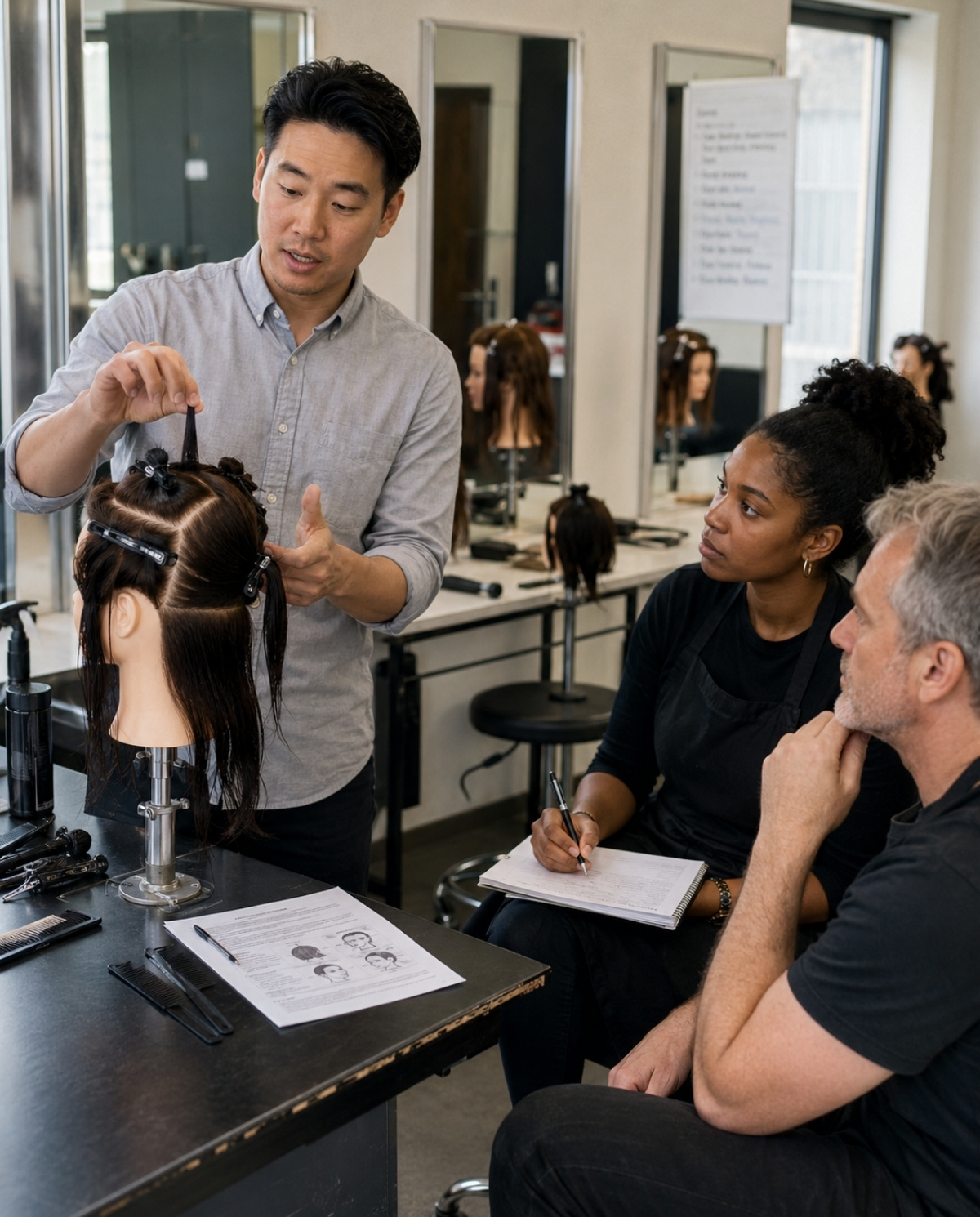
The primary reason professionals avoid enrolling in a beauty instructor program is the fear of paying tuition to re-learn basic trade skills. However, a state approved beauty instructor training program assumes your technical competency is already at a commercial standard. Your coursework shifts heavily toward pedagogy—the systematic study of instructional methods and curriculum delivery.
When you enter a cosmetology instructor program, your core objective is learning how to externalize implicit knowledge. Experienced beauty professionals work by muscle memory and intuition; you know exactly how much tension to apply to a section of hair or how deeply to compress skin during manual extractions, but you do it without thinking. Teacher training forces you to break these automatic physical actions down into structured, linear verbal directives.
Instead of operating on gut feelings—like saying “I just feel the correct angle”—pedagogical deconstruction trains you to deliver precise instructions, such as “Hold the section at a 45-degree angle parallel to the parting.”
Through focused beauty school instructor training, you learn how to map out a comprehensive syllabus, design daily lesson plans, use instructional aids, assess student work, and align practical assignments with state testing parameters. This matches the way instructor-training curricula are commonly structured: courses often cover teaching roles, teaching styles, student challenges, curriculum development, lesson-plan creation, student assessment, and supervised lab instruction. To fully grasp how these day-to-day teaching obligations fit into a larger professional trajectory, it helps to review our deep dive on becoming a beauty instructor, including daily duties and career paths explained. This underlying architecture is what elevates an everyday stylist into an elite educator, mastering the ability to transition smoothly from leading a conceptual lecture in the morning to supervising a chaotic, live clinic floor in the afternoon.
The 4-Step Architecture
Legitimate teacher training frameworks, such as the curriculum structures mapped out by the International School of Beauty, Coastal Alabama Community College, and formal teacher-training curriculum outlines, focus heavily on the practical application of structured teaching methods. Coastal Alabama’s cosmetology instructor training, for example, includes teaching and curriculum development, teacher mentorship, lesson-plan implementation, student assessment, and the four-step teaching method. Other teacher-training outlines also include instructional techniques, organization techniques, lesson planning, evaluation methods, supervised classroom instruction, and supervision of students in classroom or laboratory settings.
The point is not to make you practice hair services as if you were a beginner again. The point is to grade your ability to prepare a lesson, present it clearly, guide students through practice, and evaluate their performance objectively. Instead of simply saying a haircut or acrylic set is “wrong,” you learn how to build performance objectives, rubrics, and corrective feedback that make the student understand why the result missed the standard.
Classroom Management and the Psychology of Adult Learning
The anxiety of standing in front of a classroom and freezing, or losing control of student behavior, is a significant psychological barrier for new teachers. To address this, instructor training focuses heavily on educational psychology, communication, student motivation, and adult learning principles.
Adult learners require different instructional strategies than younger students. They are usually practical, goal-oriented, and shaped by previous work and life experience. In a beauty classroom, that means the strongest lessons do not stay abstract. They connect theory directly to real salon problems: sanitation failures, uneven color results, over-filing damage, poor consultation habits, client safety, state-board exam performance, and the income consequences of weak technique.
You will study how to identify and balance various learning modalities—ensuring your daily beauty instructor training plans cater simultaneously to visual, auditory, and kinesthetic learners. A student who struggles with textbook theory may finally understand the same concept through a live demonstration, diagram, guided practice, or side-by-side correction on a mannequin.
Furthermore, you will master advanced classroom management techniques. This goes beyond simple discipline; you learn how to balance differing technical aptitudes, diffuse friction between competitive students, redirect distracted learners, and keep digital-native generations engaged without losing professional authority.
By understanding how adult students absorb, resist, and apply new information, you can confidently guide them through the complex cosmetology licensure pathway. This psychological preparation replaces stage fright with a calm, commanding classroom presence. If you want to explore the complete roadmap to getting certified, check out our comprehensive guide on how to become a beauty instructor and all what you need to know.
Navigating the Modern Digital Classroom
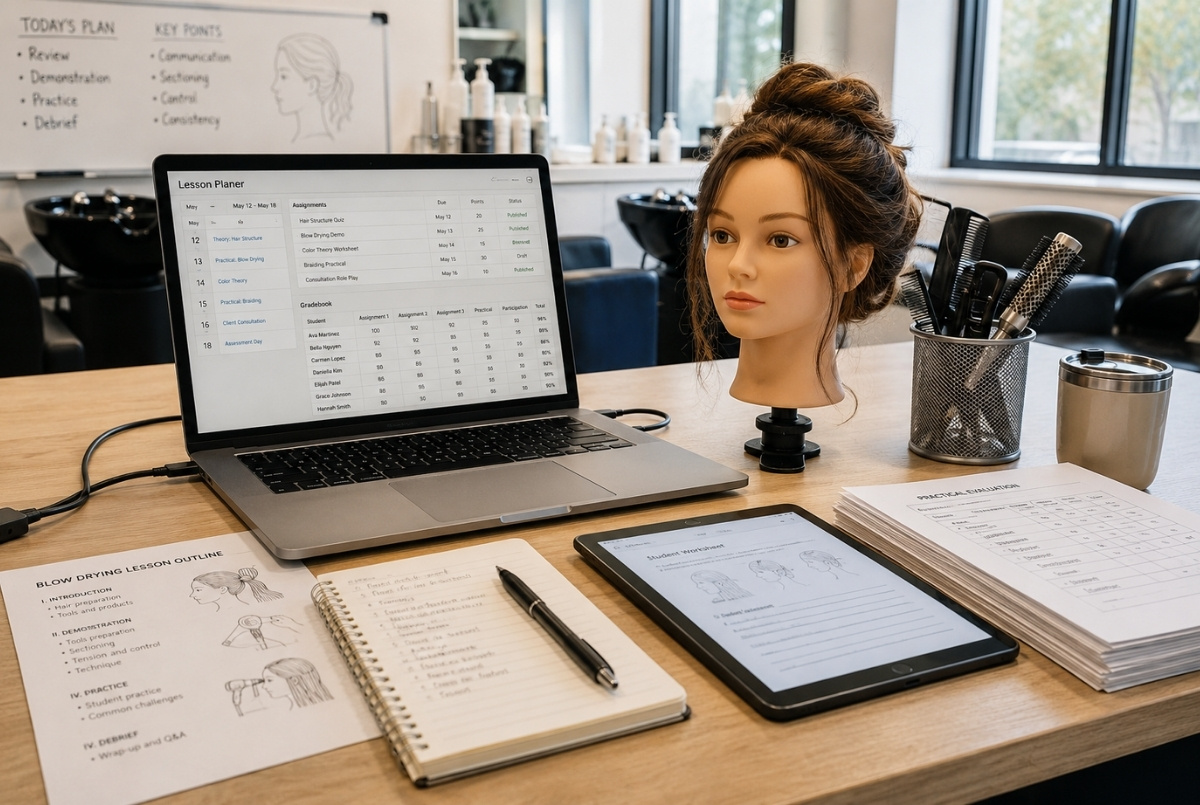
The beauty industry has integrated deep tech, from digital booking ecosystems to AI-driven skin analysis apps. Consequently, modern beauty education has evolved far beyond dry-erase boards and paper hand-outs.
When you enroll in a beauty educator course, your training may expose you to hybrid theory delivery, online learning platforms, digital gradebooks, student-hour tracking systems, and video-based teaching tools. If you pursue a cosmetology instructor program with online or hybrid components, it is important to understand the distinction: theory may be delivered digitally in some programs, but licensure-focused instructor training usually still requires state-approved supervised teaching, practical evaluation, and in-person or monitored clinic/lab experience.
Your preparation shifts from simple classroom setup to a multi-layered digital ecosystem. You learn how to organize lesson content inside learning management systems, structure hybrid lesson plans, track student progress, and use digital resources without weakening the hands-on discipline required in beauty education.
You will study how to evaluate student progress through documented assessments, design assignments that work both online and in the classroom, and deliver engaging video-supported lectures. This training directly prepares you for the operational realities of modern beauty schools, while also broadening your career potential to include brand education, remote corporate training support, online consulting, and curriculum development roles.
Digital Tools in the Classroom
Modern beauty classrooms are increasingly supported by digital learning tools, but it is safer to treat augmented reality and simulation as emerging tools rather than universal standards. Some cosmetology instructional plans already reference learning management systems, email access, digital client record systems, online learning platforms, visual aids, and technology orientation as part of the student experience, such as the instructional framework outlined by ABC Adult School. Teacher-training curricula may also incorporate platforms such as Zoom, Milady MindTap, and pre-recorded classes when distance learning is approved.
For future instructors, the real skill is not simply knowing how to click through software. It is knowing when technology clarifies a lesson and when it distracts from the tactile, safety-sensitive nature of beauty training. A strong instructor can use a video demo to preview a haircut, an LMS quiz to reinforce sanitation rules, and a digital rubric to document progress, while still requiring supervised practice before a student ever works on a live client.
Licensing, Laws, and State Board Demands
A major vulnerability for many beauty academies is regulatory compliance. A key component of your instructor education is mastering the administrative laws that govern state-approved training.
Your beauty educator training will focus heavily on parsing your state’s legal scope of practice—the exact statutory boundaries defining what a licensed professional can legally perform. You will learn how to design practical exams that mirror state board evaluation rubrics, document student hours properly, and keep instruction aligned with the licensing outcomes your future students need.
Furthermore, state regulations are changing to reflect shifting consumer demographics, safety expectations, and public health priorities. Your training teaches you how to systematically break down statutory changes and new laws, analyze their educational impact, update the school’s curriculum, and maintain institutional compliance.
For instance, recent Illinois Department of Financial and Professional Regulation (IDFPR) updates state that barber and cosmetology curricula must include specified training on different hair types and textures. The same update also adds a one-time abnormal skin growth education requirement for new applicants and renewals after January 1, 2026, with IDFPR initially approving Impact Melanoma’s free online “Skinny on Skin” program to help applicants and licensees comply. Understanding this administrative side of cosmetology instructor education makes you a highly valuable asset to school owners, transforming you from a tactical teacher into a critical compliance leader.
Niche Specialization: Tailoring Your Teaching Path
While pedagogy principles are universal, your training will teach you how to apply them directly to your specific beauty discipline.

Esthetics Instructor Focus
If you are entering an esthetics instructor training program, your coursework focuses on teaching skin analysis, sanitation, contraindications, cosmetic chemistry, and skin histology. You will learn how to guide students safely through the complexities of the skin’s lipid barrier—the protective surface layer of lipids that helps reduce moisture loss—and monitor exfoliation treatments within the legal scope of practice.
The instructor-level challenge is not simply explaining what a cleanser, exfoliant, or serum does. It is teaching students how to evaluate skin conditions, recognize when a service should be modified or refused, document client observations professionally, and understand the difference between cosmetic guidance and medical diagnosis. Your training prepares you to teach students how to analyze product ingredient labels critically, moving them past superficial marketing fluff and into hard science.
Nail Instructor Focus
For those in a specialized nail instructor program, the training emphasizes salon ergonomics, infection control, chemical polymerization, product ratios, dust control, mechanical safety, and safe electric file techniques. Polymerization—the chemical reaction that links monomers to form acrylic enhancements—is not just a chemistry word in this context. It affects odor control, product curing, client sensitivity, enhancement strength, and long-term nail health.
You will learn how to teach the precise engineering of structured enhancements, proper apex placement, safe filing pressure, and sanitation steps that protect both students and clients. The goal is to keep your students injury-free, technically confident, and compliant with state safety standards.
No matter your specialty, completing a formal training program ensures you can explain the deep scientific reasoning behind every service, elevating your professional credibility.
Reducing Redundant Training Barriers
While the global cosmetology and beauty academy market is projected to reach $9.61 billion in 2026, according to Business Research Insights, schools still need qualified instructors who can teach, supervise, document, and adapt as state rules evolve. That is why regulatory efficiency matters: experienced teachers should not always have to repeat training they have already mastered when adding a related teaching credential.
Illinois offers a clear example. The recent IDFPR update says licensees with the necessary education and experience may add additional teacher licenses without completing lengthy, redundant training. Instead, they may take only the courses not already included in another profession’s curriculum. The newsletter gives the example of a licensed cosmetology teacher seeking barber teacher licensure who may need to complete only the missing shaving and facial hair subjects, rather than repeating a much longer crossover curriculum.
That kind of rule change matters because it recognizes the difference between real competency gaps and bureaucratic repetition. For an experienced instructor, the future of beauty education is not about restarting from zero. It is about proving what you know, filling the specific gaps, and bringing more qualified teachers into classrooms faster without weakening public safety.
Your Next Power Move: Join the Legacy at Dalton Institute
The transition from a salon stylist, esthetician, or nail technician into a licensed educator is the ultimate power move for your career. It shifts you away from the physical fatigue of the service floor and positions you as an industry leader. But to truly command a classroom, you need an educational foundation that matches your ambition. You need a program built on real-world excellence, compliance awareness, and proven results.
At Dalton Institute, we do not just prepare you to pass a state exam—we prepare you to lead. With 20+ years in business and 80+ years of combined industry experience, we know exactly what it takes to guide you through this transition seamlessly.
Why Future Educators Train with Us
Through our distinct curriculum approach, we bridge the gap between classroom theory and real-world academy operations. We don’t just teach you the mechanics of lesson planning; we immerse you in active, modern classroom environments where you learn to manage diverse student personalities, use modern classroom tools, and run a productive clinic floor under expert mentorship.
Our comprehensive instructor training program equips you with the competitive advantages required to step into educational roles with confidence:
- Pedagogical Blueprint Mastery: Lean on precise training in lesson planning, teaching methodologies, curriculum creation, and instruction delivery methods to design stronger lessons for adult learners.
- Compliance and Administrative Leadership: Build working knowledge of state regulatory laws, student-hour tracking, student assessment, record keeping, and curriculum compliance so you graduate as a more valuable asset to school owners.
- Modern Classroom Management: Build confidence with digital tracking systems, learning platforms, visual aids, and classroom technology while maintaining the hands-on supervision beauty education requires.
When you blend your years of practical salon experience with our professional training structure, you create a long-term career trajectory with massive industry leverage.
Step Off the Salon Floor and Into Your Authority
We are entirely dedicated to developing graduates who are fully prepared for the realities of the industry. Our specialized training path is built for experienced professionals who are ready to turn their craft knowledge into structured teaching ability.
You have already proven you can master the craft behind the chair. Now, it is time to master the art of teaching it. Don’t let your hard-earned experience stay locked in muscle memory. Turn it into a sustainable, fulfilling career that shapes the future generation of beauty professionals.
Ready to step away from the chair and see our mentorship in action? Head over to our Enrollment page to discover how to get started on your application or to set up a personal tour of our campus. You can also drop your details and questions in the contact form below to get in touch with an admissions representative today. Let’s discuss how we can transition your hands-on talent into professional educational authority.
Frequently Asked Questions
What is the difference between a beauty educator and a beauty school instructor?
A licensed beauty school instructor usually works inside a state-approved or licensed school, teaching the curriculum students need for licensure. A beauty educator may work for a brand, salon group, private training company, or product manufacturer, teaching product knowledge, advanced techniques, or business education. Those private or brand roles often do not require a school instructor license unless the person is teaching state-mandated curriculum inside a licensed school.
Do I need to maintain my salon license once I get an instructor license?
Usually, yes, but requirements vary by state. Many instructor licenses are tied to an active underlying cosmetology, esthetics, barbering, or nail technician license, so applicants should verify renewal rules directly with their state board. The safest approach is to keep your base professional license in good standing while maintaining any instructor credential required in your jurisdiction.
What are cosmetology instructor CEU classes, and are they mandatory?
CEU stands for Continuing Education Unit. Some states require instructor-specific continuing education before renewal, while others set general licensee CE rules or no CE requirement at all. When required, these courses may focus on sanitation law updates, scope-of-practice changes, teaching methods, safety standards, educational technology, or classroom management rather than basic salon services. Always check your state board’s current renewal rules before assuming the number of hours or course type required.