
How Much Does Cosmetology School Cost and How Can You Pay for It?

Choosing a path in the beauty industry is an exciting way to build your own creative freedom and gain financial independence. But let’s be real for a minute—the moment you start looking over tuition rates, tool kit costs, and registration fees, it is completely normal to feel a wave of anxiety. A lot of prospective students worry they won’t be able to afford a quality program, or they fear getting stuck with high-interest personal debt before they ever get to practice their first haircut.

You do not have to fund your training entirely out of pocket or clear out your savings on day one. Because professional beauty programs are structured around strict technical hours to meet state licensing rules, there are real, legitimate financial systems set up to help you handle the bills. If you want to dive deeper into what you can actually do once you get your credentials, checking out career paths you can pursue with a cosmetology license can give you a great idea of the landscape ahead. By learning how federal student aid, specialized grants, military benefits, 529 plans, and tax credits work, you can map out a smart, safe strategy to pay for your education.

Key Takeaways

  • Title IV Status is Everything: Federal funding through the FAFSA is only an option if your chosen beauty academy participates in Title IV federal student aid programs. Beyond basic accreditation, double-check that the school has an active Federal School Code and that your specific track is aid-eligible.
  • Look at the Full Price Tag: The base tuition rate doesn’t tell the whole story. You need to prepare your budget for extra costs like required professional styling tools, textbooks, uniforms, and state board fees.
  • Attendance Directly Controls Your Funding: Trade programs usually track your progress using clock hours rather than typical college credits. Missing class doesn’t just hold back your skills—it stops your hour count, which can delay your financial aid payouts.
  • Alternative Savings Help: State-level workforce support, private scholarships, VA education benefits, 529 plans, and federal tax credits can heavily lower your costs, but rules depend heavily on your location and student status.

Breaking Down the Real Cost of Your Education

Cosmetology tools, tuition estimate forms, calculator, and budget notebook arranged on a desk for beauty school cost planning.

Before you start filling out financial aid paperwork, it helps to understand how beauty schools package their expenses. One of the biggest mistakes I see people make is checking the base instructional rate and assuming that is the final number they need to pay. Trade school billing structures are quite different from traditional universities, which means the smarter question to look at is not just how much is tuition for cosmetology school but rather what the full cost of attendance looks like.

The total cosmetology school cost shifts depending on your geographic location, how long the program runs, the depth of the curriculum, and what elements are packaged together. On average, the overall cost for cosmetology school lands somewhere between $5,000 and $20,000 across the country according to financial data compiled by SoFi Financial Insights. If you are specifically hunting for a cosmetology school under $10,000, your choices will likely be limited to regional vocational tech centers, community college certificate tracks, or schools located in smaller, rural markets.

To get an accurate picture of the average cost for cosmetology school, you have to look into the mandatory student kit fees. Accredited beauty academies usually require you to buy a professional-grade kit filled with high-quality shears, styling irons, mannequin heads, sanitizing products, and textbooks. You will use these tools daily on the clinic floor, and they stay with you long after graduation to help launch your career.

Analysis from the Renaissance Academie Cost Analysis shows that student kits and learning materials can add a massive upfront expense to your bill, with one example listing those specific costs at about $2,498. Some institutions build these fees directly into the main tuition price, while others expect you to pay for them separately before your first class starts. When you are figuring out how to pay for cosmetology school, make sure to ask the admissions team whether the student kit, uniforms, and state board prep items are bundled into the advertised price or billed as standalone fees.

Always request the full cost of attendance budget. A thorough institutional budget accounts for tuition, registration fees, books, equipment, transportation, and licensing expenses. This is a critical detail because financial aid offices use this complete cost of attendance number—not just the base tuition rate—to calculate the maximum amount of aid you are allowed to receive.

Can You Use FAFSA for Cosmetology Training?

Beauty school applicant reviews a financial aid checklist and laptop form while preparing documents for cosmetology school funding.

The number one question on most prospective students’ minds is whether they can use fafsa for cosmetology school tracks. Yes, federal student aid may be available for cosmetology training, but only if the specific campus and program are approved to participate in Title IV federal student aid programs. While school accreditation is a great sign of quality, it isn’t the final step for federal funding. The U.S. Department of Education maintains official Federal School Code Lists, and you need to make sure the institution appears on those lists with a valid code.

Filing your Free Application for Federal Student Aid can open the door to federal Pell Grants, federal student loans, and other forms of aid for eligible students. However, when you choose a cosmetology school with fafsa approval, you will find that the money is handled differently than it would be at a standard four-year college. Traditional colleges pay out aid based on semesters or quarters. Trade schools, on the other hand, frequently measure your progress through clock hours, which track the physical time you spend sitting in class or working on clients in the student salon.

When you attend a cosmetology school with financial aid, your funds are usually disbursed in parts that are directly tied to the completion of specific blocks of hours and instructional weeks, rather than a calendar date. The Federal Student Aid Handbook clarifies that these payment periods require you to successfully clear your target hours and weeks of instructional time before the next round of funding drops.

As outlined by the Continental School of Beauty Financial Guides, beauty school aid is released in segments as students clear specific milestones. Because of this setup, skipping classes causes a domino effect: it slows down your hour accumulation, pushes back your financial aid disbursements, and can leave you with a temporary unpaid balance on your account until you make up the time. To save yourself from stressful surprises, I highly recommend asking the financial aid office whether the program track is Title IV eligible, what code to use, and how the hour milestones affect your payouts before enrolling.

Securing Grants and Free Funding Options

If you want to complete your training with minimal debt, your main focus should be on tracking down options that do not require repayment. The most common federal option for this is the Federal Pell Grant, which is awarded based on financial need determined by your FAFSA data. According to the maximum Federal Pell Grant scheduled award documentation, the highest award is $7,395, though your actual payout depends on your personal financial eligibility, enrollment status, and program structure.

Beyond the federal system, you should look into private grants for cosmetology school that are funded by beauty brands and non-profit foundations. The American Association of Cosmetology Schools notes that organizations like Beauty Changes Lives offer seasonal scholarships that may help aspiring professionals pay for tuition, tools, supplies, or other education-related costs.

If you are balancing a family alongside your educational goals, look into targeted demographic funding. There are often specific cosmetology grants for single mothers, as well as state-funded retraining benefits for low-income adults, career changers, or displaced workers. These resources do not always have beauty in the name. Many local community foundations, workforce development boards, and vocational rehabilitation programs offer educational vouchers for approved job-training paths.

Depending on where you live, state-level grants can change the game, but you have to verify your program eligibility carefully. For instance, the Georgia Student Finance Commission provides the HOPE Career Grant to qualified students, but only for selected high-demand programs of study. You cannot assume every track qualifies, so it is always best to have the financial aid office confirm whether your exact program matches the current state approval list. A similar cautious approach is needed if you look at paths like Paul Mitchell The School Arkansas financial aid pathways to check for regional workforce funding or vocational rehabilitation support.

For those with a military background, you might be wondering if does va pay for cosmetology school. Veterans and their dependents can frequently use GI Bill® educational benefits to pay for approved trade school courses. The VA GI Bill Comparison Tool notes that the Post-9/11 GI Bill can be applied to colleges, universities, trade schools, apprenticeships, and licensing or certification tests, including cosmetology license tests. Just make sure to connect with the school’s certifying official to verify that the program is approved.

529 Savings Plans, Tax Credits, and Cash Options

If federal grants leave you with a remaining balance, or if you do not qualify for need-based aid, you can use alternative financial strategies to bridge the gap. For example, parents often ask can 529 be used for cosmetology school. Under the latest Chase Investment Insights on 529 Rules, you can generally use these savings plans to pay for tuition, fees, books, and required equipment at eligible vocational schools. Federal updates have also made it easier to use these funds for qualified postsecondary credentialing costs, including professional licensing exam fees.

However, you need to be smart about how you handle these withdrawals. While 529 distributions are typically tax-free at the federal level when used for qualified educational costs, state tax treatments can vary. The publication Saving for College notes that states may define qualified expenses differently, so it is incredibly important to save all your receipts, match your plan withdrawals to the exact same calendar year you paid the school, and check your specific state laws.

If you are trying to figure out how to pay for cosmetology school without financial aid from the government, remember that you may not have to hand over the entire sum on day one. Do you have to pay for cosmetology school upfront? Not necessarily. Many beauty institutions offer internal monthly installment plans that spread your remaining balance across the total months you are in school. This can make it easier to pay your way through the program out of pocket while keeping a regular job, but make sure to review the contract terms first and ask your chosen school exactly what payment options are available.

You can also claw back some of those out-of-pocket costs when tax season rolls around. You can potentially claim your beauty school tuition on your taxes using the federal Lifetime Learning Credit, provided the school qualifies as an eligible institution under IRS rules. According to the IRS Lifetime Learning Credit guidelines, the credit covers 20% of the first $10,000 you spend on qualified educational expenses, giving you a maximum credit of $2,000 per tax return. Keep in mind that this is a non-refundable tax credit, not a deduction—it can bring your tax bill down, but it won’t send you a surplus refund check if you do not owe taxes.

The Reality of “Free Cosmetology School” Offers

While you are digging into your options, you are almost guaranteed to see online ads or social media posts promising secrets to get cosmetology school for free. I highly recommend taking these claims with a heavy dose of skepticism. Unaccredited online platforms often use these catchy headlines as clickbait to collect your personal contact information, leaving you with a fake certificate that won’t legally allow you to sit for your state board exam.

Getting a high-quality beauty education with zero out-of-pocket debt usually requires a strategy called aid stacking. This is where you combine a federal Pell Grant with localized private scholarships, state workforce vouchers, VA benefits, vocational rehabilitation support, institutional aid, or a payment arrangement to reduce your balance. Your personal combination depends entirely on your financial background, residency, military status, school eligibility, program approval, and how proactive you are with application deadlines.

Instead of hunting for unrealistic shortcuts, investing your time in an accredited, professional training facility is the most reliable way to build a stable career. The beauty industry continues to show strong, consistent growth. According to the U.S. Bureau of Labor Statistics, employment opportunities for hairstylists, barbers, and cosmetologists are projected to grow 5% from 2024 to 2034, moving faster than the national average for all occupations.

The sheer variety of directions you can go after finishing your hours is massive. As detailed in the Boulevard 2026 Cosmetology Career Outlook, you can transition into high-end salon work, bridal styling, beauty entrepreneurship, film or television makeup artistry, or salon management. If you want to know what is legally permitted under your credentials, reading up on working as a barber, lash tech, or nail tech with a cosmetology license will help you see how far your training can take you. Picking a fully approved program ensures you get the legal and practical foundation required to build a lasting career.

Frequently Asked Questions

Can I keep a full-time job while going to beauty school?

Yes, but it takes a lot of organization and stamina. Many beauty academies offer flexible scheduling models, including morning, evening, or weekend tracks to accommodate working adults. However, because clock-hour programs require you to physically log every single hour to graduate, you need to choose a schedule you can realistically stick to without burning out or missing class.

What happens to my financial aid if I have to take a break from school?

Because trade programs use clock hours, taking an official leave of absence will pause your hour count and delay your upcoming financial aid payouts. If you end up withdrawing from school permanently, the financial aid department has to use strict federal calculation rules to determine exactly how much aid you actually earned based on the hours you completed. If you leave early, you might find that you owe a sudden cash balance directly to the school.

Can you claim cosmetology school on taxes and cover state board exam fees?

Yes, you can potentially claim the education costs on your taxes using the Lifetime Learning Credit, and you may also find that your financial aid covers the actual exam costs depending on how your specific academy builds its student budgets. The Federal Student Aid Handbook explains that for programs requiring professional licensure, the official cost of attendance can include an allowance for exam fees and application costs. Be sure to ask your financial aid office how this is handled.

Are private beauty school scholarships incredibly hard to win?

While massive national scholarships get a ton of entries, a surprising number of local, industry-specific awards get very few applicants because students assume they won’t win and never apply. Knowing your worth and having a clear view of your future can give you an edge. Spending some time researching everything you need to know to enroll in a cosmetology school this year can help you write a much more passionate, focused scholarship essay that stands out to judges.
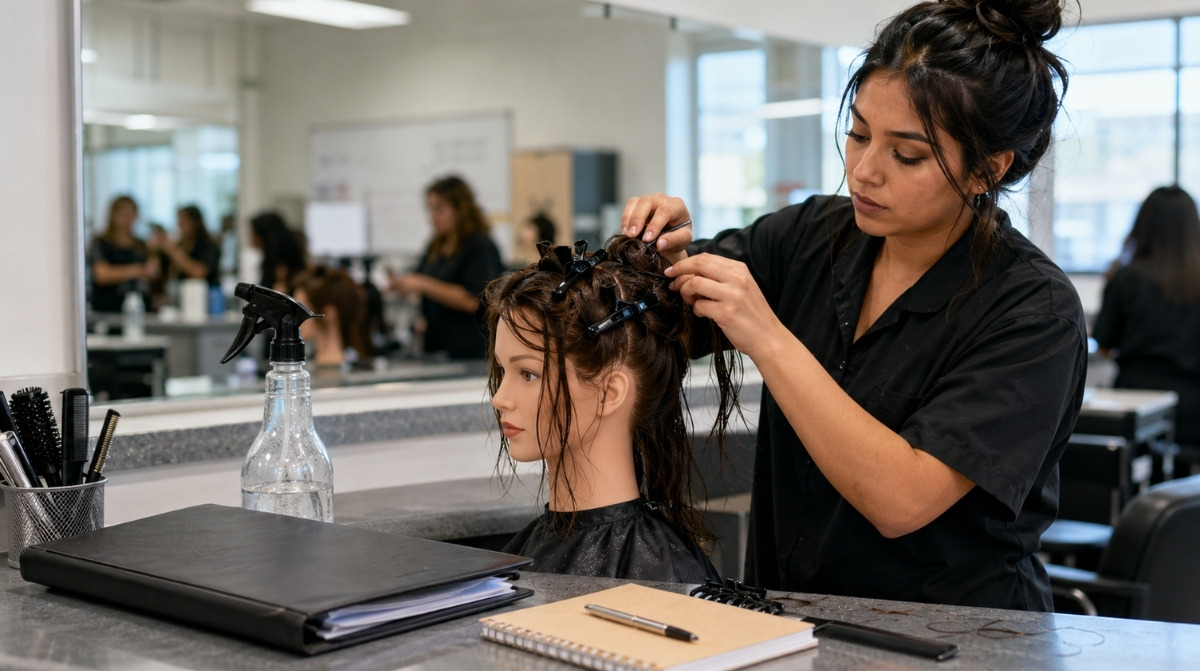
Cosmetology student practices hairstyling on a mannequin while a financial planning folder sits nearby in a salon classroom.

Ready to Get Started?

Figuring out how to pay for your education is the first major step toward turning your creative passions into a rewarding career. It is all about finding an academy that supports your goals while helping you navigate the financial side of things clearly and honestly.

The right training program will give you hands-on practice, professional-grade tools, and the consistent preparation you need to face your state licensing exams with complete confidence. Whether you want to focus on hair styling, color specialization, or salon management, starting with a clear financial plan makes the journey so much smoother.

If you want to explore how the process works for your personal situation, take a look at our Enrollment section to review the enrollment process, learn what to bring for a campus visit, and discuss available schedule options with an admissions advisor. You can also use the contact details on the site to reach out, ask questions, walk through the paperwork, or book a campus tour.
Nail Tech Program vs Cosmetology Program: Breaking Down the Real Differences

Deciding to enter the beauty industry is an exciting turning point, but it often comes with a big question: do you go broad or go deep? Choosing between a cosmetology or nail technician program is really about deciding what kind of daily life you want to lead in the salon. Some people love the variety of doing everything from highlights to pedicures, while others find their calling in the intricate, high-detail world of being a nail technician or nail artist.

In today’s market, being a professional means more than just being good with a brush. It’s about understanding the chemistry of the products you use and keeping your clients safe. Whether you want to be a “Beauty Generalist” who can handle any request or a “Technical Specialist” who masters one craft, your choice of education is the foundation for everything that comes next.

Key Takeaways for Your Career

  • Fast-Track to Licensing: A specialized nail technology program is usually the fastest way to get your license and start your own business, often requiring significantly fewer hours than a full cosmetology course.
  • Strong Industry Growth: The specialized market for nails is expanding rapidly, with reports showing a 10.7% CAGR through 2029, which is actually outpacing many other beauty sectors.
  • Safety and Compliance: Professional training is essential for navigating modern regulations like MoCRA and OSHA standards, ensuring you work safely with professional chemicals.
  • Niche Earning Power: Specializing allows you to position yourself as an expert, which often leads to higher client retention and the ability to charge premium prices for your artistry.

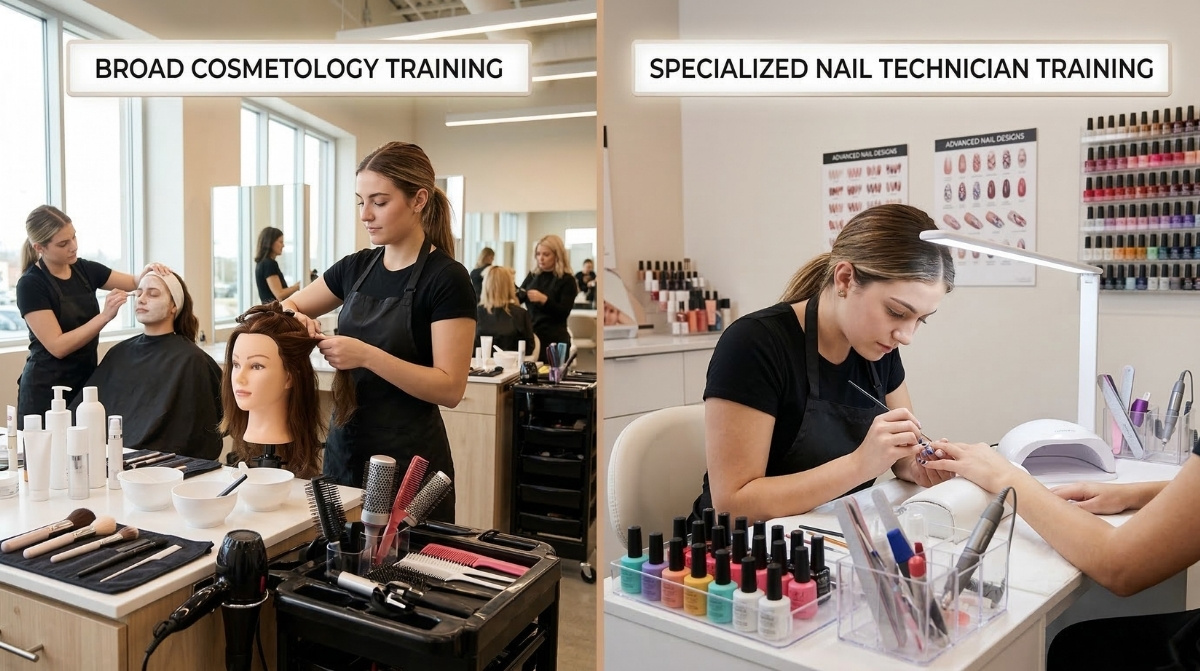
A side-by-side comparison of two beauty career paths in a modern training environment: one side showing a student practicing diverse hair and skincare services, and the other side showing a student performing detailed nail work at a professional manicure station.

Choosing Your Path: The Generalist vs. The Specialist

When you look at the difference between cosmetology and nail technology, it really comes down to the scope of your license. Cosmetology is the most comprehensive path you can take. In Georgia, this requires 1,500 hours of training and covers hair, skin, and nails. I find that this is the best route for people who want total career flexibility. If hair trends change or you want to move into skin care later, a cosmetology license gives you the legal “sovereignty” to pivot your services without going back to school.

On the other hand, a nail technology program is a focused deep-dive into the science of hands and feet. By spending 600 hours on specialized training, you can get through school much faster and start earning sooner. You’ll spend your time mastering nail chemistry, anatomy, and advanced sanitation. If you want to see a detailed breakdown of what this looks like, I recommend checking out this beginner’s guide to launching your nail technology career to see the curriculum steps.

Pro Insight: Navigating 2026 Regulations

Safety is becoming a huge focus for the feds. Under MoCRA, there is more oversight on how cosmetic products are tracked and reported. In the salon, OSHA also requires us to maintain safety data sheets for our products. A high-quality beauty program helps you understand these technicalities so you can run a professional, compliant business from day one.

Defining Your Brand: Identity and Artistry

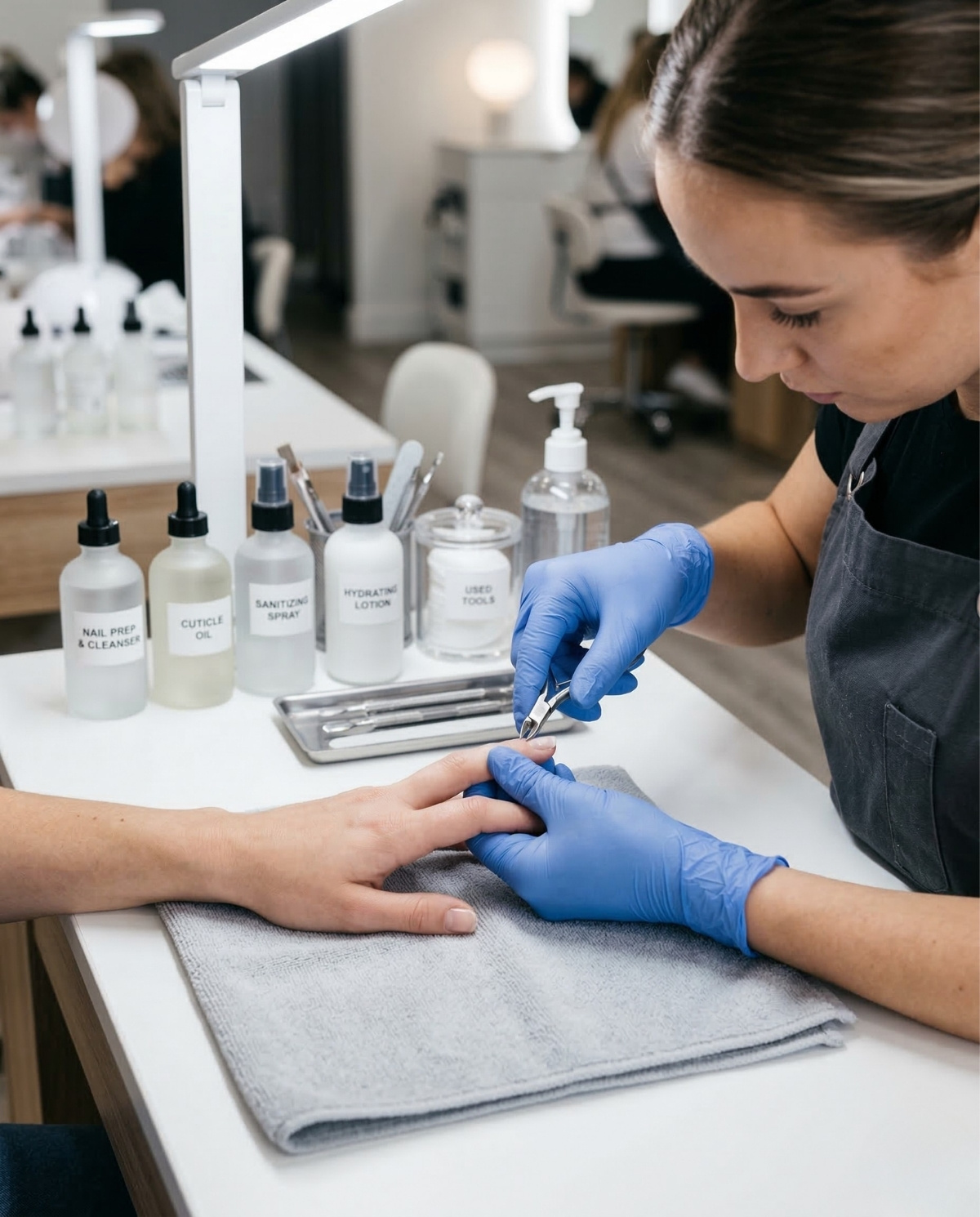
A professional nail training close-up of a beauty student wearing blue nitrile gloves performing a precise manicure at a sanitized workstation with labeled hygiene bottles and sterile implements.

I often talk to people who wonder about the difference between being a nail technician or nail artist. To me, the license is your legal foundation, but your branding is what sets your price point.

In a professional nail tech program, you learn the technical “Why” behind the work – like how to avoid over-filing or how to manage chemical reactions. A technician provides a solid, safe service, but a nail artist uses that technical foundation to create a transformation. In 2026, the most successful pros are those who use their school training to launch specialized niche studios that focus on high-end, artistic results.

For those who lean toward the broader cosmetology path, the career options are massive. There are so many career paths you can pursue with a cosmetology license, ranging from editorial work and film sets to becoming a brand educator for major international lines.

The ROI of Your Time

If you want to get into the workforce as fast as possible, the nail technology program is the clear winner. You can often finish your boards and be working in under six months. This is perfect for entrepreneurs who want to open a salon suite quickly without the time commitment of a year-long program.

However, the career safety net of cosmetology is worth the extra time if you aren’t 100% sure you only want to do nails. While it takes longer to graduate, you are essentially protected against downturns in any specific niche because you can offer so many different services.

Market Insight: The Growth Paradox

The nail sector is seeing a trend called “Premiumization.” According to Technavio’s 2025-2029 Nail Salon Market Report, the specialized nail market is growing at a 10.7% CAGR. I’ve noticed that clients are increasingly looking for specialized boutiques rather than general salons, which is great news if you decide to focus your training.

Wellness and Science in Modern Beauty

A confident nail professional in a beige blazer presents elegant finished nail art to a client in a refined, soft-lit boutique studio, highlighting a luxury beauty career and professional success.

One thing that really separates a pro education from a DIY hobby is the focus on biological integrity. I’ve seen how important it is to understand the physiology of the nail to prevent long-term damage.

Recent industry literature is leaning heavily into wellness-first protocols. For instance, a study in Skin Appendage Disorders showed that specific professional formulations can significantly improve nail hardness. Even newer research from 2025 on Advanced Dry Manicure Techniques suggests that moving away from water soaking can improve product performance and sanitation. Being in a licensed program ensures you are learning these evidence-based techniques.

Which Path Is Right for You?

Choosing between these two programs really depends on your long-term goals.

  • Pick Cosmetology if you want the freedom to work across hair, skin, and nails and want a license that lets you pivot as the market changes.
  • Pick Nail Technology if you have a great eye for detail, love the science of nail chemistry, and want to start your own specialized business in record time.

Ultimately, your success isn’t just about the license you hold, but the level of mastery you bring to your clients every day.

Ready to Start Your Professional Journey?

The beauty industry in 2026 needs more than just workers – it needs professionals who are ready to lead. At Dalton Institute, we focus on making sure you are ready for the reality of the salon from the moment you graduate. We believe in bridging the gap between the classroom and the high-end professional world through mentorship and hands-on experience.

If you are ready to turn your passion into a real career, I invite you to see what makes our approach different. You can find all the details on how to get started on our Enrollment page.

I’d love to help you figure out which program fits your goals best. If you have questions, feel free to fill out the contact form below, and let’s start building your future together.

FAQ: The Professional Reality Check

What happens if I get a Nail Tech license but want to do hair later?
You will likely need to enroll in a full cosmetology program. While some hours might transfer depending on your specific situation, you generally have to complete the hair-specific training from scratch. This is why I recommend the specialist path only if you are certain that nails are your primary passion.

Is the nail tech market too full in 2026?
The demand for high-quality, safe services is actually still growing. The U.S. Bureau of Labor Statistics projects 7% growth for the field through 2034. In my experience, if you offer high-quality work and maintain great client relationships, there is always plenty of room for you to succeed.

Does a cosmetology license let me work in a medical spa?
It’s a great starting point, but med-spa work usually requires additional specialty training or separate certifications depending on the service. For example, in Georgia, certain cosmetic laser procedures are regulated by the Georgia Composite Medical Board. Always check your local laws for specific med-spa roles.

How to Get a Cosmetology License: A Detailed Guide to Requirements and Exams

I remember when I first started looking into the beauty industry, I felt like I was trying to learn a new language. I knew I had the talent for styling and the passion for the craft, but the legal side of things felt incredibly heavy. I often see people get stuck in the research phase because information about how to get a cosmetology license is usually scattered across dozens of different government websites and forums.

I want to simplify this for you. I’ve seen many students navigating the beauty niche, and I have learned that while the process seems complicated, it actually follows a very specific rhythm. Whether you are looking for a traditional path or wondering if you can get cosmetology license without school, I can show you how to navigate the system without the usual stress.

Just keep in mind that the beauty industry is regulated on a state-by-state basis. This means that while the general steps I outline here will apply to almost everyone, the specific details like the exact number of hours or the cost of the application will depend on where you live.

Confirm Your Specific State Board Requirements

I always tell people that the most expensive mistake you can make is guessing about what your local board expects from you. I find that when people look up cosmetology license requirements or generic cosmetology requirements by state, they are usually trying to find a shortcut to avoid wasting time.

I suggest starting with a direct visit to your state board website. You should look for details regarding the total training hours required, the specific types of written and practical exams you need to take, and the current fees for applications.

For instance, California requires at least 1,000 hours of instruction for any program that is approved by the board. Similarly, Virginia has moved to a 1,000-hour cosmetology curriculum as of late 2025. Because these numbers can change, I recommend verifying your specific cosmetology requirements directly with your state board to stay safe.

Deciding on Your Training Path

I think of this stage as choosing the foundation for your career. There are two primary ways to get the training you need.

The Traditional School Route

The most common way to enter the field is by enrolling in a licensed cosmetology school. I believe this is the best option for people who want a structured environment with a set curriculum. When you look at how to enroll in cosmetology school, I suggest focusing on programs that are approved by your state board. If you plan on using federal financial aid, you should also make sure the school is properly accredited.

Pursuing a Cosmetology Apprenticeship

I often hear from people who want to find a way to get cosmetology license without school. In most states, this actually refers to a formal cosmetology apprenticeship. This path usually involves a combination of paid work experience under a mentor and some classroom instruction.

At the federal level, these are often called Registered Apprenticeship programs. I have seen states like California offer this as a more affordable way for trainees to get their foot in the door. If this sounds like the right fit for you, I recommend checking with your state apprenticeship agency or using the search tools on Apprenticeship.gov to see if your state recognizes this path.

Planning Your Financials and Timeline

I know that the time and cost involved can feel overwhelming. I often see people trying to figure out how long does it take to get a cosmetology license so they can plan around their current jobs or family responsibilities.

Your total timeline is usually built from your training hours, the time it takes to get on the testing schedule, and the state’s internal processing speed. In California, for example, the board notes that while online applications move faster, paper applications can take up to eight weeks to process.

Financial Aid and Tax Benefits

I suggest looking into federal aid if you are worried about the cost of tuition. You can use the Federal Student Aid school code search tool to see if a specific program is eligible for aid. If you cannot find a school code, Federal Student Aid explains it usually indicates that the school does not participate in federal programs.

I also find it helpful to look at potential tax benefits. According to the IRS, you may be able to claim qualified education expenses if you attend an eligible educational institution, which often includes trade schools that participate in Department of Education aid programs.

Applying for Your License and Testing

Once you finish your training, the next step is managing the paperwork. I have noticed that the process of how to apply for cosmetology license usually follows the same pattern across the country: you finish your hours, submit your application, get approved to test, and then sit for your exams.

States like California use online portals like BreEZe to make this easier for you. You can use these portals to manage your application, change your address, or even verify your license later on.

Preparing for the State Board Exam

I find that most students aren’t actually afraid of the material; they are just nervous about the pressure of the test day. The cosmetology state board exam usually consists of a written portion and a practical performance.

Many states use exams developed by the NIC, which publishes Candidate Information Bulletins. These are essential reading because they outline exactly what you will be tested on. Other vendors like Prometric also provide bulletins that detail the practical side of the test.

I always advise my students that the key to how to pass cosmetology state board exam is to treat the practical portion like a choreographed performance. You should practice your sanitation and setup until they are second nature, as these procedural steps are where people often lose the most points. I have even seen discussions on Reddit where professionals point out that structured, step-by-step practice is much more effective than just general studying.

Keeping Your License Active

I believe that getting your license is just the beginning of your professional responsibility. You will need your license number for everything from job applications to renting a salon booth.

Renewals and Transfers

It is vital to know how to renew a cosmetology license before your current one expires. In New York, licenses are good for four years and can be renewed online. Texas also provides a clear online flow for cosmetology license renewal, which includes a section for disclosing any changes in your background or contact information.

If you decide to move, you will need to look into a cosmetology license transfer from state to state. This is often referred to as a cosmetology license by reciprocity. While some states like Virginia are working on a licensure compact to make this easier in 2026, you currently have to apply to the new board based on your previous training and work history.

Handling Expired Licenses

I suggest being very careful with your expiration dates. In Pennsylvania, letting a license lapse for more than five years means you have to retake the exam. Florida has a particularly strict policy for null and void licenses, where you have to prove major hardship to get them reinstated.

Navigating Special Circumstances

I know that some people worry that their background or personal situation might prevent them from getting licensed. I have found that there is usually more flexibility than people think.

  • SSN and ITIN: Some boards, like the one in California, are authorized to accept an ITIN if you do not have a Social Security Number.
  • Legal History: Many states require you to disclose a criminal history, but they often review these situations on a case-by-case basis. Texas, for example, includes a section for this in their standard renewal flow.
  • Education: While most schools require a high school diploma or a GED, the exact rules can vary by school and state policy.

Final Steps for Your Career

I find that the best way to avoid feeling overwhelmed is to follow a simple checklist:

  1. Identify your state board and their specific hour requirements.
  2. Select a training path that fits your budget and learning style.
  3. Complete your hours and submit your application online.
  4. Use official exam bulletins to guide your practice.
  5. Pass your exams and verify your license through the official state portal.
  6. Set a reminder for your first renewal date immediately.

I believe that once you have your license, you can explore so many different paths, from fashion styling to salon management. It is all about getting that initial foundation right.

If you are looking for a place to start your journey, I recommend looking into the options at Dalton Institute. I find that they have a very clear approach to helping students navigate the path from enrollment to licensure. You can find out more about the process on their Enrollment page.

If you are ready to start moving toward your career in beauty, please feel free to use the contact form we have provided below. I would love to hear which part of the industry you are most excited about so we can help you find the best way forward.