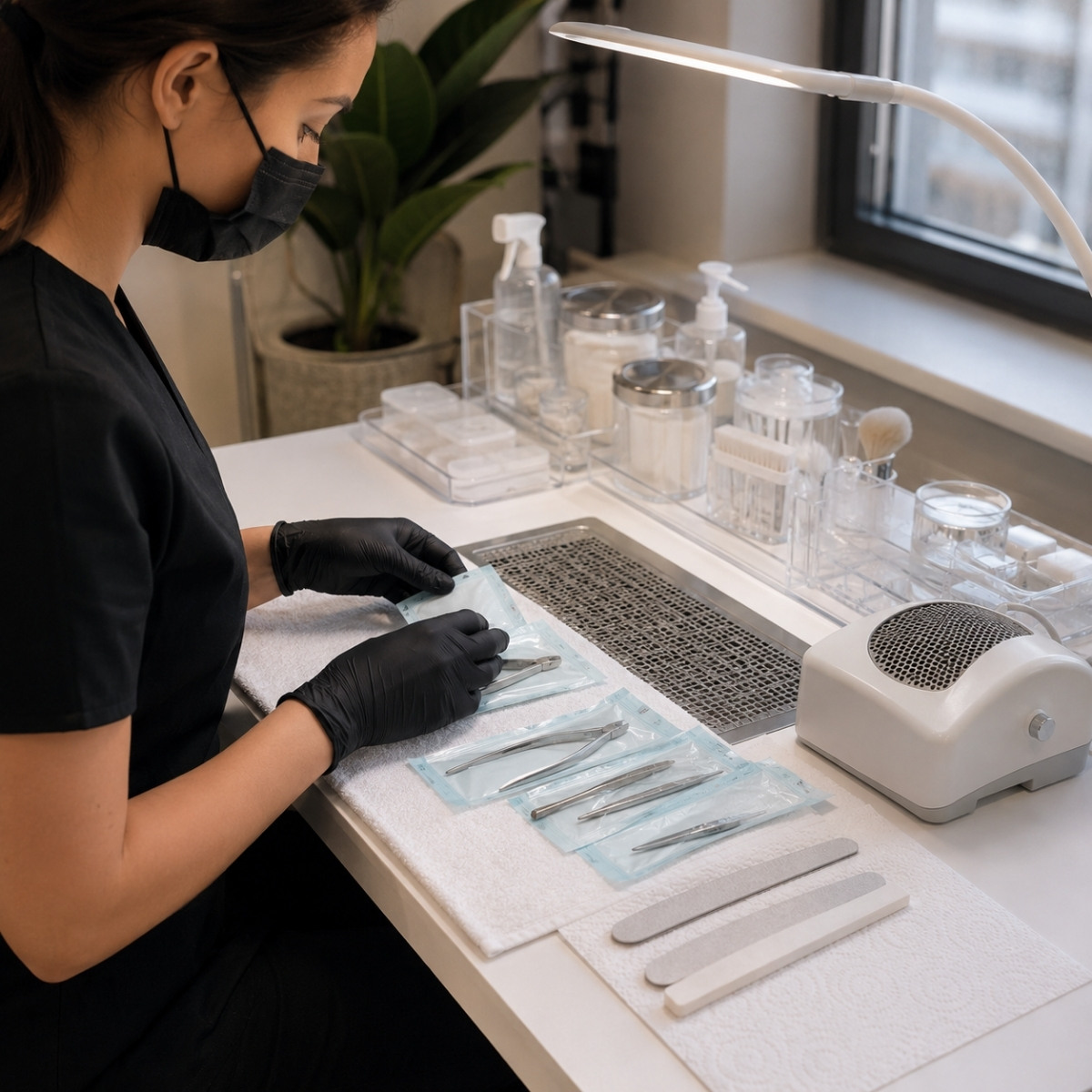
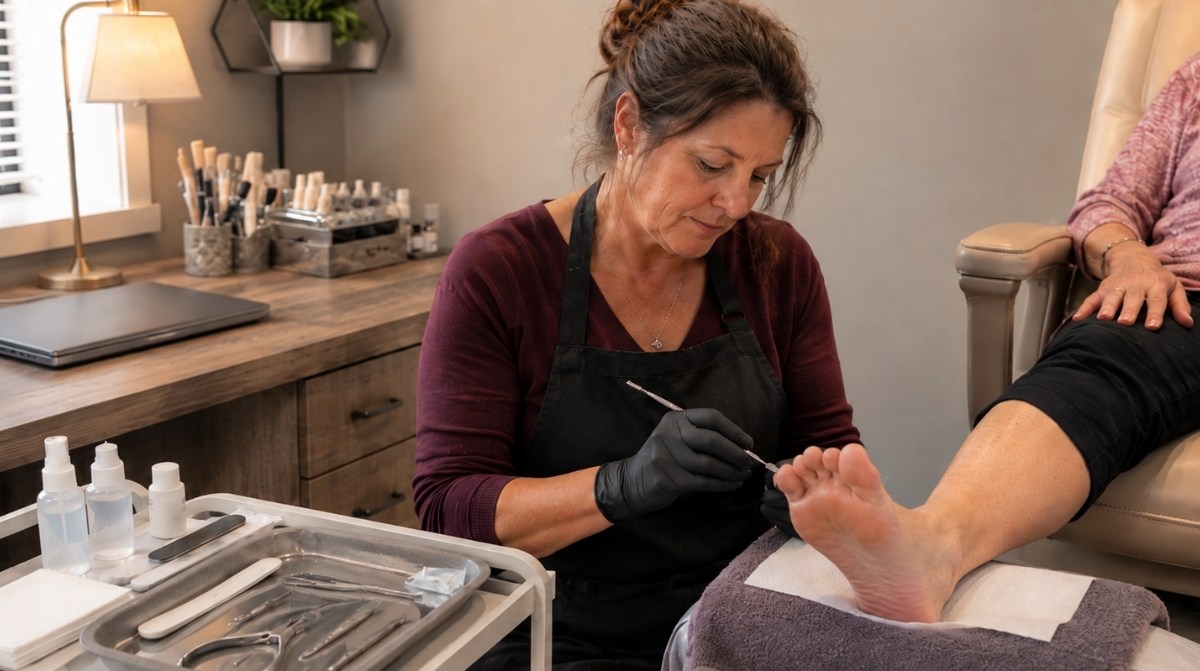
A packed appointment calendar can look like career success while still leaving a nail professional physically and mentally drained. Repeatedly rushing between clients, working around product fumes, and relying heavily on tips may eventually make a more deliberate specialty appealing. For some technicians, advanced education centered on sanitation, detailed client consultation, and safer service decisions offers a possible next direction.
The need for thoughtful nail and foot care is not based on age or diagnosis alone. Many older adults and people with diabetes can receive salon services when appropriate precautions are followed. However, fragile skin, reduced sensation, circulation concerns, or existing foot problems can make ordinary service decisions more consequential. The Centers for Disease Control and Prevention estimates that 40.1 million Americans had diabetes in 2023, illustrating how many people may need to take additional care when maintaining their feet.
This is one reason more beauty professionals are asking what is a medical nail technician. Advanced safety education may help a licensed technician make better service decisions, communicate more effectively with clients, and build relationships with healthcare professionals without stepping outside the limits of cosmetic nail care.
What You Should Understand About This Specialty
- It Builds on an Existing Beauty License: A Medical Nail Technician, often shortened to MNT, is generally a licensed nail technician or cosmetologist who has completed additional private education related to infection prevention, chronic-condition awareness, visible risk recognition, and appropriate referral.
- It Does Not Create Medical Authority: An MNT certificate is not a government-issued medical license. It does not authorize diagnosis, wound care, treatment of disease, surgery, or services prohibited under the technician’s original state license.
- It May Support a Focused Service Model: Additional training can help a technician create more structured consultations and safety procedures. It does not guarantee referrals, premium pricing, employment in a medical office, or a particular income.
- State Law Remains the Final Authority: The state where the service is physically performed determines which tools, techniques, sanitation procedures, and services are legally permitted.
How Medical Nail Technicians Approach Client Care

A safety-trained nail professional may organize appointments differently from a technician working in a quick-service salon. The process may include a detailed client consultation, visible inspection of the nails and surrounding skin, careful service documentation, stronger infection-control procedures, and a clear plan for declining or modifying services when necessary.
The title Medical Nail Technician generally describes a licensed beauty professional who has pursued private advanced education related to serving older adults, people with diabetes, and clients living with certain chronic health concerns. Despite the word medical, the technician remains a cosmetic-service provider unless that individual separately holds a recognized healthcare license.
Several principles commonly shape this type of practice:
- Aseptic Work Habits: The Centers for Disease Control and Prevention defines asepsis as preventing contact with microorganisms. In nail services, this may involve hand hygiene, organized workstation preparation, appropriate single-use supplies, and correct cleaning and disinfection of reusable implements according to product directions and state rules. Asepsis is not the same as sterilization, which is a separate process intended to destroy all forms of microbial life.
- Waterless Service Options: Some advanced technicians use dry or waterless methods to reduce reliance on shared footbaths and avoid lengthy soaking. Balance Health identifies waterless care as a common feature of medical-pedicure services. The National Institute of Diabetes and Digestive and Kidney Diseases also advises people with diabetes not to soak their feet because soaking can dry the skin. A waterless method may reduce certain risks, but it does not make a service risk-free or replace required sanitation procedures.
- Conservative Cosmetic Maintenance: An MNT may perform careful nail and skin maintenance only when the client’s condition and state law permit it. Nail thickness by itself does not create one universal rule. However, painful nails, suspected infection, open skin, severe ingrowing, drainage, or significant changes in a medically vulnerable client may require evaluation by a podiatrist or another qualified healthcare provider.
- Observation Before Service: Advanced education may help a technician recognize visible reasons to modify, postpone, or refuse an appointment. The technician may record what is visible and ask relevant consultation questions, but does not conduct a medical examination or diagnose the cause of a condition.
- Cautious Product Decisions: Aggressive exfoliants and chemical callus products may be inappropriate for some clients. NIDDK specifically warns people with diabetes not to use liquid corn and callus removers because these products can damage the skin and contribute to infection. Product selection must follow the manufacturer’s directions, the client’s known risk factors, and applicable state rules.
The legal boundaries of this role are just as important as the additional knowledge. An MNT is not expected to function as a doctor, nurse, or podiatrist. The technician does not diagnose fungal infections, manage ulcers, treat wounds, prescribe medication, perform surgery, or remove living tissue.
The purpose of advanced education is to support better judgment, stronger infection-prevention habits, and timely referral. Our professional guide to nail salon hygiene and modern aftercare advice for nail technology provides additional information about reducing cross-contamination and protecting both clients and technicians during ordinary nail services.
Broader foot-care data also shows that routine maintenance represents a meaningful part of the foot-health field. Mordor Intelligence estimates that the global podiatry services market will reach $4.87 billion in 2026 and reports that routine foot care accounted for 46.87% of the market in 2025. These figures describe the podiatry market, not MNT employment or earnings, but they provide context for the wider attention given to ongoing foot maintenance.
Some podiatrists may employ safety-trained nail technicians or refer suitable clients to them for cosmetic-level maintenance. These relationships depend on state law, office policy, insurance requirements, the technician’s experience, and the services permitted under the technician’s license. Completing an advanced certificate does not guarantee that a medical provider will offer employment or referrals.
Establishing Your License Before Pursuing Advanced Education
The advanced pathway begins with the same foundation required of other professional nail technicians: approved education and the appropriate state license. A strong entry-level program should introduce nail anatomy, product chemistry, sanitation, client consultation, practical technique, and professional conduct.
Before enrolling in a specialization course, you must generally complete the licensing path required by the state where you plan to work. Our guide to the difference between a nail-school certificate and a state-issued professional license explains why graduating from school and receiving legal authorization to practice are separate steps.
Training-hour requirements vary by state. Under the Georgia State Board of Cosmetology and Barbers’ nail-care curriculum rules, a nail-care student completes 525 hours divided between Level 1 theory and Level 2 service applications. The Dalton Institute Nail Technician program is listed as a 600-hour program completed over approximately five months, placing its program length above Georgia’s minimum curriculum requirement. By comparison, the Arkansas Department of Health requires 600 hours of manicure training.
These examples demonstrate why applicants must check the rules of their own state rather than relying on one national hour requirement. Completing a foundational nail program and obtaining a license prepares you for professional practice, but it does not automatically award MNT status.
Medical Nail Technician education is privately administered rather than nationally standardized. Providers may use different credential names, course sequences, examinations, internship requirements, and eligibility rules.
One established pathway is offered by Nailcare Academy. Within that provider’s specific system, the complete MNT track includes:
- Advanced Nail Technician, or ANT, education
- Wellness Nail Technician, or WNT, education
- The Medical Nail Technician internship preparation program
- A documented 40-hour internship with a foot-care medical provider
Nailcare Academy identifies the ANT program as a prerequisite for WNT education and identifies both ANT and WNT as prerequisites for its MNT internship program. This sequence belongs to Nailcare Academy’s credentialing system and should not be presented as a legal nationwide requirement.
Before purchasing an advanced course, investigate the curriculum, instructor qualifications, examinations, practical evaluation methods, internship arrangements, graduate support, refund policies, and applicant requirements. You should also determine whether the tools or procedures taught in the program are permitted under your state license.
Combining Online Study with Supervised Experience
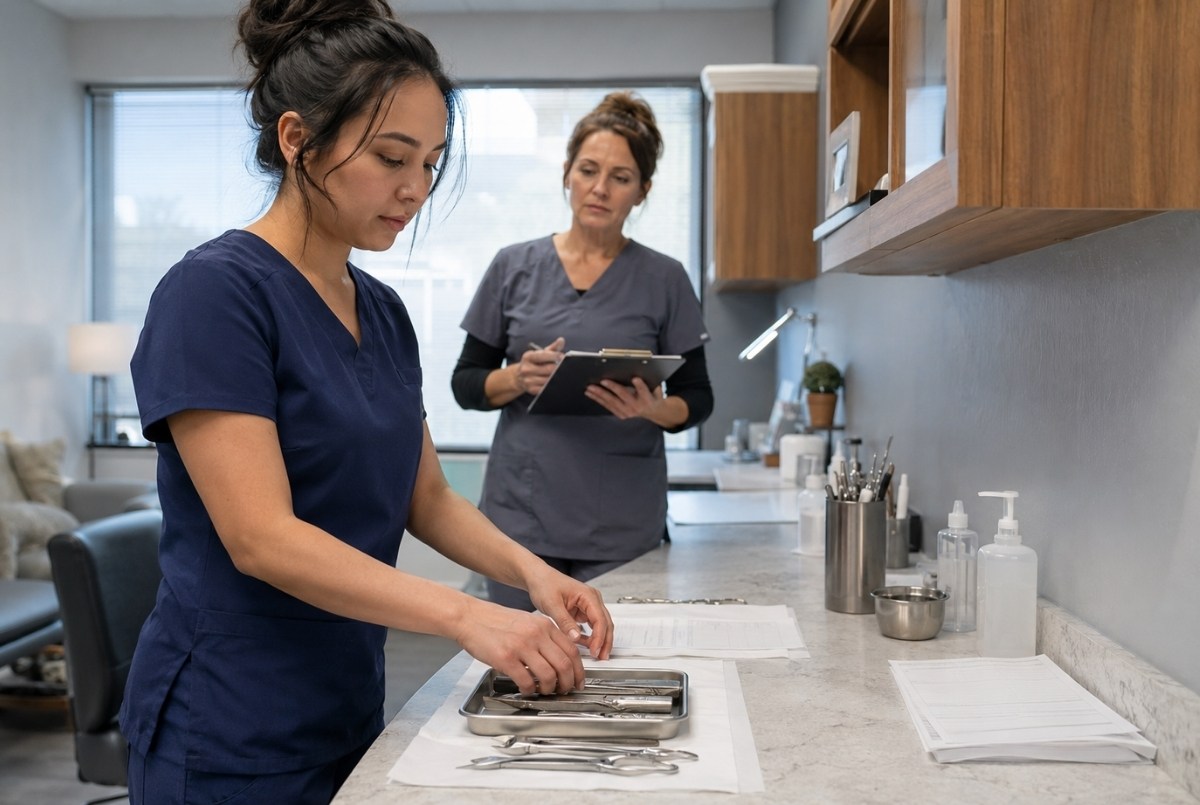
Online education can make advanced theory more accessible to professionals who are already working. Subjects such as anatomy, chronic-condition awareness, infection prevention, service documentation, and consultation procedures may be suitable for remote study.
Nailcare Academy states that its classes are delivered online. Its MNT pathway nevertheless includes instructions for obtaining and completing a separate 40-hour internship with a foot-care medical provider. The internship is intended to expose the technician to professional communication, medical-office procedures, and cosmetic-level foot care within the technician’s existing scope.
Other certificate providers may follow different structures. Because MNT is not a nationally regulated license, applicants should not assume that every online program includes the same coursework, assessment, or supervised experience.
A credible provider should explain:
- Which subjects are completed online
- How knowledge and practical competency are evaluated
- Whether an internship or hands-on component is required
- Whether the provider assists students in finding a placement
- Whether applicants must already hold an active nail or cosmetology license
- Which credential is issued after all requirements are completed
During supervised exposure in a medical setting, a technician may observe office procedures, learn appropriate communication and documentation practices, and become more familiar with visible warning signs. The technician must still avoid diagnosing neuropathy, vascular disease, fungal infection, or any other medical condition.
The Legal Limits That Advanced Certificates Cannot Change
An additional certificate may expand your knowledge, but it does not rewrite your state license. Your scope of practice remains the legal boundary for every service, regardless of whether you work in a salon, private suite, mobile setting, senior community, or podiatry office.
An explanation from Nailcare Academy about ANT, WNT, and MNT scope of practice states that a nail technician has the same scope in a podiatry office as in a salon. The technician may have additional knowledge about chronically ill clients and referral decisions, but the certificate does not authorize medical treatment.
Georgia provides a clear example. Under Georgia’s facility and sanitation rules, cosmetology services are limited to intact, healthy skin and nails. An advanced certificate does not permit a Georgia nail technician to work on open wounds, treat infected tissue, remove living tissue, diagnose disease, or perform services belonging to medicine or podiatry.
Visible conditions that may justify stopping the appointment and recommending medical evaluation include:
- Open sores, ulcers, cuts, or active bleeding
- Drainage, blisters, or suspected infection
- Unusual redness, warmth, or swelling
- Severe pain or a sudden change in the foot or nail
- An ingrown nail that has entered or broken the surrounding skin
- Thick, yellowed, curved, or distorted nails in a client with diabetes, reduced sensation, or difficulty caring for their own feet
- A client who cannot safely see, feel, or reach their feet
NIDDK advises people with diabetes to have a foot doctor trim their toenails when they cannot see, feel, or reach their feet, when the nails are thick or yellowed, or when the nails curve and grow into the skin. It also tells people to contact a healthcare provider when they notice wounds that are not healing or skin that becomes red, warm, or painful.
A certificate does not remove professional liability. Technicians must continue to follow sanitation regulations, document services appropriately, collect relevant client information, carry suitable insurance, use products as directed, and refuse procedures that exceed their legal authority.
Understanding the Career and Income Picture

Advanced education may help a technician develop a more carefully structured service model, but there is no authoritative national wage category specifically for Medical Nail Technicians. Federal employment data places these professionals within the broader manicurist and pedicurist occupation rather than tracking MNTs as a separate healthcare career.
The U.S. Bureau of Labor Statistics reports that manicurists and pedicurists earned a median wage of $16.66 per hour in May 2024. Employment is projected to grow 7% between 2024 and 2034, representing an estimated net increase of 14,700 jobs over the decade.
BLS also projects approximately 24,800 openings per year on average. These openings should not all be described as newly created jobs. BLS explains that many are expected to result from workers transferring to other occupations, retiring, or otherwise leaving the labor force.
Federal wage figures also exclude self-employed workers. This matters because BLS reports that approximately 28% of manicurists and pedicurists were self-employed in 2024. Income for a suite owner, booth renter, mobile technician, or independent specialist may differ considerably from employee wage data.
Individual business results can be affected by:
- Local demand and competition
- State restrictions on services and tools
- Employee, renter, mobile-provider, or owner status
- Appointment length and service prices
- Client retention and professional relationships
- Rent, products, equipment, insurance, taxes, and processing fees
- Unpaid time spent on scheduling, marketing, records, and cleaning
- The technician’s experience, reputation, and booking volume
Specialized knowledge may help a technician build a service experience around longer consultations, careful documentation, consistent sanitation, and individual attention. Whether that positioning supports higher prices depends on the local market and the business’s reputation. Neither an MNT certificate nor a relationship with a healthcare office guarantees premium rates or a specific annual income.
Gross service sales must also be separated from personal earnings. Rent, supplies, equipment, insurance, licensing, continuing education, marketing, payment fees, and taxes all reduce the amount the owner ultimately keeps.
The practical financial value of specialization lies in having another way to distinguish a business through knowledge, consistency, and client trust. It should not be promoted as a guaranteed escape from financial pressure or as an automatic path to a high salary.
Build the Nail Technology Foundation at Dalton Institute
Advanced specialization starts with dependable entry-level education. The Nail Technician program at Dalton Institute is listed as 600 hours over approximately five months. The program introduces students to services ranging from basic manicures to custom acrylic designs while providing hands-on experience and exposure to current nail techniques.
Dalton also lists salon business, client retention, résumé writing, job-seeking skills, teamwork, and professional development among its program features. These subjects can help students prepare for the practical and business responsibilities that follow graduation.
Georgia’s official nail-care curriculum minimum is 525 hours, while Dalton’s published program contains 600 hours. After completing the required education and obtaining the appropriate state license, graduates who are interested in health-conscious nail care may separately investigate private ANT, WNT, or MNT education.
Dalton Institute does not present its foundational Nail Technician program as a Medical Nail Technician certificate. Advanced MNT credentials must be completed through a specialized provider unless a school expressly documents that such education is included. A private certificate also cannot replace the license required by the state.
Visit Dalton Institute’s Enrollment page to review its admission process and request additional information about current program availability. You may also use the contact form below to ask the admissions team about schedules, campus options, and the steps required to begin training.
Questions Future Specialists Commonly Ask
Does an MNT certificate make someone a healthcare professional?
No. An MNT is generally a licensed nail technician or cosmetologist who has completed additional private education. The credential does not make the holder a physician, nurse, podiatrist, or other licensed healthcare provider. It does not authorize diagnosis, prescriptions, wound care, disease treatment, or services beyond the underlying beauty license.
Can clients submit MNT appointments to health insurance?
Cosmetic services independently performed by a nail technician are generally paid for by the client and are not billed to Medicare as nail-technician services. However, it is inaccurate to say that insurance never covers any foot or nail care. According to Medicare, routine services such as ordinary nail trimming and callus removal are usually not covered. Medically necessary treatment and very limited routine foot-care circumstances may be covered when Medicare’s requirements are met and the care is furnished through an eligible doctor or other healthcare provider. Being inside a medical facility does not, by itself, make a service covered.
How are ANT and MNT credentials different?
The answer depends on the private provider issuing the credentials. In Nailcare Academy’s system, ANT education comes first and focuses on advanced salon safety and professional practices. WNT education follows and addresses working more safely with older and chronically ill clients. The provider’s MNT track then includes internship preparation and a documented 40-hour internship with a foot-care medical provider. This sequence should be attributed specifically to Nailcare Academy rather than treated as a nationwide standard.
May an MNT remove fungus, correct ingrown nails, or care for diabetic ulcers?
The MNT certificate itself does not authorize diagnosis or treatment of these conditions. A technician may observe visible concerns, document what is seen, decline an unsafe cosmetic service, and recommend that the client consult a qualified healthcare provider. Whether any cosmetic maintenance can be performed depends on the condition of the skin and nails and the laws of the state where the service takes place.
Will my license automatically transfer when I relocate?
No. A private advanced certificate may remain proof of completed education, but it does not authorize practice in another state. You must satisfy the destination state’s endorsement, reciprocity, examination, education, and application requirements before working there.
The Cosmetology Licensure Compact is being developed to make interstate practice easier for eligible cosmetologists in participating states. As of July 2026, the official website states that the Compact is not yet issuing multistate licenses. Its published eligibility language refers specifically to a cosmetologist who holds an active, unencumbered license in the participating home state. A person holding only a separately classified nail-technician or manicurist license should not assume eligibility without checking the final Compact rules and the licensing classifications used by the relevant states.