Stepping into the beauty industry can feel exciting because you are finally moving toward a creative career that gives you more control over your future. But for many students, that excitement quickly turns into confusion once they start seeing state rules, clock-hour requirements, renewal deadlines, and exam steps.
You may be worried about fitting school into your schedule, passing a formal licensing test, or keeping your income stable if you already work in the industry and need to renew or move your license. Those concerns are normal. The beauty field is wide, practical, and open to many different types of students, so understanding the rules early can make the whole path feel much easier. If you want a clearer starting point, review this guide on everything you need to know to enroll in a cosmetology school this year so you can plan your next step with more confidence.
Key Takeaways
- State-by-State Licensing: Cosmetology rules are controlled by state boards, so age requirements, required training hours, exam formats, renewal cycles, and application fees can change depending on where you want to work.
- Lower-Hour Models: Several major states now use a 1,000-hour cosmetology requirement, and recent research shows that reducing required hours can raise completion, lower tuition, and expand enrollment among some groups without showing a detectable earnings decline.
- License Mobility: The Multi-State Cosmetology Licensure Compact may make interstate practice easier for eligible licensees in participating states, but it should not be treated as automatic nationwide transfer.
- Ongoing Safety Rules: Renewal requirements and continuing education help boards reinforce sanitation, infection control, legal compliance, and safer chemical-handling practices throughout a beauty career.
Why Cosmetology Rules Change From State to State
State laws decide who can legally provide professional beauty services. Since the United States does not use one national cosmetology license, cosmetology regulations by state can look very different depending on where you plan to build your career. Each board sets its own rules for legal practice, service scope, school approval, exam requirements, and license maintenance.
These rules are not designed to judge your creativity. They exist to protect public health through sanitation, infection control, skin and scalp knowledge, chemical safety, and consumer protection standards. Learning these requirements before you enroll helps you avoid delays, rejected paperwork, or training that does not match your target state.
What Licensing Boards Usually Require
When you research cosmetology license requirements by state, you will usually see rules covering minimum age, education history, approved training hours, exams, fees, and possible criminal-history disclosures. Many states require applicants to be at least 16 or 17, but the exact education and testing path is not the same everywhere. The Texas Department of Licensing and Regulation lists a 1,000-hour cosmetology operator course and a minimum application age of 17. The New York Department of State requires a 1,000-hour approved course plus written and practical examinations.
That is why a generic national checklist is never enough. A reliable plan starts with the board rules for the state where you actually want to work. A strong school can help you organize age verification, school records, exam paperwork, fee payments, and licensing steps so you do not lose time over avoidable mistakes.
Because a cosmetology license can cover many different beauty services, students often ask what they will legally be able to do after graduation. If you want a clearer look at service boundaries, this guide on working as a barber, lash tech, or nail tech with a cosmetology license can help you understand what may or may not fit under your credential.
How Required School Hours Shape Your Timeline
One of the biggest numbers to check is the number of hours needed for a cosmetology license by state. These hours decide how long you may spend in class, on the clinic floor, and in supervised technical training before you can qualify for your licensing exam. Anyone comparing cosmetology school hours by state will quickly notice that crossing a state line can change the training timeline.
For example, New York uses a 1,000-hour standard, the California Board of Barbering and Cosmetology lists 1,000 school hours for cosmetologists, and Texas also structures its cosmetology operator course around 1,000 hours. However, states such as Ohio, Georgia, and Arkansas commonly use a 1,500-hour pathway for standard cosmetology licensure, though license titles and exam structures may differ.
Before paying tuition, you should compare the cosmetology hours for each state where you may want to work. This helps you choose a program that satisfies your board instead of falling short after you graduate. If you are asking how many hours do you need for cosmetology from a cost-and-time perspective, a 2025 EdWorkingPaper from the Annenberg Institute at Brown University found that lowering required hours is likely beneficial for students because it raises completion, lowers tuition, and expands enrollment among some groups of students. The study also found no detectable effects on cosmetologist earnings. This does not guarantee the same result for every student, but it does suggest that very high hour requirements can raise the cost of entry without clearly improving earnings outcomes.
Getting Ready for the Licensing Exam
After you finish your required hours, the next major step is the official state board exam. It is normal to feel nervous here, especially if you are more comfortable with hands-on services than written testing. The exam is not about proving that you are the most artistic stylist in the room. It is about showing that you understand safe, legal, and competent practice.
Building a Better Exam Review Plan
A serious cosmetology state board exam review should go beyond the services you enjoyed most in school. The written or theory section usually tests chemical safety, infection control, sanitation, tool disinfection, hair care, skin care, nail care, and state-specific laws.
A cosmetology practice test free online can help you understand the question format before exam day. A focused cosmetology written exam study guide can also help you review topics such as chemical texturizing, product handling, disinfection, and safety procedures without feeling buried in information. Good preparation connects your practical talent with the safety knowledge required for professional licensing.
What to Know Before Test Day
- Question Count: You should check how many questions are on the cosmetology state board exam before you test so you can manage your time properly. Many states use national testing content, but the final structure depends on the board and vendor. The NIC National Cosmetology Theory Examination, for example, includes 110 total items, with 100 scored questions used for the final score.
- Practical Exam Rules: Do not assume every state still requires the same hands-on practical test. California states that, effective January 1, 2022, the practical exam is no longer required for all license types, and candidates only need to pass the written exam. Other states may still require practical, written-practical, theory, or state-law testing.
- Testing Fees: Budget for exam costs before you reach graduation. The amount can change depending on whether your state requires written, practical, state-law, or combined testing, so always check how much it costs to take the state board for cosmetology through your board or testing vendor.
- Scheduling: Your school may help you submit graduation records, but you still need to understand how to apply for the cosmetology state board exam and how to schedule a cosmetology exam through approved providers such as PSI, Prov, Pearson VUE, or another state-approved vendor.
- Difficulty Level: Students often ask how hard is the cosmetology state board exam. The better question is whether you understand the safety and competency standards. If you can confidently review sanitation, infection control, chemical safety, and the services inside your license scope, you can build a realistic plan for how to pass the state board of cosmetology on your first attempt.
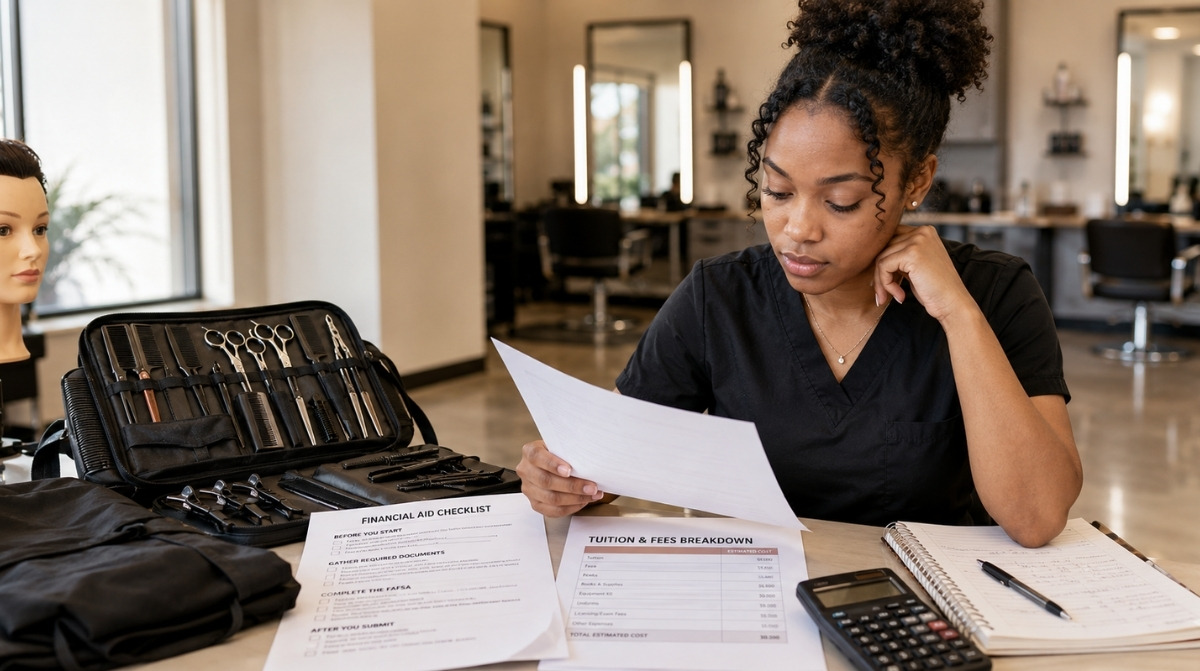
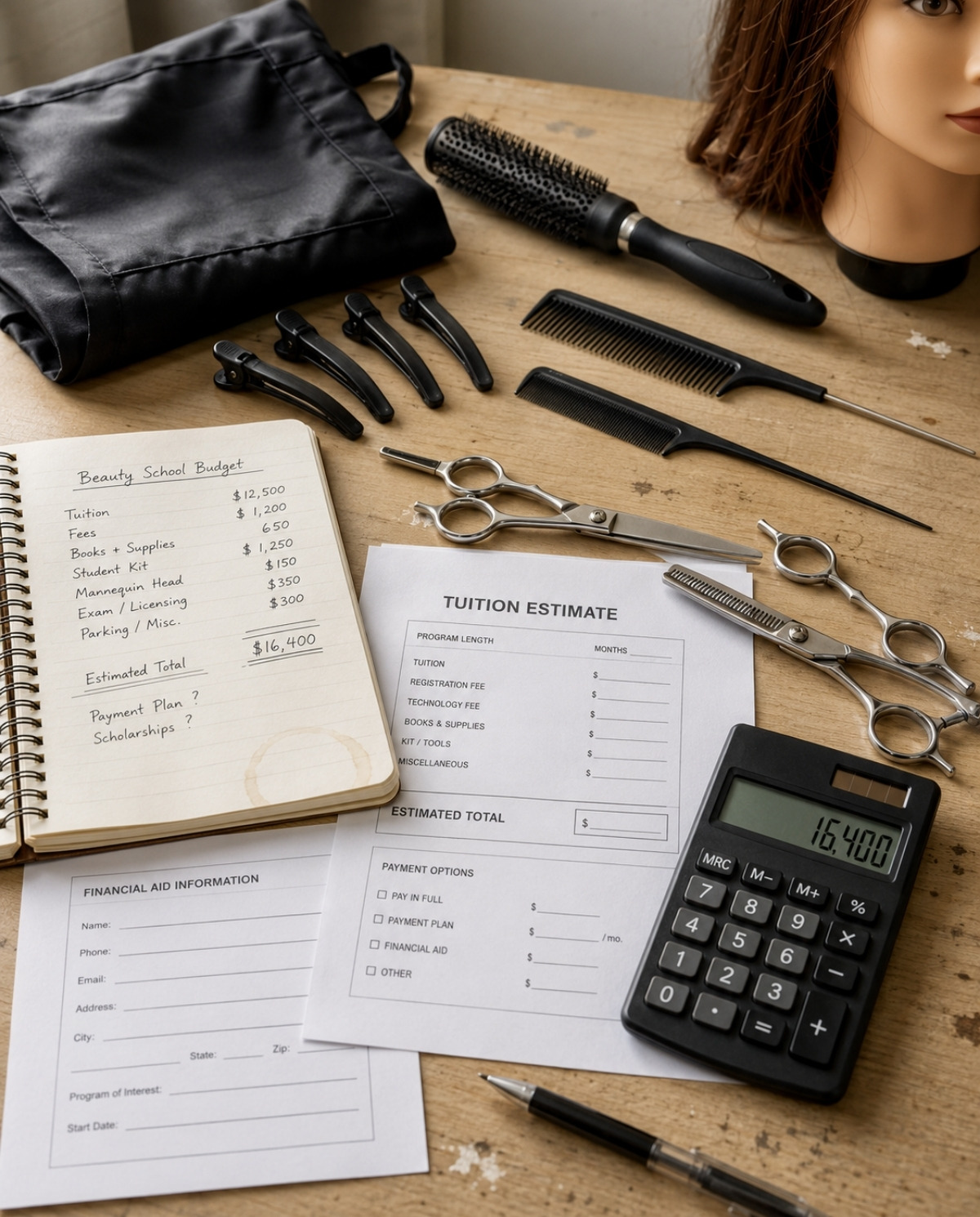
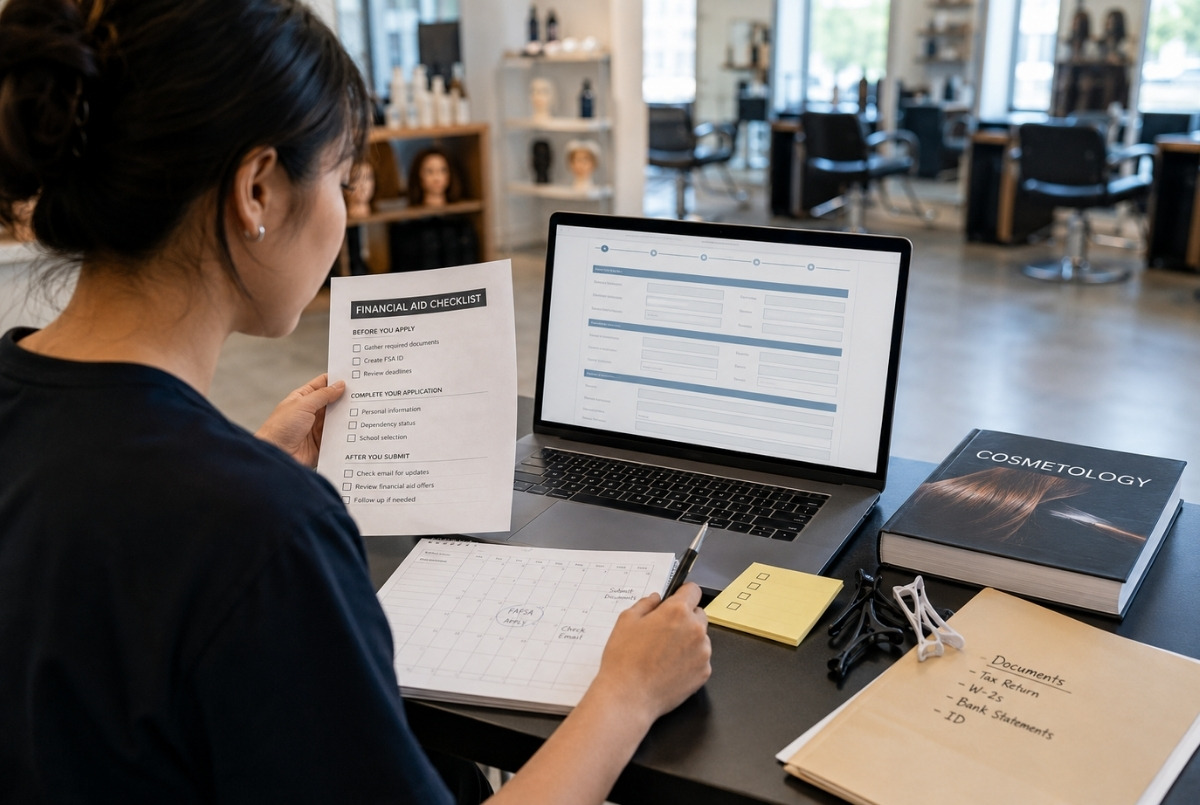
As you calculate exam fees, tuition, and supplies, remember that beauty school costs do not always have to be handled alone. If you want a better breakdown of payment options, review this guide on how much cosmetology school costs and how you can pay for it.
Keeping Your Cosmetology License Active
Getting licensed is a major achievement, but your credential still needs maintenance. If you step away from the salon, move to another state, or simply miss a renewal reminder, your license can lapse. That can be stressful, but the solution depends on your state’s rules and how long the license has been inactive.
How Renewal Deadlines Work
Every state board sets its own renewal cycle. Your deadline may be tied to a fixed calendar date, your birth month, your issue date, or a specific board schedule. Some states renew yearly, while others use two-year or longer cycles. If you are in California, you may wonder, can I renew my CA cosmetology license online? Many state boards now provide online portals, which can make the cosmetology renewal license application process faster.
If you miss the deadline, you need to know how long after a cosmetology license expires you can wait before the board adds penalties, changes your status, or cancels your file. Waiting too long can increase costs and interrupt your legal ability to work. You should also learn how to check if my cosmetology license is expired through your state registry so you can confirm your status before offering paid services. In many cases, completing cosmetology license renewal after expiration online is the fastest way to move the process forward.
When a License Becomes Too Old to Renew Normally
If a credential is ignored for years, the board may mark it as expired beyond renewal, cancelled, or null and void. Reinstatement rules can be strict because every state handles long-expired licenses differently.
For example, the Florida Department of Business and Professional Regulation states that a license becomes null and void after a licensee fails to renew for two consecutive licensure cycles. To learn how to reinstate a null and void cosmetology license in Florida, applicants generally need to show illness or economic hardship, and each request is reviewed case by case. In other words, a long-expired license may not be fixed with a simple late fee.
Many states also require continuing education courses for cosmetology before renewal. The Georgia State Board of Cosmetology and Barbers requires five hours of board-approved continuing education, including three hours in health and safety. These hours support consumer protection, sanitation, infection control, state-law awareness, and safe professional practice.
Workplace safety research also shows why ongoing education matters. A study published in Occupational and Environmental Medicine found associations between hairdresser work and certain hormone-related outcomes, including higher odds of prebaseline hysterectomy and higher rates of incident endometriosis, while not finding notable associations with several cancers studied. This does not prove every stylist will face these outcomes, but it does support the importance of ventilation, product awareness, protective habits, and careful chemical handling.
Relocating With a Cosmetology License
Moving to a new state can complicate your beauty career. You may be moving for family, a partner, a new market, or a better opportunity, but your license does not automatically follow you everywhere. Before you accept clients in a new state, you need to confirm whether your current credential qualifies for transfer, reciprocity, endorsement, or a new application process.
Reciprocity, Endorsement, and Transfer Rules
When researching how to transfer a cosmetology license to another state, you will usually see the terms reciprocity and endorsement. They are related, but they are not always identical. A cosmetology license by reciprocity application usually means the new board recognizes another state’s license or training standards. Endorsement usually means the board reviews your active license, school hours, exam history, and sometimes work experience before deciding whether you qualify.
Most transfer processes require an application, a fee, and official license verification from your original state. If your original state required fewer hours than your destination state, you may need extra hours, a state-law exam, additional testing, or proof of work experience.
Arkansas shows why the details matter. The Arkansas Department of Health explains that a person transferring school hours from another state without holding a current out-of-state license must pass written and practical examinations to qualify for an Arkansas license. Florida uses a different setup. The Florida DBPR states that applicants who qualify for a Florida cosmetology license by endorsement do not have to take the Florida cosmetology examination, but they must hold a valid out-of-state cosmetology license and complete the required HIV/AIDS course.
Online Applications and the Cosmetology Compact
If you are asking, do cosmetology licenses transfer to other states easily, the answer depends on your destination board. Many boards now let you start a cosmetology license transfer from state to state online, but that does not mean every application is fast or automatic. Before signing a salon lease or accepting clients, check your new state’s exact rules so you do not face unnecessary downtime.
Understanding license mobility also helps you think about the full range of career paths you can pursue with a cosmetology license, from salon work and platform artistry to editorial styling, management, or business ownership.
Legal analysis from the University of Missouri School of Law Scholarship Repository tracks the rollout of the Multi-State Cosmetology Licensure Compact. The official Cosmetology Compact explains that the system is designed to create a multistate license pathway for eligible cosmetologists who live in compact member states and hold an active, unencumbered license. Once fully implemented, it should reduce the need for separate traditional reciprocity applications across participating states.
The compact should not be described as automatic nationwide portability. It applies only to participating states, and eligibility still depends on the licensee’s home-state license, state board rules, and implementation timeline. Before relying on it for a move, confirm whether your state has enacted the compact and whether multistate licenses are actively being issued.
To better understand how this mobility system works, you can also watch this overview of the Cosmetology Licensure Compact and State Board Rules.
Start Your Training With a Clearer Plan
Training hours, exam rules, renewals, and license transfers are much easier to manage when you choose a school that understands both salon skills and state requirements. At Dalton Institute of Esthetics and Cosmetology, students train in an environment focused on developing “Salon Ready” graduates while building the skills, knowledge, and capabilities needed to launch a career in the cosmetology industry.
Dalton Institute lists its Master Cosmetologist program as required for licensure in Georgia at 1,500 hours. The program includes hands-on experiences, salon business, client retention, resume writing, and job seeking skills. Students also train with CHI products while learning services such as haircutting, coloring, perming, styling, manicures, pedicures, acrylic sets, lash and brow services, facials, waxing, and makeup application.
The school also highlights 20+ years in business and 80+ years of combined experience. That background can help students move through training with a better understanding of both technical beauty work and the professional expectations of the industry.
If you want to see the campus, ask questions, and map out your next step, visit Dalton Institute’s Enrollment page. The enrollment process includes scheduling a tour, filling out an application, discussing financial aid options with an Admissions Coordinator, and finalizing your start date.
Frequently Asked Questions
Can I practice cosmetology without a license if I work from home or offer mobile services?
No. State laws generally require a valid beauty license for professional cosmetology services, whether you work in a salon, home studio, mobile setup, or event location. Offering hair, skin, or nail services for compensation without the proper credential can lead to fines, legal problems, misdemeanor exposure in some states, and future licensing complications.
How is a merged barber-cosmetology board different from a standalone cosmetology board?
Some states historically regulated barbering and cosmetology through separate boards, with different licensing categories, school approvals, and exam rules. Other states now use a combined administrative structure. Texas, for example, merged its Barbering and Cosmetology programs under TDLR through HB 1560, and the Texas Department of Licensing and Regulation now manages Barbering and Cosmetology under one program. This can help standardize sanitation, health, safety, establishment, and administrative rules, but it does not mean every state has merged its boards or eliminated the difference between barber and cosmetology licenses.
Do lower beauty school hour requirements automatically reduce customer satisfaction?
Not necessarily. An econometric study hosted by San Jose State University found that stricter licensing rules did not show a general positive association with higher consumer ratings for the beauty-service occupations studied. The study used Yelp ratings as a customer-satisfaction measure, so it should not be treated as a perfect measure of safety or technical quality. Still, it supports the point that very high licensing burdens do not automatically lead to better customer-rated service.