


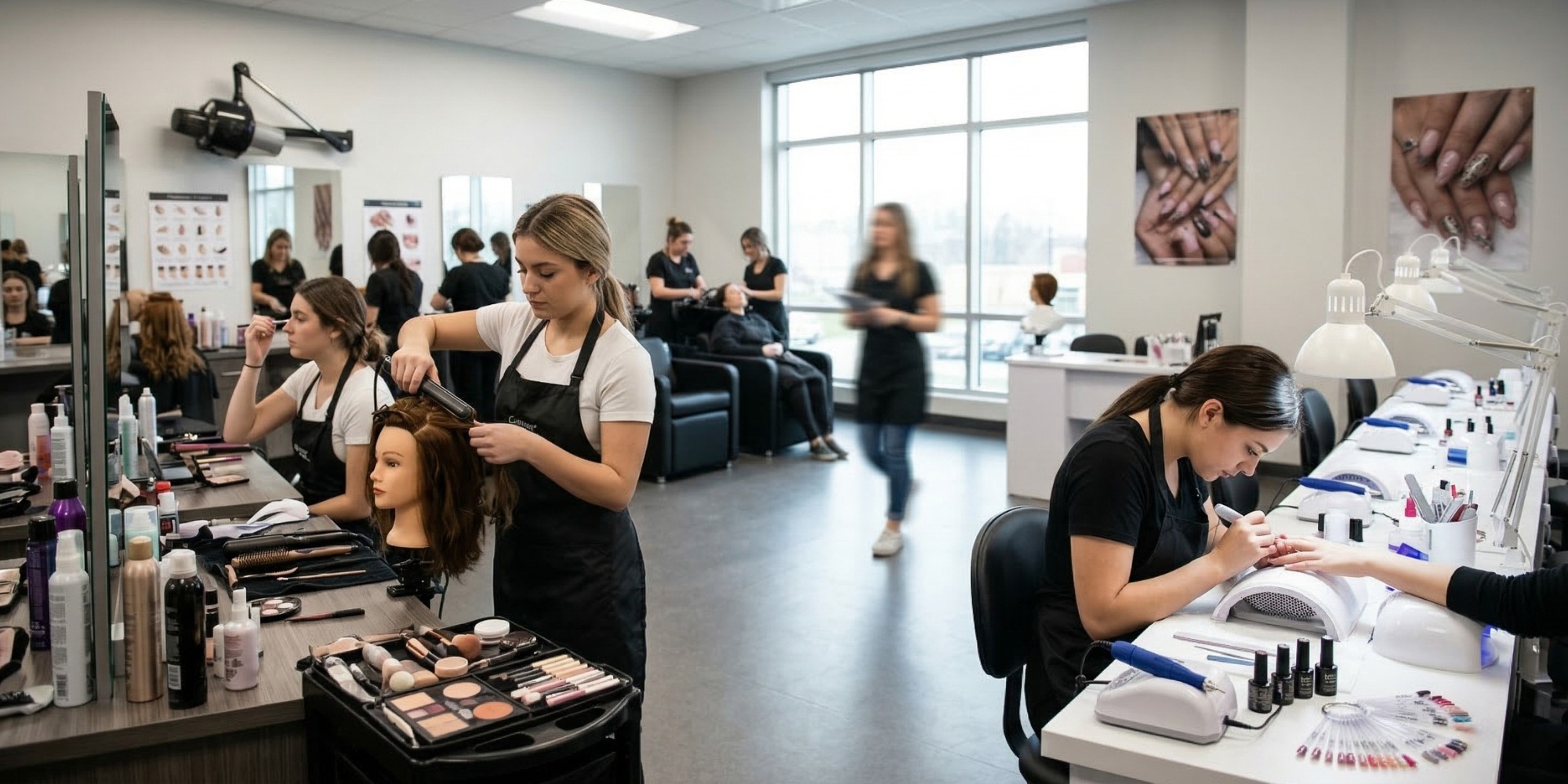
Deciding to enter the beauty industry is an exciting turning point, but it often comes with a big question: do you go broad or go deep? Choosing between a cosmetology or nail technician program is really about deciding what kind of daily life you want to lead in the salon. Some people love the variety of doing everything from highlights to pedicures, while others find their calling in the intricate, high-detail world of being a nail technician or nail artist.
In today’s market, being a professional means more than just being good with a brush. It’s about understanding the chemistry of the products you use and keeping your clients safe. Whether you want to be a “Beauty Generalist” who can handle any request or a “Technical Specialist” who masters one craft, your choice of education is the foundation for everything that comes next.
Key Takeaways for Your Career
- Fast-Track to Licensing: A specialized nail technology program is usually the fastest way to get your license and start your own business, often requiring significantly fewer hours than a full cosmetology course.
- Strong Industry Growth: The specialized market for nails is expanding rapidly, with reports showing a 10.7% CAGR through 2029, which is actually outpacing many other beauty sectors.
- Safety and Compliance: Professional training is essential for navigating modern regulations like MoCRA and OSHA standards, ensuring you work safely with professional chemicals.
- Niche Earning Power: Specializing allows you to position yourself as an expert, which often leads to higher client retention and the ability to charge premium prices for your artistry.
Choosing Your Path: The Generalist vs. The Specialist
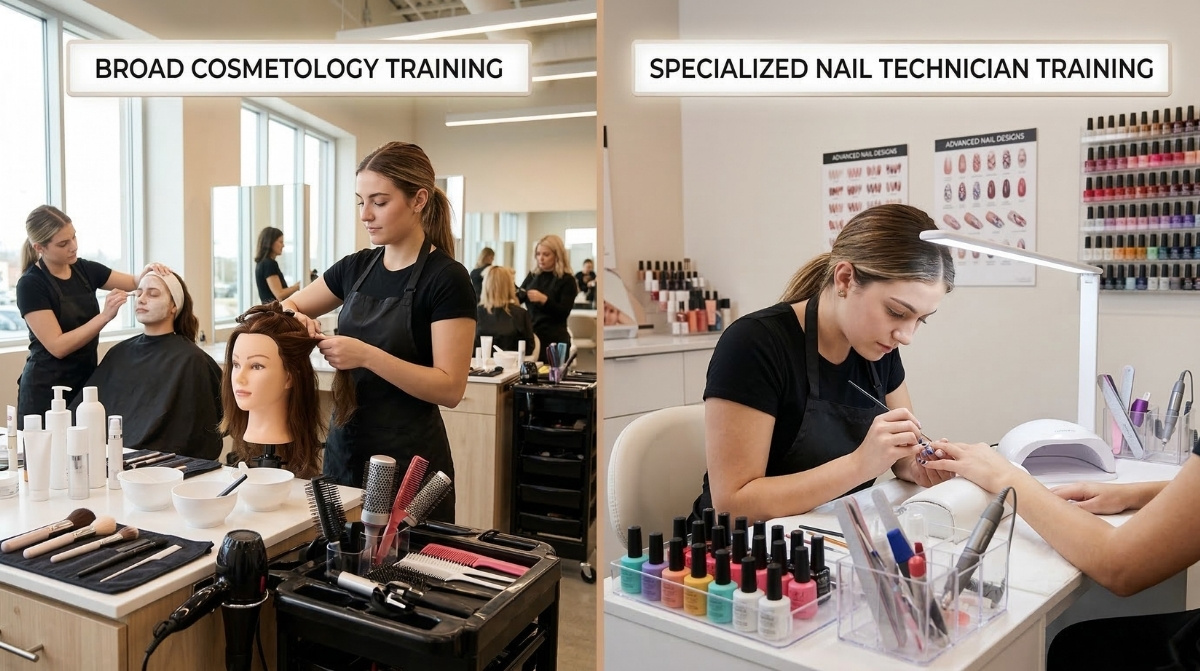
When you look at the difference between cosmetology and nail technology, it really comes down to the scope of your license. Cosmetology is the most comprehensive path you can take. In Georgia, this requires 1,500 hours of training and covers hair, skin, and nails. I find that this is the best route for people who want total career flexibility. If hair trends change or you want to move into skin care later, a cosmetology license gives you the legal “sovereignty” to pivot your services without going back to school.
On the other hand, a nail technology program is a focused deep-dive into the science of hands and feet. By spending 600 hours on specialized training, you can get through school much faster and start earning sooner. You’ll spend your time mastering nail chemistry, anatomy, and advanced sanitation. If you want to see a detailed breakdown of what this looks like, I recommend checking out this beginner’s guide to launching your nail technology career to see the curriculum steps.
Pro Insight: Navigating 2026 Regulations
Safety is becoming a huge focus for the feds. Under MoCRA, there is more oversight on how cosmetic products are tracked and reported. In the salon, OSHA also requires us to maintain safety data sheets for our products. A high-quality beauty program helps you understand these technicalities so you can run a professional, compliant business from day one.
Defining Your Brand: Identity and Artistry
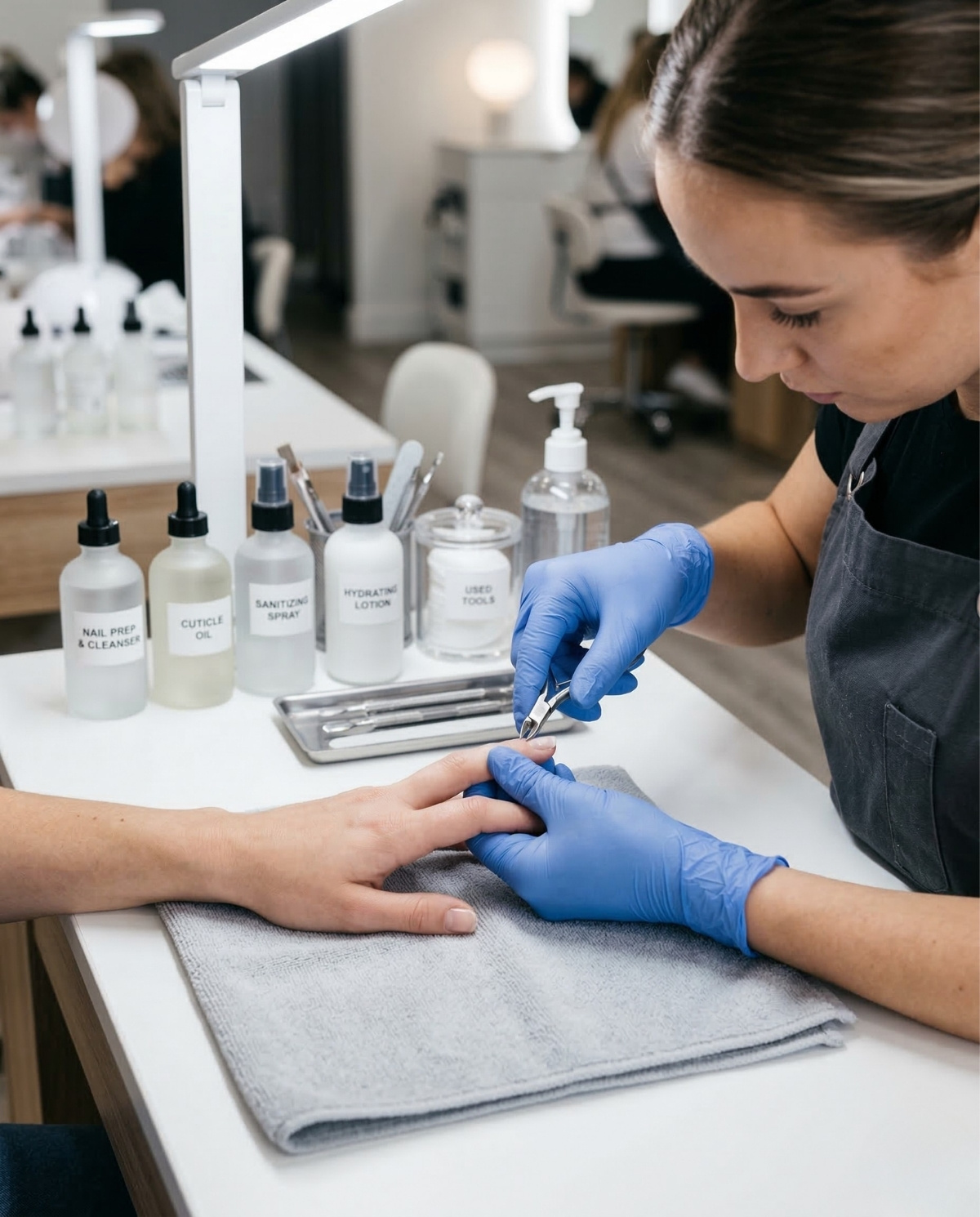
I often talk to people who wonder about the difference between being a nail technician or nail artist. To me, the license is your legal foundation, but your branding is what sets your price point.
In a professional nail tech program, you learn the technical “Why” behind the work – like how to avoid over-filing or how to manage chemical reactions. A technician provides a solid, safe service, but a nail artist uses that technical foundation to create a transformation. In 2026, the most successful pros are those who use their school training to launch specialized niche studios that focus on high-end, artistic results.
For those who lean toward the broader cosmetology path, the career options are massive. There are so many career paths you can pursue with a cosmetology license, ranging from editorial work and film sets to becoming a brand educator for major international lines.
The ROI of Your Time
If you want to get into the workforce as fast as possible, the nail technology program is the clear winner. You can often finish your boards and be working in under six months. This is perfect for entrepreneurs who want to open a salon suite quickly without the time commitment of a year-long program.
However, the career safety net of cosmetology is worth the extra time if you aren’t 100% sure you only want to do nails. While it takes longer to graduate, you are essentially protected against downturns in any specific niche because you can offer so many different services.
Market Insight: The Growth Paradox
The nail sector is seeing a trend called “Premiumization.” According to Technavio’s 2025-2029 Nail Salon Market Report, the specialized nail market is growing at a 10.7% CAGR. I’ve noticed that clients are increasingly looking for specialized boutiques rather than general salons, which is great news if you decide to focus your training.
Wellness and Science in Modern Beauty

One thing that really separates a pro education from a DIY hobby is the focus on biological integrity. I’ve seen how important it is to understand the physiology of the nail to prevent long-term damage.
Recent industry literature is leaning heavily into wellness-first protocols. For instance, a study in Skin Appendage Disorders showed that specific professional formulations can significantly improve nail hardness. Even newer research from 2025 on Advanced Dry Manicure Techniques suggests that moving away from water soaking can improve product performance and sanitation. Being in a licensed program ensures you are learning these evidence-based techniques.
Which Path Is Right for You?
Choosing between these two programs really depends on your long-term goals.
- Pick Cosmetology if you want the freedom to work across hair, skin, and nails and want a license that lets you pivot as the market changes.
- Pick Nail Technology if you have a great eye for detail, love the science of nail chemistry, and want to start your own specialized business in record time.
Ultimately, your success isn’t just about the license you hold, but the level of mastery you bring to your clients every day.
Ready to Start Your Professional Journey?
The beauty industry in 2026 needs more than just workers – it needs professionals who are ready to lead. At Dalton Institute, we focus on making sure you are ready for the reality of the salon from the moment you graduate. We believe in bridging the gap between the classroom and the high-end professional world through mentorship and hands-on experience.
If you are ready to turn your passion into a real career, I invite you to see what makes our approach different. You can find all the details on how to get started on our Enrollment page.
I’d love to help you figure out which program fits your goals best. If you have questions, feel free to fill out the contact form below, and let’s start building your future together.
FAQ: The Professional Reality Check
What happens if I get a Nail Tech license but want to do hair later?
You will likely need to enroll in a full cosmetology program. While some hours might transfer depending on your specific situation, you generally have to complete the hair-specific training from scratch. This is why I recommend the specialist path only if you are certain that nails are your primary passion.
Is the nail tech market too full in 2026?
The demand for high-quality, safe services is actually still growing. The U.S. Bureau of Labor Statistics projects 7% growth for the field through 2034. In my experience, if you offer high-quality work and maintain great client relationships, there is always plenty of room for you to succeed.
Does a cosmetology license let me work in a medical spa?
It’s a great starting point, but med-spa work usually requires additional specialty training or separate certifications depending on the service. For example, in Georgia, certain cosmetic laser procedures are regulated by the Georgia Composite Medical Board. Always check your local laws for specific med-spa roles.