

What Does Cosmetology School Teach? Hair, Skin, Nails & More
Key Takeaways
- A Broader Skill Set: Cosmetology training can include haircutting, styling, chemical services, color, basic skin care, nail services, makeup, and hair removal, depending on the school and state.
- Science Matters: Anatomy, chemistry, infection control, product safety, and other scientific concepts are part of professional training. Scientific concepts make up 35% of the NIC Cosmetology Theory Examination.
- Career Preparation Goes Further: Client communication, retailing, salon operations, and other professional skills can help graduates prepare for employment, independent work, or future business ownership.
- Licensing Rules Depend on Location: Georgia and Arkansas both require 1,500 hours of cosmetology school training, but their curriculum rules, examinations, and licensing procedures are not identical.
Beauty school can look very different from what people imagine before enrolling. You may expect mostly haircuts and styling, only to discover that cosmetology combines technical practice with chemistry, safety, skin and nail fundamentals, client care, and professional preparation. If you are still deciding whether this field matches your goals, our guide on whether a career in cosmetology is worth it can help you think through the bigger picture. Here is a closer look at what students may actually study and practice during cosmetology school.
What Cosmetology Training Actually Covers
A cosmetology program is designed to teach more than how to reproduce a finished hairstyle. Students study the principles behind each service, practice techniques, and learn how to make choices based on the client's hair, condition, desired result, and safety needs.
Hair education remains a major part of the program. Topics can include haircutting, shaping, wet styling, thermal styling, natural hair styling, and design principles. The NIC Cosmetology Theory Examination also tests procedures for different hair types and textures, along with concepts such as haircutting, styling, and natural hair design.
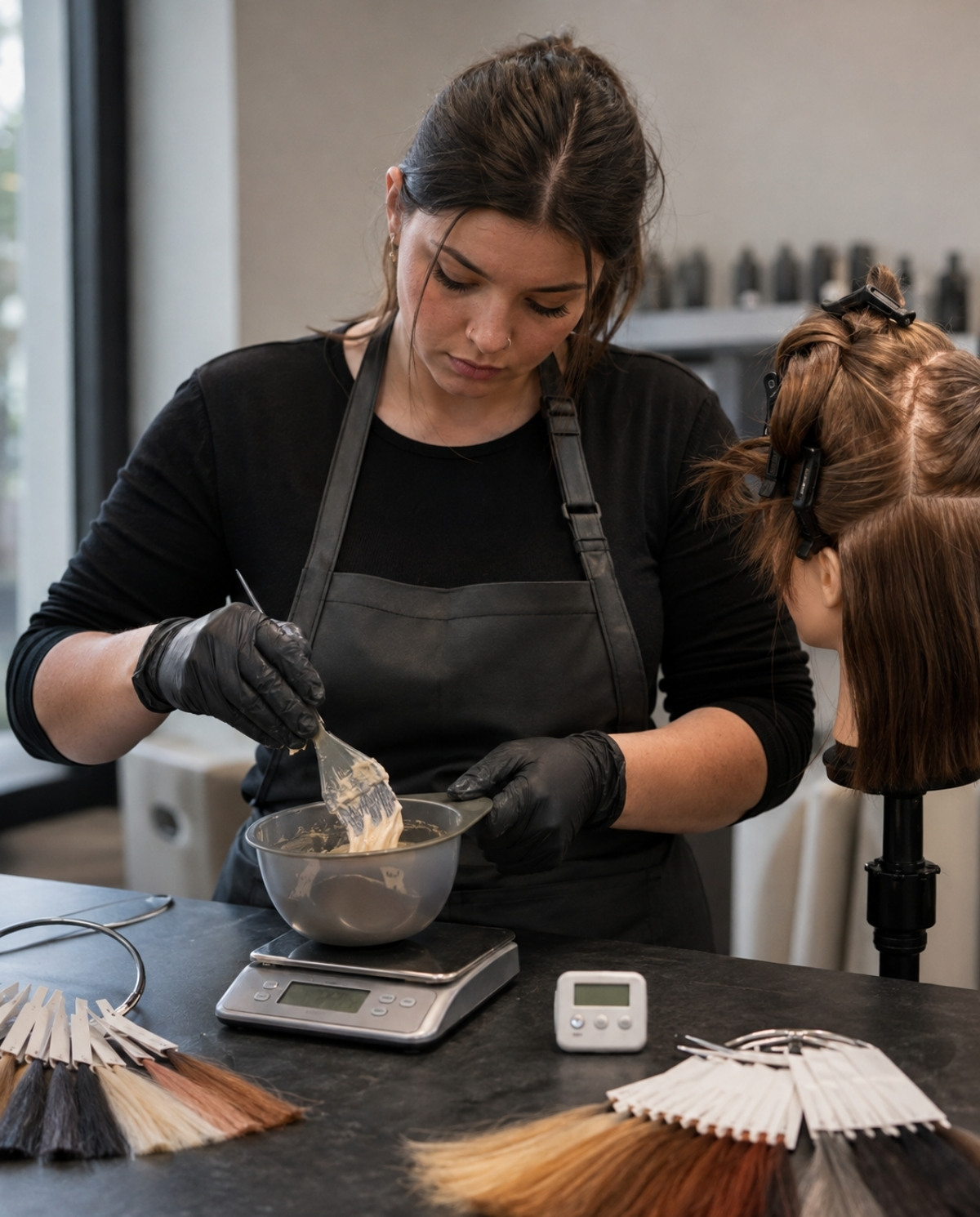
Chemical services add another layer of training. Students learn the principles behind permanent waving, chemical relaxing, hair coloring, and lightening, including how these processes affect the hair. Color education can cover formulation, application, lightening, tone correction, and the use of color theory to manage unwanted tones. The NIC examination blueprint also includes knowledge of techniques such as foiling and balayage within its chemical-services content, although the specific techniques practiced at an individual school can vary.
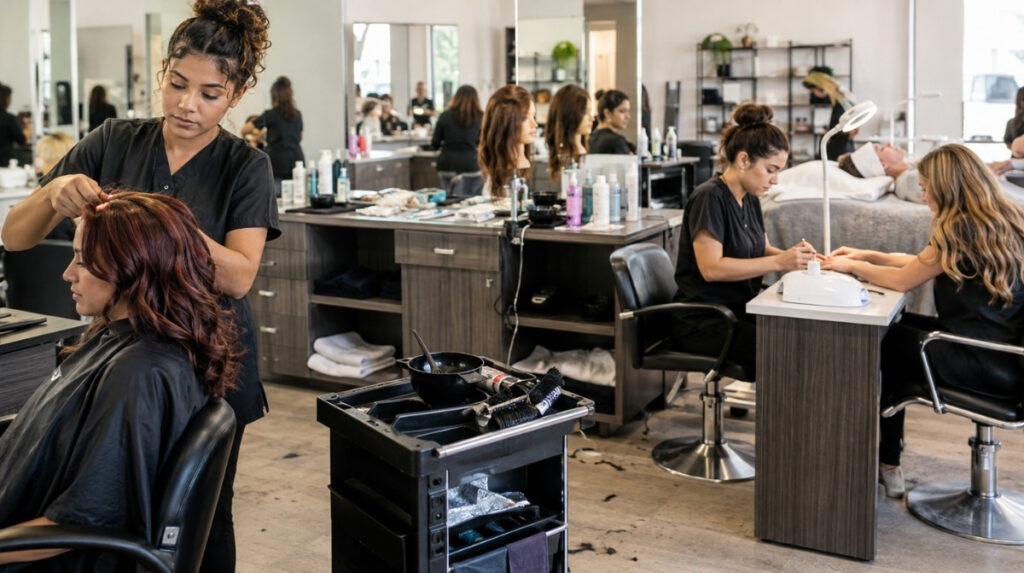
At Dalton Institute, the Master Cosmetologist program includes training in areas such as haircutting, coloring, perming, styling, manicures, pedicures, acrylic nails, lash and brow services, facials, waxing, and makeup application.
Why Science and Numbers Matter in Beauty Work
Cosmetology may be creative, but much of the work also depends on practical science and measurement. Some chemical services require products to be mixed or applied according to manufacturer directions, including specific ratios, processing times, and safety precautions. Following those instructions helps reduce avoidable irritation, poor results, or damage.
Haircutting uses geometry in practical ways as well. Angles, elevation, over-direction, balance, and proportion all affect the finished shape. Business-related math becomes useful later when calculating service costs, managing retail products, monitoring inventory, or evaluating whether a service is profitable.
Science is especially important because beauty professionals work directly with people's hair, scalp, skin, and nails. According to the National Interstate Council of State Boards of Cosmetology, 35% of the NIC Cosmetology Theory Examination covers Scientific Concepts. Topics include infection control, safety, anatomy and physiology, hair and scalp conditions, skin and nail conditions, basic chemistry, chemical interactions, chemical reactions, and the pH scale.
This knowledge helps students recognize when a service may be inappropriate, understand how contamination can spread, follow disinfection and blood-exposure procedures, and use chemical products more responsibly. School cannot recreate every situation you may encounter in a professional setting, but it gives you the foundation for evaluating risks and following established safety procedures.
Beauty Skills That Go Past Hairstyling
Cosmetology can appeal to students whose interests extend beyond hair. Depending on the program and state scope of practice, training may also introduce skin services, makeup, hair removal, manicuring, pedicuring, and other beauty techniques.
Dalton Institute's cosmetology program includes facials, waxing, makeup application, manicures, pedicures, acrylic nail services, and lash and brow work in addition to hair services. Its published curriculum has also included hair-removal techniques such as tweezing and waxing.
That variety gives students an opportunity to develop a wider foundation before deciding which areas they want to emphasize professionally. Hair-removal education, for example, may cover different waxing products and application methods, but the exact procedures taught should always be confirmed through the school's current curriculum.
A cosmetology license also comes with a legal scope of practice. That scope determines which services a license holder is permitted to perform, and those rules vary from one state to another. After graduation, there are many possible career paths you can pursue with a cosmetology license, but every professional must stay within the services permitted by the state where they work.
How Skin Services Fit Into Cosmetology
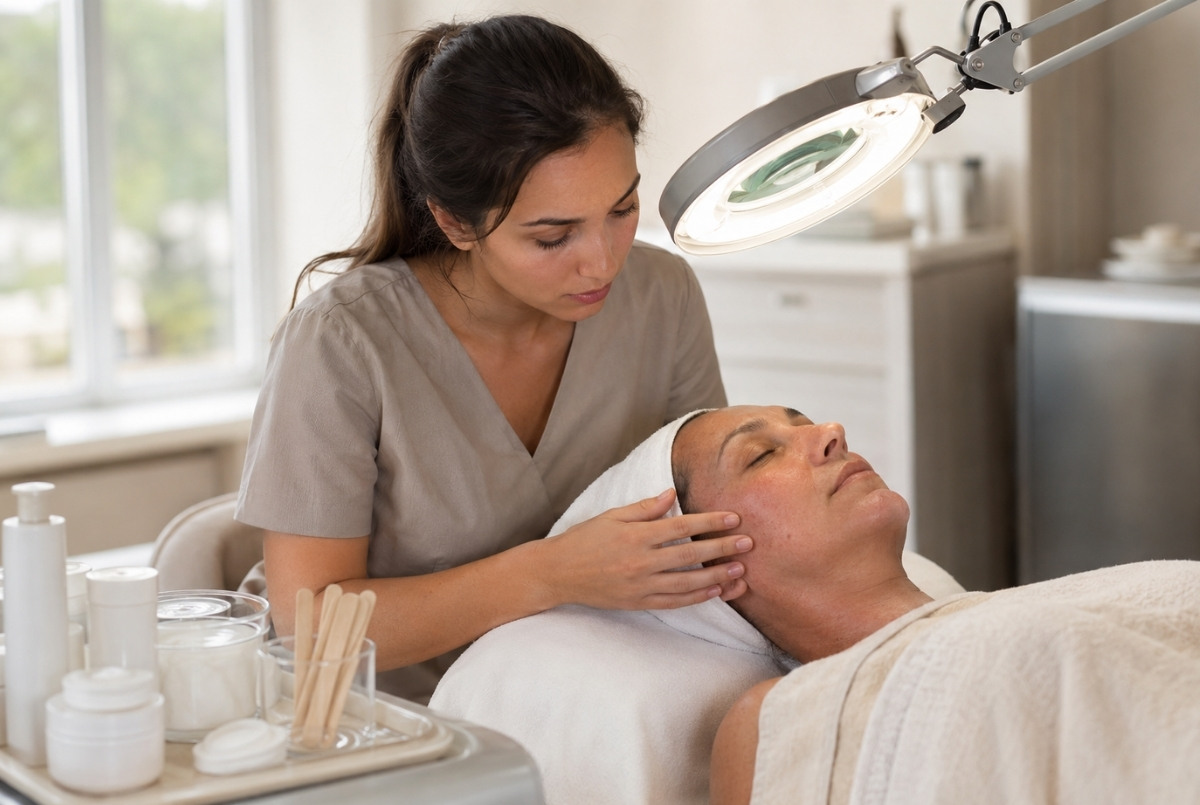
Skin-related education is not limited to putting on makeup. Students may also learn basic skin structure, sanitation, client evaluation, contraindications, facial procedures, hair removal, and safe product use.
The NIC Cosmetology Theory Examination assigns 10% of its content to Skin Care and Services. That portion includes client skin evaluation, contraindications, infection-control procedures, basic facials, hair removal, makeup application, and safe use of skin-care equipment.
Dalton Institute includes facials, waxing, makeup, and related beauty services within its Master Cosmetologist training. These subjects provide a foundation in skin services, but general cosmetology training should not be confused with every form of advanced esthetics.
Medical-aesthetic procedures and other specialized treatments may require additional education, a different license, medical supervision, or another credential depending on the service and state. Knowing where your cosmetology license ends is just as important as knowing what it allows you to do.
Preparing for Clients and the Business Side of the Industry
Being good at technical services is only one part of building a career. Cosmetologists also work with appointments, client expectations, retail products, customer relationships, records, supplies, and sometimes the financial responsibilities of operating independently.
Dalton Institute identifies salon business, client retention, resume development, and job-seeking skills among the professional areas students can encounter during training. These lessons can become increasingly important as graduates begin building a regular clientele or considering self-employment.
The U.S. Bureau of Labor Statistics projects about 84,200 openings for barbers, hairstylists, and cosmetologists each year, on average, from 2024 through 2034. BLS also reports that 48% of hairdressers, hairstylists, and cosmetologists were self-employed in 2024.
Running your own operation can mean handling much more than client services. BLS notes that salon or shop owners may keep business and inventory records, order supplies, arrange advertising, and hire or supervise workers. Those responsibilities are why business awareness can be valuable even for students who enter cosmetology because of their creative interests.
Safety Rules, Modern Techniques, and State Licensing

Beauty trends may change quickly, but strong training focuses on principles that remain useful when styles change. Understanding design, texture, hair condition, product chemistry, and client evaluation makes it easier to adapt techniques rather than simply memorizing one current trend.
The NIC examination blueprint includes procedures for different hair types and textures, natural hair styling such as braiding, scalp evaluation, and scalp treatments. Chemical-service knowledge covers permanent waving, relaxing, coloring, and lightening, along with the safety principles involved in working with those products.
Beauty professionals also work around products that are regulated beyond state cosmetology boards. The Modernization of Cosmetics Regulation Act of 2022, or MoCRA, significantly expanded federal oversight of cosmetics. Its provisions include requirements involving serious adverse-event reporting, cosmetic facility registration, cosmetic product listing, and safety substantiation.
Those duties do not all fall on individual cosmetologists. Depending on the requirement, legal responsibilities may apply to the responsible person for a cosmetic product or to facilities that manufacture or process cosmetics. Even so, product safety remains important for salon professionals who handle and apply cosmetic products every day.
Workplace regulation is another consideration. The Occupational Safety and Health Administration explains that some hair-smoothing products may contain or release formaldehyde, including during heating. Salons and beauty schools using products that contain or can release formaldehyde may need to comply with OSHA requirements involving formaldehyde exposure and hazard communication.
State licensing rules add another layer. In Georgia, the State Board of Cosmetology and Barbers rules require a complete cosmetology school course to include 1,500 hours and take at least nine months. Georgia's curriculum begins with 250 hours of Level 1 training, which students must complete before performing clinical services on clients.
Arkansas also requires at least 1,500 hours of cosmetology training under the Arkansas Department of Health cosmetology rules. Its 2026 Cosmetology Candidate Information Bulletin identifies the NIC Cosmetology Theory Examination as the written examination for cosmetology candidates.
Because licensing steps differ by state, completing school is only one milestone. Our guide to what comes after cosmetology school explains how graduates can begin thinking about examinations, licensing, job opportunities, and their next professional steps.
Frequently Asked Questions
- How long is Dalton Institute's cosmetology program? Dalton Institute's current published financial-aid information lists the Master Cosmetologist program at approximately 48 weeks, or 12 months, for full-time students and 60 weeks, or 15 months, for part-time students. Actual completion can still depend on attendance and the student's individual progress. You can review the school's current published program information for the latest schedule and costs.
- Should I purchase professional tools before starting school? It is better to confirm the current kit requirements before buying a full set of equipment yourself. Dalton Institute publishes a student kit as part of its cosmetology program materials, so admissions can tell you what is included, when the kit is issued, and which items, if any, you need to purchase separately.
- Can I focus on one specialty once I am licensed? Yes. You can choose to concentrate on services such as hair color, textured hair, bridal styling, makeup, or another area that falls within your legal scope of practice. More specialized services may have separate licensing rules. In Georgia, for example, a master cosmetologist who wants to qualify as an Assistant Laser Practitioner must satisfy separate laser-practitioner licensing requirements, including approved education involving laser or intense pulsed light technology.
Thinking About Cosmetology at Dalton Institute?
A cosmetology education can give you much more than practice with scissors and styling tools. It can help you build technical ability, understand client safety, work with different beauty services, and develop the professional habits needed to enter the industry.
If Dalton Institute feels like the right place to begin, visit the Enrollment page to learn more about getting started. You can also contact the school with questions about program schedules, current costs, student kits, admissions requirements, or campus visits.
One thought on “What Does Cosmetology School Teach? Hair, Skin, Nails & More”