


Medical Cosmetology After BDS: Courses, Career Options, and Legal Limits

Years spent bending over patient chairs, managing complicated insurance approvals, and performing repetitive restorative procedures can make even passionate dental professionals seek fresh energy in their routine. Precision is second nature to dentists, so expanding into facial aesthetics may feel like a natural step forward.
Dentists possess extensive background knowledge in head and neck anatomy, facial musculature, nerve pathways, local anesthesia, occlusion, and perioral function. With procedure-specific training, this knowledge can support treatments affecting the lips, lower face, smile line, and muscles of mastication. However, holding a dental degree or private course certificate does not automatically authorize someone to provide these services. Practitioners must hold the license required in the state where treatment occurs and comply with all applicable scope-of-practice regulations.
This boundary is particularly important for international dental graduates exploring facial aesthetics or clinical cosmetology after BDS. A foreign dental degree alone does not authorize someone to practice dentistry or medical aesthetics in the United States. Graduates must fulfill the dental-licensure standards of the state where they intend to practice, which commonly involves completing an advanced-standing DDS or DMD program. In the US, neurotoxin and dermal-filler procedures are generally classified as facial aesthetics or aesthetic medicine rather than traditional cosmetology.
What Dentists Should Know Before Entering Facial Aesthetics
- Self-Pay Revenue Potential: Cosmetic facial-aesthetic treatments are commonly self-pay, which may reduce insurance billing and eliminate dental laboratory expenses for those services. Profitability still depends on product costs, scheduling, liability coverage, marketing, product waste, follow-up care, and complication management.
- Different Rules in Every State: Legal boundaries vary by jurisdiction. Georgia requires most qualifying dentists to complete a Board-approved post-doctoral course lasting at least 21 hours and restricts treatment to specific dental connections and settings. Dentists should confirm current requirements with the appropriate state dental board before treating patients.
- A Useful but Incomplete Clinical Foundation: Dental education gives clinicians extensive knowledge of head and neck anatomy and perioral function, but procedure-specific preparation is still necessary for patient selection, injection technique, consent, and complication response.
- Education Cannot Enlarge a License: ADA CERP recognition, AGD PACE approval, and private certificates may provide information about a continuing-education organization, but they do not independently grant legal authority, guarantee board acceptance, or confirm malpractice coverage.
How Dental Scope Applies to Facial Procedures
Dental Knowledge That Transfers to the Lower Face
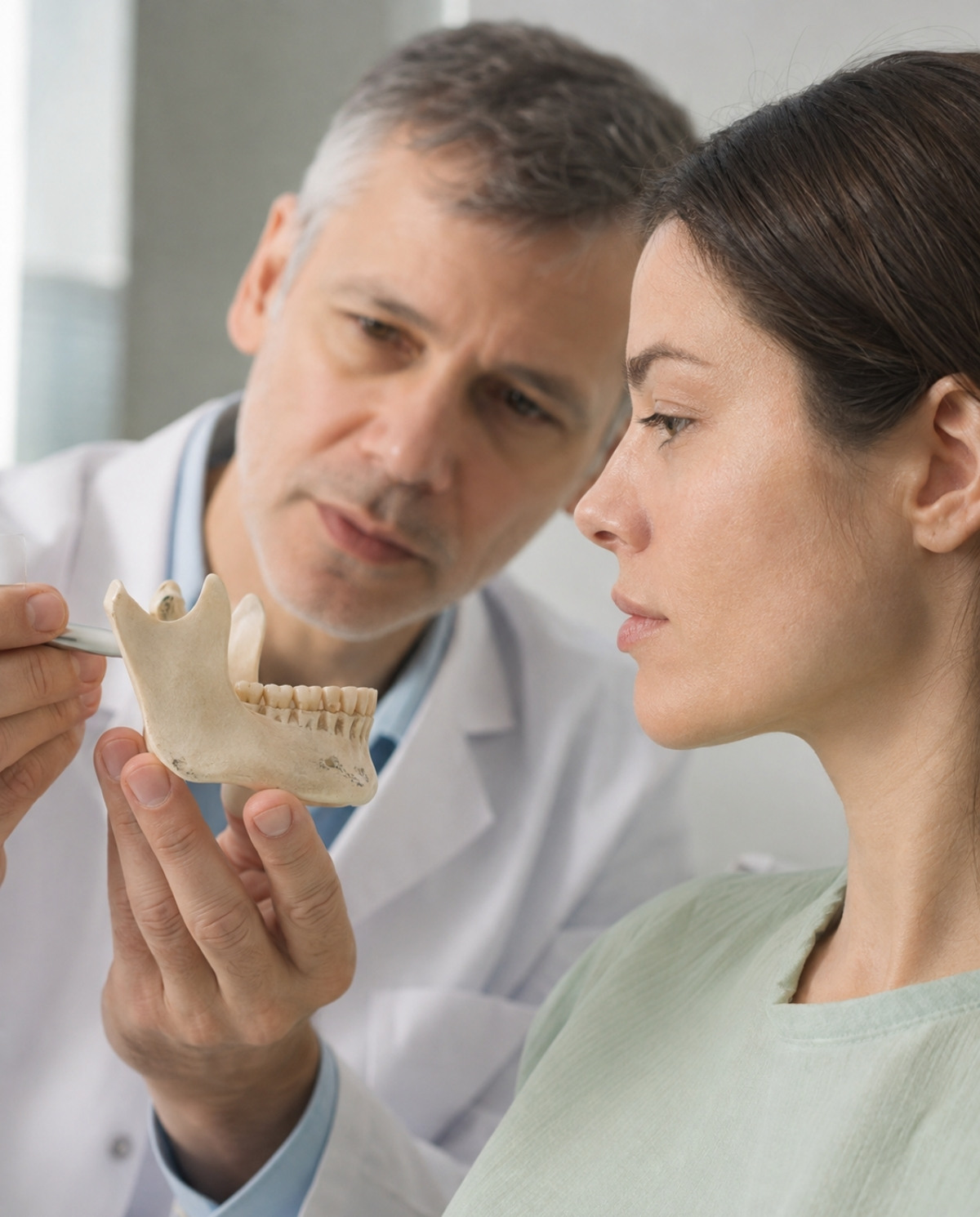
Dental school provides a strong foundation in facial and trigeminal nerve pathways, facial muscles, vascular supply, occlusion, and structural balance. Dentists also work routinely with local anesthesia and understand the functional relationships connecting the teeth, cheeks, lips, jaws, and masticatory muscles. This experience can be valuable when evaluating perioral balance and assessing how a smile relates to the lower face.
Even with that background, additional education is not optional. Dermal fillers and neurotoxins involve distinct pharmacology, contraindications, anatomical danger zones, consent protocols, and emergency procedures. Dentists must develop competence in each proposed treatment while remaining within the authority granted by their state dental license.
The central regulatory question is whether a specific facial-aesthetic procedure falls within the dentist's legal scope. There is no universal national standard. State statutes, administrative regulations, and dental-board guidance may limit treatment according to anatomical area, clinical purpose, connection to dental care, educational requirements, practice setting, or permit conditions. Familiarity with facial anatomy does not create permission to perform a procedure that state law excludes.
Some jurisdictions allow qualifying dentists to perform functional and cosmetic procedures within defined oral and maxillofacial regions. Others restrict care to the gums, lips, cheeks, jaws, oral cavity, associated tissues, or treatments directly connected to a dental procedure. Practitioners should confirm the applicable limits through current statutes, administrative codes, official board publications, or written communication from the responsible dental board.
These requirements can differ significantly:
- Georgia: Under Georgia Rule 150-14-.04, licensed dentists may administer qualifying injectable pharmacologics for functional or cosmetic enhancement of the gums, cheeks, jaws, lips, oral cavity, and associated tissues when treatment is connected with a dental procedure and performed in a dental treatment setting. Except for dentists who have completed an ADA-accredited oral and maxillofacial surgery specialty program, the dentist must complete a Board-approved post-doctoral course of at least 21 hours. The dentist must submit a certified copy of the completion certificate to the Board within 30 days, perform the required patient assessment, document the treatment, and personally administer the injectable rather than delegate it.
- Arkansas: Arkansas's publicly available dental rules do not appear to contain the same detailed injectable framework provided by Georgia. Dentists should obtain current written guidance directly from the Arkansas State Board of Dental Examiners before purchasing products, advertising injectable services, or treating patients.
Reviewing these jurisdictional differences is essential before introducing any service. Just as salon professionals investigate cosmetology license requirements by state, including exams, renewal, and transfer rules, dentists must verify their obligations through the appropriate dental authorities. A state dental license, foreign BDS, cosmetology credential, and facial-aesthetics certificate are separate qualifications with different legal effects.
Functional Care and Cosmetic Results Can Overlap
Therapeutic and aesthetic outcomes may intersect in selected cases. Some clinicians use botulinum toxin off-label for overactive masticatory muscles, masseter hypertrophy, bruxism, or certain temporomandibular disorders. Relaxing an enlarged or overactive masseter may provide a functional benefit in an appropriately selected patient while gradually producing a narrower lower-face appearance.
These treatments should not be presented as universally appropriate or automatically included within every dentist's scope. The TMJ is the anatomical joint, while the larger group of related conditions is generally called temporomandibular disorders, or TMD. Botulinum-toxin treatment for bruxism and many TMD-related applications is off-label in the United States, meaning the product is being used for a purpose not specifically included in its FDA-approved labeling. Such use may be lawful within professional practice, but it still requires an appropriate clinical basis, informed consent, professional competence, and authorization under state law.
A clinician cannot make an unauthorized cosmetic procedure lawful merely by calling it therapeutic or loosely connecting it to a smile makeover. The diagnosis, anatomical target, treatment objective, records, consent, and advertising must truthfully represent the care being delivered.
The overview from Oberman Law Firm provides helpful general context about how different jurisdictions regulate injectable treatments. Nevertheless, a private legal article summarizes the law rather than establishing it. Dentists should prioritize current statutes, administrative regulations, official board guidance, and advice from a qualified healthcare attorney whenever the legal boundaries remain uncertain.
Evaluating Facial-Aesthetics Training Options
Postgraduate education in this field can be difficult to compare. Short workshops, online programs, multi-level certificate series, fellowships in medical cosmetology after BDS, and diplomas in facial cosmetology after BDS may use overlapping terms. Unlike a state dental license or a CODA-accredited dental specialty, labels such as fellowship, diploma, and certificate do not have a uniform meaning across the private facial-aesthetics education market.
An introductory workshop may last one or several days and address facial anatomy, patient assessment, basic neurotoxin or filler techniques, and initial complication recognition. More extensive programs may continue for several months and include multiple treatment areas, supervised clinical participation, case reviews, skin procedures, and continuing mentorship. Program length by itself does not prove instructional quality, professional competence, or legal acceptance.
Before selecting a course, confirm:
- Whether the relevant state dental board accepts the provider and curriculum
- Whether the course includes every subject and training hour required by state law
- How much instruction is didactic, simulated, observational, or hands-on
- Whether clinical participation involves appropriately screened live patients
- Whether the instructors hold the licenses and qualifications needed to teach the procedures
- Whether the curriculum addresses informed consent, contraindications, anatomy, dosing, product handling, and complication management
- Whether graduates receive mentorship or clinical support after introductory training
- Whether the dentist's professional liability carrier will recognize the training
Dentists considering chemical peels, lasers, microneedling, facials, or advanced skin care must investigate each procedure separately. A dental license that authorizes selected facial injectables does not necessarily permit unrestricted skin care, laser treatment, or general esthetics services. Likewise, an esthetics or cosmetology license generally does not authorize a beauty professional to prescribe or inject neurotoxins or dermal fillers.
That legal structure differs from how beauty professionals may approach working as a barber, lash technician, or nail technician with a cosmetology license. Dentists should not assume that dental education automatically provides esthetician privileges or that beauty-school training expands the medical authority of a dental license.
Why Practical Instruction Is an Essential Part of Training
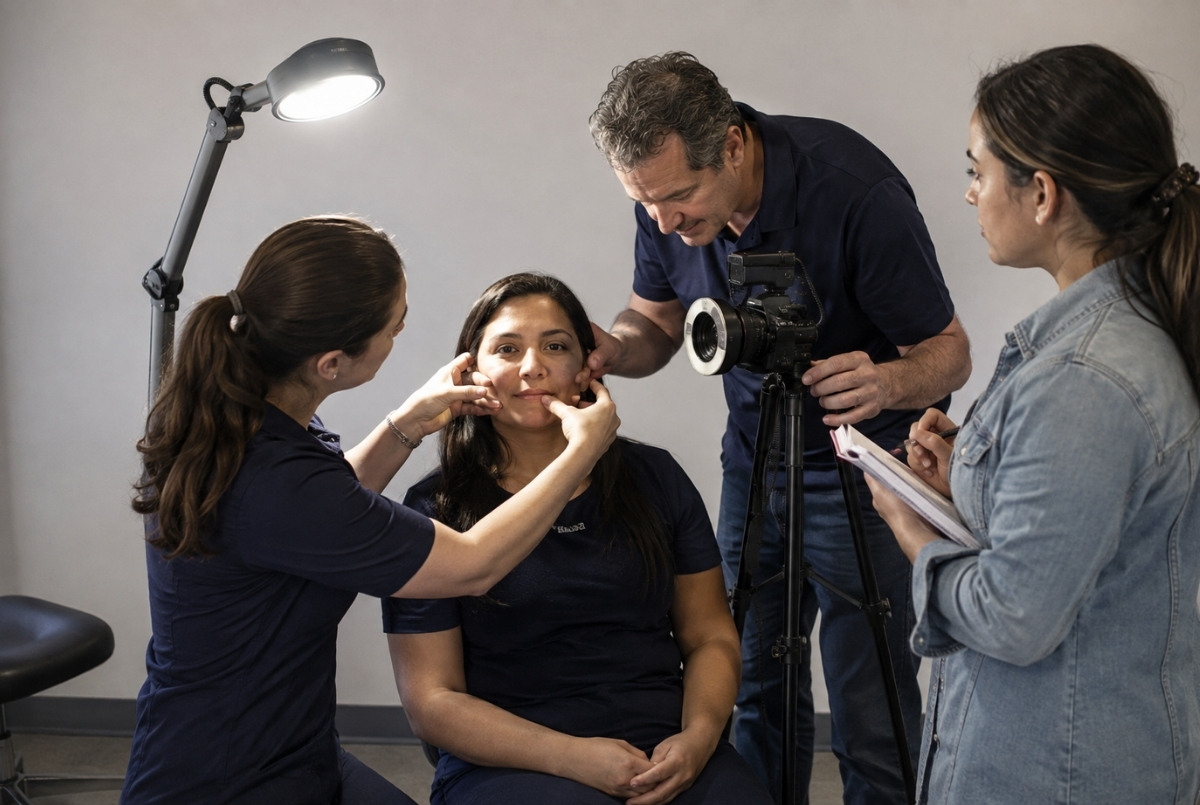
Online learning can support the study of facial anatomy, pharmacology, skin biology, informed consent, and complication theory. It cannot fully reproduce the tactile judgment involved in assessing tissue, controlling injection depth, observing product behavior, or responding to an unexpected clinical reaction.
Injectable procedures and skin treatments also require separate competencies. Dermal-filler training should address vascular anatomy, tissue planes, product characteristics, and vascular-occlusion response. Neurotoxin education requires an understanding of muscle function, dosing, diffusion, asymmetry, and contraindications. Chemical peels and microneedling involve their own considerations, including skin classification, treatment depth, infection control, pigmentation risk, wound healing, and aftercare.
When reviewing a course, determine whether the provider is recognized through ADA CERP or approved through AGD PACE. It is equally important to understand the limits of those designations. ADA CERP recognizes continuing-education providers rather than approving individual courses, instructors, techniques, products, or therapies. Its recognition also does not guarantee that a state dental board will accept the credit. Similarly, AGD PACE approves continuing dental-education organizations rather than individually endorsing every course or procedure they offer.
The most reliable approach is to verify the requirements from both directions before enrolling. Ask the appropriate dental board whether the proposed course satisfies its rules, and provide the curriculum to your professional liability carrier to determine what training or documentation the insurer expects.
Clinical education should place particular emphasis on filler-related vascular occlusion. According to the US Food and Drug Administration, accidental injection of filler into a blood vessel can interfere with circulation and cause tissue necrosis, vision abnormalities including blindness, or stroke. Although these complications are uncommon, they can be serious and may be permanent.
Training should therefore cover early warning signs, product-specific response protocols, appropriate emergency supplies, informed consent, detailed documentation, referral pathways, and immediate escalation when a patient develops visual symptoms or signs of tissue ischemia. Completing a certificate does not guarantee malpractice coverage. Depending on the jurisdiction and policy, documented procedure-specific clinical training may be considered or required by a state board or liability insurer.
Assessing Revenue Without Overlooking Expenses
Facial aesthetics may appeal to dentists who want to reduce their dependence on third-party insurance claims, delayed reimbursements, and laboratory expenses. Purely cosmetic facial-aesthetic treatments are commonly self-pay, which can reduce insurance billing and eliminate dental laboratory fees for those particular services. Therapeutic treatments may be handled differently depending on the diagnosis, payer, authorization requirements, and practice circumstances.
Self-pay treatment does not automatically produce a high profit margin. Product acquisition, storage, expiration, discarded inventory, clinical supplies, staff education, appointment time, liability premiums, marketing, follow-up care, refunds, and complication management all affect the financial outcome.
A practical calculation should include:
- Collected treatment revenue minus product acquisition costs
- Minus expired, discarded, or unusable inventory
- Minus clinical materials and staff time
- Minus marketing and professional liability expenses
- Minus follow-up and complication-management costs
Practices should create projections based on local pricing, product utilization, realistic patient demand, and actual treatment capacity instead of relying on promotional revenue figures published by training providers.
What National Procedure Data Can and Cannot Show
Many patients pursue minimally invasive treatments because they generally require less recovery time than surgical procedures. Some fillers create an immediate visible change, although initial swelling can affect the appearance and certain products develop their full effect more gradually. Neuromodulator results generally emerge over several days, while chemical peels and skin-remodeling procedures may take longer to show their full effects.
According to the American Society of Plastic Surgeons, nearly 25.4 million minimally invasive cosmetic procedures were performed in 2023. The total included approximately 9.48 million neuromodulator procedures and 5.29 million hyaluronic-acid filler treatments. These figures demonstrate substantial national interest, but they do not prove that every dental practice will attract the same demand or achieve comparable financial performance.
Patients may see their smile as one component of their overall facial appearance. Someone receiving clear aligners or porcelain veneers may also ask about lip volume, perioral lines, skin texture, or lower-face balance. When state law permits and the dentist has suitable training and insurance coverage, facial-aesthetic services may allow selected patients to discuss those concerns within an established professional relationship.
Chemical peels do not produce identical results at every treatment depth. Their effects depend on the chemical agent, concentration, formulation, contact time, and depth of treatment. Superficial peels may primarily address surface texture and pigmentation, while deeper controlled treatments can create more substantial remodeling but also involve longer recovery and greater risk.
Commercial analysis from Fortune Business Insights estimates that nonsurgical facial treatments represent nearly 61% of aesthetic procedures in the United States. Because this number comes from industry market research rather than a clinical registry, it should be treated as a commercial estimate rather than an exact national procedure count.
The American Academy of Facial Esthetics states that a typical dentist member adds approximately $30,000 per month in production after incorporating facial aesthetics, facial-pain treatment, and dental sleep medicine. This is an organization-reported promotional claim covering several service categories rather than an independently verified measurement of injectable revenue. In addition, production represents gross treatment value, not net profit or personal income. It should not be treated as a guaranteed financial outcome.
A Step-by-Step Plan for Adding New Services Safely
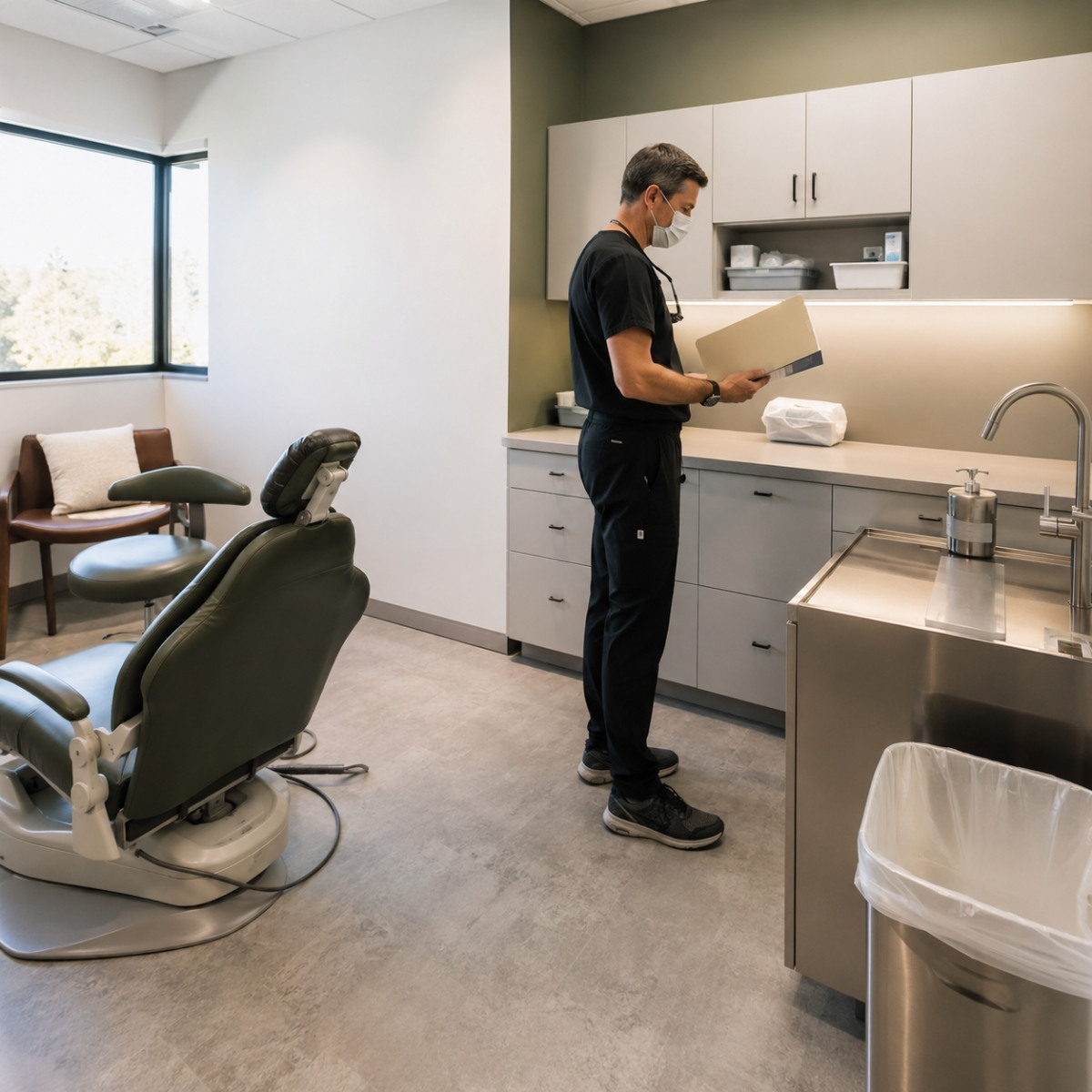
Dentists researching how to do cosmetology after BDS or how to move into facial aesthetics should follow a structured process that protects their patients, professional license, and practice.
Begin by confirming professional licensure and legal authority. International dental graduates must identify the pathway required to obtain a dental license in the jurisdiction where they plan to work. Dentists who are already licensed should contact the relevant state board to confirm permitted products, clinical purposes, anatomical areas, treatment settings, educational hours, permits, record-keeping responsibilities, and delegation restrictions. If the rules are unclear, request written guidance instead of relying exclusively on a course provider's advertising.
Next, evaluate clinical education carefully. Select a dental or medical continuing-education provider whose faculty, curriculum, supervised participation, and emergency instruction meet applicable board requirements. The syllabus should address patient selection, contraindications, informed consent, facial and vascular anatomy, product handling, treatment planning, documentation, adverse effects, vascular-occlusion response, and referral procedures.
The third step is confirming professional liability protection. A standard dental malpractice policy may not automatically include cosmetic injectables or other aesthetic services. Give the insurer a written description of the procedures, products, anatomical areas, training, and treatment setting. Obtain written confirmation of coverage before advertising or treating patients. Depending on the carrier, coverage may be included, added by endorsement, separately underwritten, restricted, or excluded.
The fourth step involves establishing treatment-specific systems. Prepare appropriate consent documents, medical-history protocols, standardized photography procedures, product lot and expiration records, follow-up schedules, emergency supplies, adverse-event protocols, and referral relationships. Staff members should know how to recognize urgent warning signs and whom to contact if a complication occurs.
Finally, introduce authorized services gradually. Existing patients may first learn about suitable options during smile-design or facial-balance consultations. Treatment should occur only after a complete assessment, informed consent, appropriate documentation, proper scheduling, and confirmation that the requested service falls within the dentist's legal scope and insurance coverage.
Common Questions About Dentists and Facial Aesthetics
Must I leave general dentistry to provide facial-aesthetic services?
No. Many dentists add legally permitted facial-aesthetic treatments to an existing dental practice. Whether they may do so depends on state law, treatment purpose, anatomical location, education, practice setting, and professional liability coverage. Some dentists reserve dedicated sessions so they have adequate time for assessment, photography, consent, treatment, documentation, and follow-up.
How is an introductory workshop different from a private fellowship?
An introductory workshop may address foundational anatomy, patient evaluation, product principles, and basic techniques. A longer program may include supervised clinical participation, advanced treatment planning, case analysis, complication management, skin procedures, or mentorship. However, the label fellowship does not automatically indicate a CODA-accredited specialty or a qualification recognized by a state board. Dentists should evaluate the actual curriculum and its regulatory acceptance rather than relying on the program's title.
Are cosmetic injectables covered by regular dental malpractice insurance?
Not necessarily. Coverage depends on the carrier and individual policy. Dentists should provide the insurer with information about the procedures, products, treatment locations, education, and clinical setting and obtain written confirmation before providing care. Completing a course from an ADA CERP-recognized or AGD PACE-approved provider does not independently guarantee coverage.
May a dentist delegate injectable treatments to a hygienist or dental assistant?
Delegation requirements differ substantially by jurisdiction and profession. Georgia expressly prohibits dentists from delegating injectable pharmacologics under Rule 150-14-.04. Dentists practicing elsewhere must determine whether a hygienist or assistant may administer each product and what education, supervision, or permit would be necessary. Botulinum toxin is a prescription biologic drug, while dermal fillers are generally regulated as medical devices, so the applicable rules should be investigated separately.
Does a facial-aesthetics certificate increase the legal scope of my dental license?
No. A course can help a dentist develop competence and document education, but it cannot enlarge the scope established by state law. The training must relate to procedures already authorized under the dentist's license and satisfy any additional conditions imposed by the responsible board.
Can a foreign-trained BDS graduate treat patients after earning a private certificate?
Generally, no. A private training certificate does not replace the dental or medical license required where treatment occurs. International graduates should first establish their pathway to professional licensure and then determine what additional facial-aesthetics education the relevant board requires.
Prepare for a Career Change With the Right Credentials
Moving from conventional dentistry into facial aesthetics requires an active professional license, a clear understanding of legal scope, procedure-specific clinical education, emergency preparation, and confirmed liability coverage.
If you are considering broader career possibilities in beauty education, review Dalton Institute's Enrollment information to explore its available pathways. Dalton Institute offers education in areas such as cosmetology, esthetics, nail technology, and instructor training; these programs are separate from dentist-specific injectable education and do not replace dental-board authorization. To ask about admission requirements or available programs, complete the contact form at the bottom of the page and connect with the school's admissions team.