


Certificate vs. License: What You Really Need to Launch Your Nail Career

I’ve noticed a lot of talented artists lately who can create stunning sets right from their own homes. It is an exciting time to be in the beauty industry, but as 2026 rolls around, the path to turning that talent into a legitimate business is becoming a bit more structured. Artistry is a huge part of the job, but having a strong legal foundation is what really makes a career unshakeable. Before you start planning your professional pivot, it is worth looking at a beginner guide to launch your professional journey to get some perspective on how the industry looks this year.
Key Takeaways for 2026
- Licensure vs. Education: While you might earn a nail technician certificate during your studies, you actually need a state-issued license to legally accept payment for services.
- Client Expectations: Modern data shows that about 22% of clients now prioritize technicians who have verified medical-grade sanitation credentials.
- Transparent Pricing: At Dalton Institute, the nail technician training program is priced at $8,500 total, which covers your education without hidden surprises.
- New Safety Laws: The 2026 enforcement of MoCRA means that knowing your chemistry and product safety is now a federal expectation.

The Legal Reality: Why a Certificate Alone Isn't Enough
One of the most frequent points of confusion I see involves the difference between a school diploma and the actual permit you need to work in a salon.
Education Milestones vs. Permission to Practice
When people ask if they can do nails with a certificate, the answer really depends on their goals. You can certainly use a certificate in nail technology to show you’ve completed a course or a workshop, but it doesn't grant you the legal right to work in a commercial setting. To do that, you need a nail technology license from your state’s Board of Cosmetology.
Your certificate proves you did the work and learned the skills, but the license proves you are compliant with the state health codes. If you attend a state approved nail technician program, you also benefit from the Interstate Cosmetology Compact. In 2026, this initiative is making it much easier for licensed professionals to move and work across different states without having to start their testing from scratch.
The Impact of MoCRA in 2026
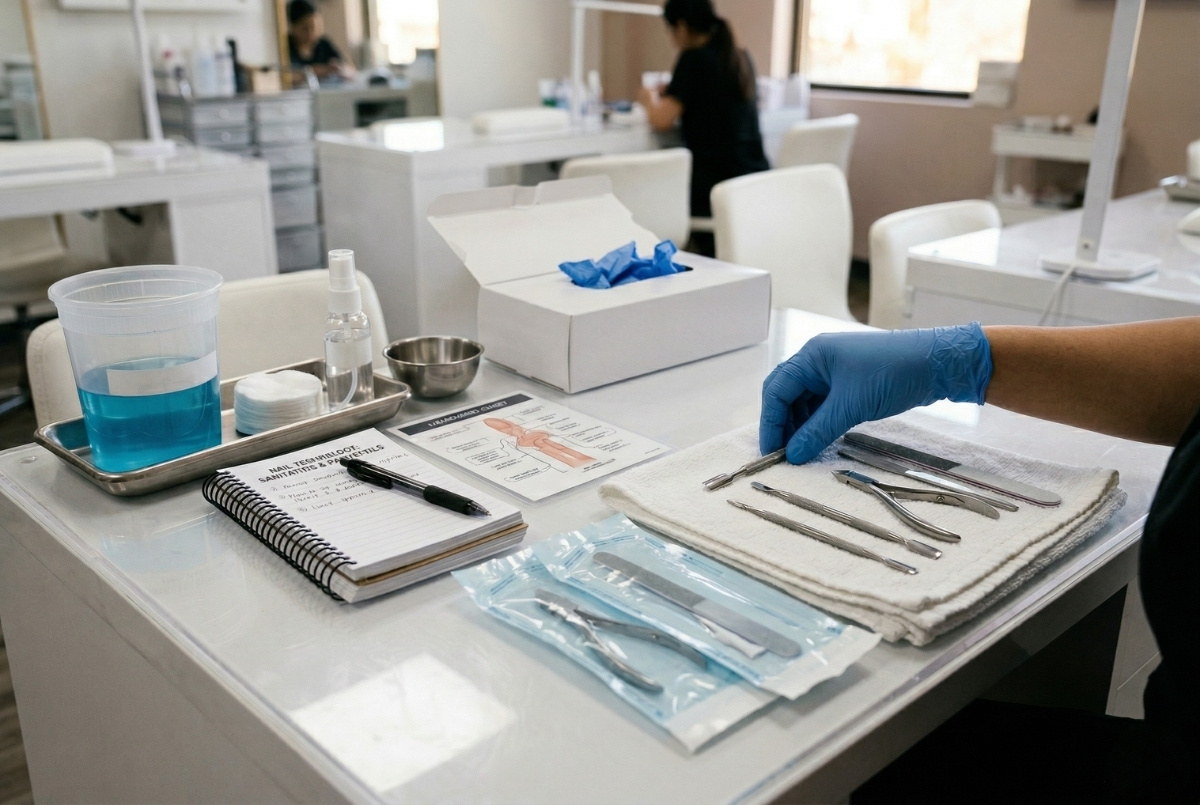
The industry shifted quite a bit this year because of the Modernization of Cosmetics Regulation Act (MoCRA). According to the U.S. Food & Drug Administration, there is now more oversight regarding the chemicals used in professional-grade products. This means that being a pro in 2026 isn't just about the art; it’s about being a safety expert who understands chemical volatility. If you practice without a license, you are actually taking on much higher federal liability than in previous years.
The Education Path: Clock Hours and Preparation
Deciding on a nail technology program is a big step for your future business. I always recommend that you break down the real differences between nail programs and cosmetology before you sign up, just to make sure the curriculum fits your specific goals.
Training Hours and Experience
If you’re wondering how long is a nail program, most states in 2026 require between 300 and 600 hours of training. For those looking to finish quickly, you can often complete a nail tech program in about 3 months if you go full-time. If you have other commitments, a part-time manicuring school schedule might take closer to 6 months.
I sometimes hear people mention a nail technician apprenticeship as an alternative. While some states allow this, it usually takes twice as long as traditional school. Plus, you might miss out on the structured nail technology training program theory—like learning how to handle blood exposure or understanding the lipid barrier—that is vital for passing your exams.
The State Board Exam
To get your license, you have to pass the final nail technology exam. I’ve found that the best schools now use AI-driven nail technology state board practice tests. These tools are great because they mimic the 2026 exam format, helping you focus on sanitation and chemical safety so you aren't overwhelmed on the day of the actual test.

Planning Your Financial Investment
I know that the nail technician certificate cost and tuition can feel like a lot to handle upfront. However, it is better to look at the total cost of attendance so you aren't surprised by extra fees later.
Understanding the Total Cost
When you are looking at how much is nail technology school, remember to check if the price includes your tools. At Dalton Institute, we aim for total transparency with a total investment of $8,500. This is designed as a complete package that includes:
- Professional instruction to guide you through the requirements for nail technology.
- A high-quality student kit with the same tools used by working professionals.
- Your books, registration fees, and access to our modern learning portals.
Knowing your nail program cost upfront helps you plan your budget without worrying about hidden expenses for kits or graduation fees halfway through.
Finding Support and Funding
There are actually quite a few ways to make your nail technology classes more affordable in 2026:
- Workforce Pell Grants: The Department of Education is expanding aid for short-term career training through the Workforce Pell framework starting in July 2026. It is worth asking our office how these federal shifts might help you.
- Industry Scholarships: I often suggest students look into Beauty Changes Lives, which provides various scholarships for nail technology to help reduce the financial burden.
- Payment Plans: We understand that paying everything at once isn't always an option. Many students use our flexible internal payment plans to manage their tuition in smaller increments while they study.
The 2026 Earning Potential
The market right now is looking for professionals who can guarantee safety. Recent data from Business Research Insights shows that 22% of customers specifically look for licensed technicians because they want to know the salon is hygienic. This "Safety Premium" is a major part of why licensed pros can charge more.
When we look at what you can earn, Indeed’s data for March 16, 2026 shows a strong upward trend:
- The national average base pay is around $23.68 per hour.
- Experienced professionals in the industry can earn base rates over $50.00 per hour.
- In high-demand luxury markets, some specialized rates have been reported as high as $94.94 per hour.
Remember that these numbers are just the base pay. Your total income usually grows quite a bit when you factor in tips and commissions on the products you use.
Start Building Your Professional Legacy
I believe that the right education is the bridge between having a talent and having a career. At Dalton Institute, we focus on helping you make that transition into the professional world with confidence. We have over 20 years of experience helping students turn their passion into a sustainable business, and we would love to help you do the same.
If you are ready to see our campus for yourself or want to talk through the next steps, you can find more details on our Enrollment page. We also have a contact form at the bottom of this article where you can reach out to us directly. I look forward to helping you map out your new career path.
FAQ: Common Industry Questions
What is the difference between a level 2 nail technology certificate and a level 3 one? A level 2 certificate usually covers the basics of manicuring and standard enhancements. A level 3 nail technician certificate goes deeper into mastery, covering things like advanced electric filing and complex chemical safety.
Can I go to school for nails online? In 2026, many schools offer hybrid nail technology classes where you can do the theory online. However, you still have to complete your hands-on training hours in a physical school to qualify for your state license.
Is the nail technology state board exam difficult? It can be challenging, but if you use a high-quality nail technology state board practice test and stay focused during your training, you will be well-prepared to pass and start your career.