
How to Get a Cosmetology License: A Detailed Guide to Requirements and Exams

I remember when I first started looking into the beauty industry, I felt like I was trying to learn a new language. I knew I had the talent for styling and the passion for the craft, but the legal side of things felt incredibly heavy. I often see people get stuck in the research phase because information about how to get a cosmetology license is usually scattered across dozens of different government websites and forums.

I want to simplify this for you. I’ve seen many students navigating the beauty niche, and I have learned that while the process seems complicated, it actually follows a very specific rhythm. Whether you are looking for a traditional path or wondering if you can get cosmetology license without school, I can show you how to navigate the system without the usual stress.

Just keep in mind that the beauty industry is regulated on a state-by-state basis. This means that while the general steps I outline here will apply to almost everyone, the specific details like the exact number of hours or the cost of the application will depend on where you live.

Confirm Your Specific State Board Requirements

I always tell people that the most expensive mistake you can make is guessing about what your local board expects from you. I find that when people look up cosmetology license requirements or generic cosmetology requirements by state, they are usually trying to find a shortcut to avoid wasting time.

I suggest starting with a direct visit to your state board website. You should look for details regarding the total training hours required, the specific types of written and practical exams you need to take, and the current fees for applications.

For instance, California requires at least 1,000 hours of instruction for any program that is approved by the board. Similarly, Virginia has moved to a 1,000-hour cosmetology curriculum as of late 2025. Because these numbers can change, I recommend verifying your specific cosmetology requirements directly with your state board to stay safe.

Deciding on Your Training Path

I think of this stage as choosing the foundation for your career. There are two primary ways to get the training you need.

The Traditional School Route

The most common way to enter the field is by enrolling in a licensed cosmetology school. I believe this is the best option for people who want a structured environment with a set curriculum. When you look at how to enroll in cosmetology school, I suggest focusing on programs that are approved by your state board. If you plan on using federal financial aid, you should also make sure the school is properly accredited.

Pursuing a Cosmetology Apprenticeship

I often hear from people who want to find a way to get cosmetology license without school. In most states, this actually refers to a formal cosmetology apprenticeship. This path usually involves a combination of paid work experience under a mentor and some classroom instruction.

At the federal level, these are often called Registered Apprenticeship programs. I have seen states like California offer this as a more affordable way for trainees to get their foot in the door. If this sounds like the right fit for you, I recommend checking with your state apprenticeship agency or using the search tools on Apprenticeship.gov to see if your state recognizes this path.

Planning Your Financials and Timeline

I know that the time and cost involved can feel overwhelming. I often see people trying to figure out how long does it take to get a cosmetology license so they can plan around their current jobs or family responsibilities.

Your total timeline is usually built from your training hours, the time it takes to get on the testing schedule, and the state’s internal processing speed. In California, for example, the board notes that while online applications move faster, paper applications can take up to eight weeks to process.

Financial Aid and Tax Benefits

I suggest looking into federal aid if you are worried about the cost of tuition. You can use the Federal Student Aid school code search tool to see if a specific program is eligible for aid. If you cannot find a school code, Federal Student Aid explains it usually indicates that the school does not participate in federal programs.

I also find it helpful to look at potential tax benefits. According to the IRS, you may be able to claim qualified education expenses if you attend an eligible educational institution, which often includes trade schools that participate in Department of Education aid programs.

Applying for Your License and Testing

Once you finish your training, the next step is managing the paperwork. I have noticed that the process of how to apply for cosmetology license usually follows the same pattern across the country: you finish your hours, submit your application, get approved to test, and then sit for your exams.

States like California use online portals like BreEZe to make this easier for you. You can use these portals to manage your application, change your address, or even verify your license later on.

Preparing for the State Board Exam

I find that most students aren’t actually afraid of the material; they are just nervous about the pressure of the test day. The cosmetology state board exam usually consists of a written portion and a practical performance.

Many states use exams developed by the NIC, which publishes Candidate Information Bulletins. These are essential reading because they outline exactly what you will be tested on. Other vendors like Prometric also provide bulletins that detail the practical side of the test.

I always advise my students that the key to how to pass cosmetology state board exam is to treat the practical portion like a choreographed performance. You should practice your sanitation and setup until they are second nature, as these procedural steps are where people often lose the most points. I have even seen discussions on Reddit where professionals point out that structured, step-by-step practice is much more effective than just general studying.

Keeping Your License Active

I believe that getting your license is just the beginning of your professional responsibility. You will need your license number for everything from job applications to renting a salon booth.

Renewals and Transfers

It is vital to know how to renew a cosmetology license before your current one expires. In New York, licenses are good for four years and can be renewed online. Texas also provides a clear online flow for cosmetology license renewal, which includes a section for disclosing any changes in your background or contact information.

If you decide to move, you will need to look into a cosmetology license transfer from state to state. This is often referred to as a cosmetology license by reciprocity. While some states like Virginia are working on a licensure compact to make this easier in 2026, you currently have to apply to the new board based on your previous training and work history.

Handling Expired Licenses

I suggest being very careful with your expiration dates. In Pennsylvania, letting a license lapse for more than five years means you have to retake the exam. Florida has a particularly strict policy for null and void licenses, where you have to prove major hardship to get them reinstated.

Navigating Special Circumstances

I know that some people worry that their background or personal situation might prevent them from getting licensed. I have found that there is usually more flexibility than people think.

  • SSN and ITIN: Some boards, like the one in California, are authorized to accept an ITIN if you do not have a Social Security Number.
  • Legal History: Many states require you to disclose a criminal history, but they often review these situations on a case-by-case basis. Texas, for example, includes a section for this in their standard renewal flow.
  • Education: While most schools require a high school diploma or a GED, the exact rules can vary by school and state policy.

Final Steps for Your Career

I find that the best way to avoid feeling overwhelmed is to follow a simple checklist:

  1. Identify your state board and their specific hour requirements.
  2. Select a training path that fits your budget and learning style.
  3. Complete your hours and submit your application online.
  4. Use official exam bulletins to guide your practice.
  5. Pass your exams and verify your license through the official state portal.
  6. Set a reminder for your first renewal date immediately.

I believe that once you have your license, you can explore so many different paths, from fashion styling to salon management. It is all about getting that initial foundation right.

If you are looking for a place to start your journey, I recommend looking into the options at Dalton Institute. I find that they have a very clear approach to helping students navigate the path from enrollment to licensure. You can find out more about the process on their Enrollment page.

If you are ready to start moving toward your career in beauty, please feel free to use the contact form we have provided below. I would love to hear which part of the industry you are most excited about so we can help you find the best way forward.

Everything You Need to Know to Enroll in a Cosmetology School This Year

If you’ve been scrolling through forums or staring at an enrollment page wondering if you can actually get into beauty school – especially if you’re holding a GED, haven’t finished your diploma, or you’re still a teenager – I know exactly how that feels. You aren’t just looking for a “maybe.” You need to know if you’re eligible so you can decide if this career path is worth your energy.

I want to break this down from the perspective of someone who sees these questions every day. Let’s get past the gatekeeping and look at how you can actually get your foot in the door.

The Three “Yes” Answers You Actually Need

One of the biggest reasons people get confused is that they think “getting in” is just one step. In reality, you’re navigating three different sets of rules at the same time. If you don’t keep them separate, you’ll get mixed messages.

1. The School’s Own Rules

This is what a specific school needs just to put you on the roster. Most schools want to see a high school diploma or a GED, but some have specific pathways for students who are still working on those credentials.

2. The State Board Requirements

This is the big one. Even if a school lets you sit in a chair and learn, you eventually need a license to get paid. In Georgia, we follow the rules set by the Georgia State Board of Cosmetology and Barbers. They decide the minimum age and education level required to actually sit for your state exam.

3. Federal Financial Aid (FAFSA)

If you’re planning to use federal grants or loans, the rules get much stricter. To qualify for Title IV funding, the government generally requires a high school diploma or a recognized equivalent. There are some “Ability-to-Benefit” paths for those without a diploma, but these usually involve being part of a very specific career pathway program.

GED, No Diploma, or No GED: What are the Real Options?

I hear this constantly: “Can I get into cosmetology school with a GED?” The short answer is a resounding yes. In the eyes of almost every admissions office and the state board, a GED is a perfectly valid high school credential.

But what if you don’t have a diploma or a GED yet?

If you are currently asking if you can go to cosmetology school without a GED, the path is a bit more narrow, but it isn’t always a dead end. Some schools offer conditional enrollment where you can start your beauty hours while you simultaneously finish your GED. However, you have to be careful here – you often can’t graduate or take the state board exam until that secondary education is officially wrapped up.

If you’re looking for cosmetology schools without a GED or diploma requirement, just keep in mind that while you might find a way to start the classes, your ability to get federal financial aid will be the biggest hurdle.

Starting Young: The 16 and 17-Year-Old Path

I often see younger readers asking, “How old do you have to be for cosmetology school?” or “Can I go at 16?”

In Georgia, you can generally start your training while you’re still in high school. If you’re under 18, you’ll just need a parent or guardian to sign off on your paperwork. There are even high schools with cosmetology programs or partnerships with local institutes. It’s a brilliant way to get a head start, but I always remind students to make sure the hours they’re earning are recognized by the state board.

Is it Hard to Get Into Cosmetology School?

A lot of people think there is some secret talent test or a “hardest cosmetology school to get into” list. Truthfully, it’s rarely about your skill with a round brush and usually about your paperwork.

Most of the time, when I see someone struggle to get accepted, it’s because of one of these three things:

  • Missing Documents: Not having a valid ID, social security card, or a transcript that the school can verify.
  • Funding Gaps: Not having a plan for tuition, kit costs, or how to navigate the FAFSA process.
  • Waitlists: Schools have strict student-to-teacher ratios. If a class is full, you simply have to wait for the next start date.

So, does everyone get in? Not necessarily “everyone,” but if you have your documents in order and a plan to pay for it, the door is usually wide open.

How to Enroll Without the Headache

If you want to know how to sign up for cosmetology school without feeling like you’re being “sold” a dream, I recommend asking one very specific question during your tour.

Don’t just ask “Can I join?” Ask this instead:

“Based on my current education status, can you confirm in writing that I meet the requirements for school admission, state licensing in Georgia, and federal financial aid eligibility?”

If they can’t give you a straight answer on all three, keep looking. Clear programs won’t avoid that question.

Who Beauty Schools Are Really For

I’ve seen all types of people walk through these doors. Beauty school isn’t just for the person who was “born with a makeup brush in their hand.” It’s for the person who is disciplined enough to show up, humble enough to take feedback, and resilient enough to handle the “ugly” phase of learning.

If you’re worried because you have a non-traditional background – maybe you’re coming back to school after a long break or you’re worried that you didn’t excel in a traditional classroom – don’t let that stop you. The “clinic floor” (where you work on real people) is a totally different world than a high school math class.

Taking the Next Step at Dalton Institute

If you’re in the North Georgia area and you’re ready to stop wondering how to get into beauty school and actually start doing it, I’d suggest looking at what we’re doing at Dalton Institute of Esthetics and Cosmetology.

We focus on making sure you aren’t just “clocking hours,” but actually preparing for a career that lasts. Whether you’re interested in a full Cosmetology program or you want to specialize, we have pathways designed to get you to the state board exam with confidence.

Programs Available at Dalton Institute

Depending on what you want to do, our core training programs include:

  • Master Cosmetologist
  • Esthetician
  • Nail Technician
  • Instructor Training

Ready to check it out?

The best way to know if this is right for you is to see it in person. You can find our full list of requirements and program details on our site, or you can use the contact form right below this post to ask us your specific questions. I’m happy to help you figure out the GED or diploma stuff so you can get to the fun part: starting your career.

Can You Practice Cosmetology Jobs Without a License? Here’s What You Can (And Can’t) Legally Do

If you’ve been looking for ways to break into the beauty world without a license, I’m guessing you’re not trying to be reckless. You’re likely just trying to be practical.

Maybe you need to start bringing in some cash right now, or maybe the cost of school feels like a huge mountain to climb. Or, if you’re like a lot of people I talk to, you might just be frustrated by the conflicting advice you see on Reddit or social media. One person says you’re fine, the next says you’ll get fined.

I want to make this easy for you. I’m going to break down where the legal lines are usually drawn, how to find cosmetology jobs without license requirements today, and how to stay on the right side of the law while you build your dream career.

License vs Certification vs Business Permit: What’s the Difference?

Before we dive into the specific roles, we have to clear up the terminology. This is where most people get tripped up when they start researching cosmetology without a license.

The Professional License

Think of this as your legal green light from the state. You need this to perform specific services on the public. States require these because many beauty treatments involve chemicals, sharp tools, or sanitation risks that could actually hurt someone if done wrong.

The Certification

A certificate proves you took a class and learned a skill (like a specific lash technique). It’s great for your resume and building trust with clients, but it is not a legal substitute for a state license. Having a certificate doesn’t automatically mean you can practice cosmetology without a license.

The Business License

This has nothing to do with your talent and everything to do with taxes and local laws. Even if the job you’re doing doesn’t require a cosmetology license, you’ll still likely need a general business license to operate legally, pay taxes, or sell products.

A quick way to remember it:
License = permission to perform, Certification = proof of training, Business license = permission to run a company.

How the Law Decides What’s “Off-Limits”

Most of the time, states don’t regulate beauty because they want to “gatekeep” the industry. They regulate based on physical risk.

You can usually bet that a license is required if the service involves:

  • Cutting or altering hair
  • Using strong chemicals (like hair dye, relaxers, or chemical peels)
  • Using tools that require high-level sanitation
  • Anything that could break the skin or cause an infection
  • Procedures that carry a risk of burns or permanent scarring

Services that stay “on the surface” are often less restricted, but every state is a little different. That’s why you might hear that someone in one state can do makeup freely, while someone in another state needs a full license for it.

Beauty Careers You Can Start Right Now (No License Needed)

If you want to get your foot in the door and start networking without the legal headache, you actually have a lot of great options.

Non-Service Roles

These are honestly underrated. They let you learn how the business works from the inside out while you plan for future careers with a cosmetology license:

  • Beauty Retail & Sales: Working at a beauty supply store or a makeup counter.
  • Salon Management/Front Desk: Being the face of the salon and handling bookings.
  • Brand Representative: Working for a specific brand at events or trade shows.
  • Content Creation: You don’t need a license to film tutorials, write reviews, or run a beauty-focused social media page.
  • Beauty Writing: Blogs and newsletters are always looking for people who know the niche.

Product-Based Businesses

If you’ve got an entrepreneurial spirit, you can build a brand without ever touching a client:

  • Press-on Nail Brands: You can design and sell custom sets online.
  • Selling Tools or Accessories: Think lash strips, brushes, or organizers.
  • Digital Products: Creating guides or “how-to” e-books for other enthusiasts.

Salon Ownership: You Can Often Own Without Being Licensed

This is a question I get all the time: can I own a salon without a cosmetology license?

The short answer is yes, in many places, you can! You can be the business owner and the boss without ever picking up a pair of shears. If you are researching how to open a hair salon without a cosmetology license, keep these points in mind:

  • You can’t do the hair: You must hire licensed professionals to perform the services.
  • The building needs a license: The facility itself usually needs an establishment permit.
  • Compliance is on you: Even if you aren’t the one doing the work, you are responsible for health and safety codes.

So, while you can own a salon without a cosmetology license, you must ensure your staff is fully compliant.

The “Big Five”: Lashes, Nails, Hair, Makeup, and Microblading

Let’s get into the specifics of what people usually want to do. If you’re asking yourself, “Where is the line?” here is how it usually breaks down:

Common Industry Questions

  • Lashes: You might wonder, can I do lashes without a cosmetology license? Usually, the answer is no. Because you’re using strong adhesives so close to the eye, most states require a license. If you’re asking, “can I be a lash tech without a cosmetology license?” check if your state has a specific “lash-only” certificate, though these are rare.
  • Nails: If you’re wondering, “can I be a nail tech without a cosmetology license?” or “can I do nails without a cosmetology license?” it’s tricky. In almost every state, if you are touching cuticles or using professional-grade gels for money, you need a license.
  • Hair: You cannot legally cut or chemically treat hair without a cosmetology license. Some people ask, “can you be a barber without a cosmetology license?” but barbering almost always requires its own specific license.
  • Makeup: Can you be a makeup artist without a license? Often, yes! Many states allow “freelance” makeup for weddings as long as you aren’t performing skin treatments. If you want to know “can you do makeup without a cosmetology license?” the answer is usually yes for retail and events.
  • Microblading: Can you do microblading without a cosmetology license? Generally, yes-but that’s because it’s usually regulated under “body art” rather than cosmetology. Similarly, it is rare to find a way to be an esthetician without a cosmetology license or a specialized skin license.

How to Check Your Local Rules Without the Stress

If you want to be 100% sure you’re safe, follow these steps:

1) Define the service specifically
Don’t just say “nails.” Say “applying press-on nails for a photoshoot.”

2) Go to the source
Search for your state’s “Board of Cosmetology” or “Board of Barbering.”

3) Look for exemptions
Most boards have a list of services that don’t require a license (like threading or certain types of braiding).

4) Confirm the business side
Remember that even if you don’t need a personal license, you can own a salon without a cosmetology license as long as you register the business correctly.

Final Thoughts on Starting Your Journey

Building a career in beauty is a marathon, not a sprint. While there are plenty of ways to start earning and learning right now, having a license eventually is what turns a side hustle into a lifelong career.

If you’re currently working in a non-licensed role, use that time to soak up every bit of knowledge you can. Watch how the pros handle clients, learn the business side of things, and start building your network. When you finally do get that license, you’ll be miles ahead of everyone else.

Whatever path you choose, just make sure you’re doing it the right way. Your future self-and your clients-will thank you for it!

10+ Career Paths You Can Pursue with a Cosmetology License

The common assumption is that a cosmetology license leads to exactly one destination: standing behind a salon chair for forty hours a week. While that is a classic and rewarding path, the truth is that your license is actually a versatile key that can open doors to education, corporate roles, and even remote work.

If you have been wondering what else you can do with your training – and which of those paths offer real stability – I want to walk you through the landscape of the modern beauty industry.

First, Understand Your Legal Boundaries

Before you start dreaming of a specific niche, you have to know what your license actually allows you to do. Every state has different rules, and even two “licensed pros” might have different permissions based on their specific certification category.

For example, the Texas Department of Licensing and Regulation provides detailed scope-of-practice guides that clarify exactly what services are legal under different licenses. It is also important to note that if you are thinking about working from home, many states (like California) regulate home setups as official establishments rather than just “doing hair in the kitchen.”

My best advice: check in with your state board before you spend money on a specific niche. It prevents a lot of legal headaches later on.

The Foundation: Traditional Offline Career Paths

The Salon Experience (And Its Many Sub-Specialties)

Working in a salon or studio is the most familiar route, but it is rarely just one job. Within this space, you can specialize in areas that actually boost your income and keep things interesting, such as:

  • Precision cutting and modern styling
  • Advanced color and chemical treatments
  • Extensions and bridal hair
  • Texture-focused services

According to the Bureau of Labor Statistics, the median pay for hairstylists and cosmetologists was around $16.95 per hour (May 2024). More importantly, BLS projects about 84,200 openings each year, on average, over the decade. While that is just a baseline, it shows that the demand for skilled pros remains very high.

Skin and Nails: High Consistency Roles

If you prefer a more routine-oriented environment with a focus on detail, skin and nail care are fantastic options. BLS data from 2024 shows median pay for skincare specialists at $19.98 per hour and manicurists at $16.66 per hour. These roles are great for building a loyal, recurring client base because the services often require regular maintenance.

Senior Living and Community Care

I think this is one of the most overlooked sectors in beauty. Many companies, such as Resident Salon Services, specialize in placing beauty professionals inside senior living communities. This path usually offers steadier hours and a built-in clientele without the high-pressure trend-chasing of a high-end commercial salon.

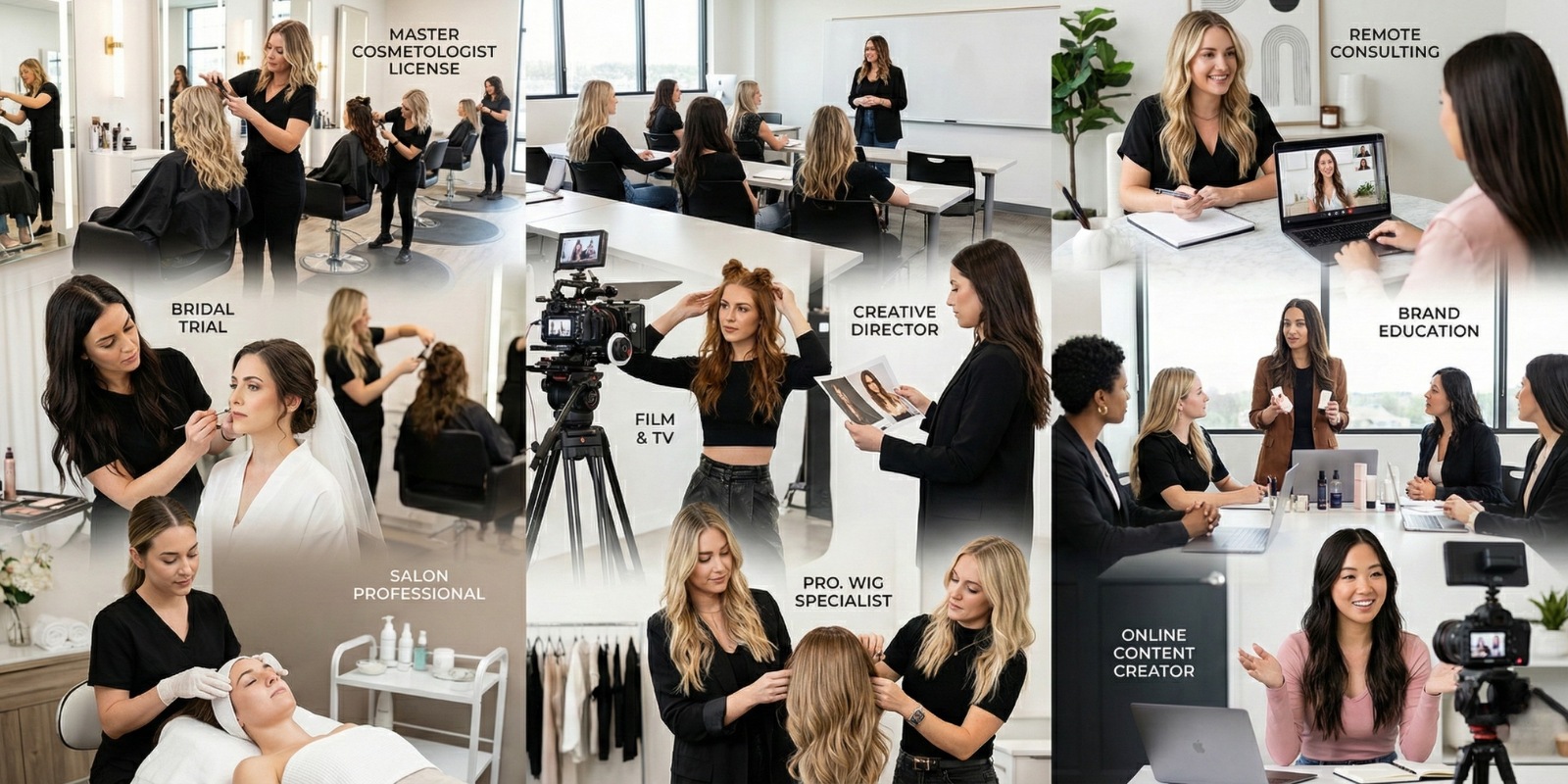
Moving Into Creative and Specialized Industries

If you love the idea of storytelling or high-stakes environments, you might find your fit in the “creative” side of beauty:

  • Weddings and Special Events: High-energy work that focuses on one-day transformations.
  • Film, TV, and Editorial: Often freelance-based work for shoots and performance. The IATSE Local 706 notes that hair stylists applying for Network Broadcasting Television must bring a current cosmetologist license..
  • Wig Design and Hair Loss Support: This is a deeply meaningful niche. Some pros specialize in customizing wigs for clients with medical hair loss. The American Cancer Society and the National Alopecia Areata Foundation both offer resources on how these services (often called “cranial prostheses”) can even be insurance-reimbursable.

Corporate Stability and Education

If you want a more structured environment with potential benefits, consider these paths:

Training and Brand Education

Experienced pros often move into teaching at schools or working as platform artists. Brands often need people to demonstrate products at trade shows or train salon staff on new techniques. If you enjoy explaining the “why” behind a process, this is a natural fit.

Sales and Brand Management

This is about product knowledge rather than “hard sales.” You could work as a professional sales rep or an account manager for a major beauty brand. You understand the products because you have used them, which makes you a reliable resource for other salon owners.

Can You Really Work From Home? (Remote Options)

To be honest, most remote beauty work is not about hands-on service. It is about using your expertise in a digital format.

  • Online Color Consulting: Companies like eSalon hire licensed cosmetologists to help remote customers pick the right shades. This values your color theory knowledge without the physical strain of standing all day.
  • Brand Support and Content: Many hair care companies need licensed experts for customer support or digital content creation. Your license gives you the credibility to teach techniques through video or write educational guides that people actually trust.

Launching Your Career at Dalton Institute of Esthetics and Cosmetology

If you have read this far, you are likely looking for a school that prepares you for more than just a single job title. You want to know if you will graduate “Salon Ready” and if the program actually fits your life.

I have looked into how we do things here at Dalton Institute, and it really comes down to a few key pillars:

Comprehensive, State-Required Training

In Georgia, earning your license as a Master Cosmetologist requires 1,500 hours of training. At Dalton Institute, our program is designed to cover every base – hair, skin, and nails – so you aren’t limited when you enter the job market. We also offer specialized tracks like our 1,000-hour Esthetician program and our 600-hour Nail Technician course if you already know exactly where you want to specialize.

Professional Partnerships and Real-World Experience

One thing that really sets our training apart is our partnership with CHI products. You will be training with professional-grade tools and formulas used in high-end salons globally. Plus, our student salon and spa environment allows you to work on live clients under the supervision of licensed instructors. That hands-on experience is where your confidence actually builds.

Focused on Your Success After Graduation

We take a very practical approach to your future. Our mission is to provide a complete educational experience that includes the business side of beauty – things like client retention, resume writing, and job-seeking skills. We even offer instructor training (750 hours) for those who want to eventually lead the next generation of beauty pros.

Whether you want to be an entrepreneur, work on a film set, or build a brand online, you need a solid educational foundation first.

Take the Next Step

The best way to see if this environment fits your goals is to see it for yourself. We offer a no-obligation, 30-minute campus tour where you can meet our instructors, see our salon floors, and ask the specific questions that matter to you.

Working as a Barber, Lash Tech, or Nail Tech with a Cosmetology License: What’s Allowed?

I get it – you finally have that license in your hand (or you’re almost there!), and now you’re looking at the beauty industry like a kid in a candy store. You might be wondering if you can jump straight into doing lashes, or if you can take a chair at that cool new barbershop down the street.

The biggest mistake I see new pros make is assuming a cosmetology license is a “golden ticket” to every single beauty service. While it’s definitely the most flexible license you can get, there’s one thing you have to understand:

Cosmetology is broad, but it isn’t a free-for-all.

What you can and can’t do depends entirely on your “scope of practice,” which is a fancy way of saying “what the law allows.” Here is the breakdown of how your license translates to other specialties.

Your License Isn’t One-Size-Fits-All

In the United States, every state has its own rulebook for beauty.

For instance, New York is pretty inclusive – they say cosmetology covers skin, nails, and even shaving or trimming beards. On the other hand, Texas has very specific guides that tell a Cosmetology Operator exactly what they can do (like using a safety razor) and what is off-limits (like using a straight razor).

So, when people ask me, “Can you work as an esthetician with a cosmetology license?” I always tell them the same thing: You can do exactly what your state board says a cosmetologist can do. Nothing more, nothing less.

How I Double-Check My Scope Before Adding a Service

Before I ever add a new service to my menu or try to switch lanes in my career, I follow this 5-minute checklist:

  1. Find your state regulator’s website (usually the State Board of Cosmetology).
  2. Look for “Scope of Practice” or “Laws and Rules.”
  3. Search for specific keywords: eyelash extensions, straight razor, facials, or chemical peels.
  4. Get it in writing. If I’m still confused, I email the board. Having a written response can save your career if an inspector ever walks in.

States like Texas make this easy with centralized guides, while California uses “Industry Bulletins” to clarify things like microneedling or lash services.

Can You Be an Esthetician With a Cosmetology License?

In most states, the answer is yes – but with a “but.”

Most cosmetology programs include basic skin care. For example, Florida and New York explicitly include esthetics and skin treatments under the cosmetology umbrella.

The “Basic” vs. “Advanced” Trap

This is where I see people get into trouble.

  • Basic services usually include facials, masks, and waxing.
  • Advanced services are often restricted.

Illinois is very strict about this – they have a list of procedures that are prohibited if they affect the living layers of the skin. Similarly, California is very clear that things like microneedling are not within the scope of practice for any board licensee.

Watch Your Title

Even if you can legally do the work, you might not be allowed to call yourself an “Esthetician.” The National Coalition of Estheticians Association points out that some states restrict professional titles. You might be a licensed cosmetologist who offers skin services, but you may not be a “Licensed Esthetician.” That might sound like a small detail, but it’s huge for your marketing and insurance.

Can I Do Nails With a Cosmetology License?

This is almost always a “yes.” Most states consider nail care a core part of cosmetology.

In Texas, a cosmetology operator can legally do manicures, pedicures, and acrylics. Florida has similar rules.

However, just because you can do it doesn’t mean you should without proper training. Nail tech work requires a high level of hygiene and product knowledge. If you want to work as a nail tech without a license specifically for nails, your cosmetology license is usually enough, but make sure your education was solid.

Can You Do Lashes With a Cosmetology License?

Lashes are the wild west of the beauty world right now. People often confuse a “certificate” from a weekend class with a “license” from the state.

In California, applying eyelash extensions is only legal for licensed cosmetologists or estheticians. In Texas, there is a specific lash specialty license, but a full Cosmetology Operator license also covers everything a lash specialist can do.

The Liability Headache

It isn’t just about the law; it’s about insurance. On forums like SalonGeek, you’ll see pros constantly asking if their insurance covers them when they move from one service to another. Another thread highlights how a policy might not cover you if you’re performing a service that wasn’t specifically listed. Always check with your insurance provider before you start gluing anything near someone’s eyes!

Can a Cosmetologist Work as a Barber?

This is where things get interesting. Cosmetology and barbering have a lot of overlap (like cutting hair), but the “line in the sand” is usually the razor.

In Texas, a cosmetologist can do almost everything a barber does except straight-razor shaving. If you want to use a straight razor, you usually need a barber license. However, New York allows cosmetologists to shave and trim beards.

If you are looking for a “cosmetology to barber crossover,” most states have a path where you can get your barber license after cosmetology by completing a shorter crossover program. This is the best way to ensure you can work in a barber shop legally and offer the full range of services.

A Warning About Working Without a License

I know it’s tempting to start working while you’re still in school, but “can you work as a nail tech without a license?” or “can you do lashes without a cosmetology license?” The answer is almost always a hard no if you’re charging money.

Some states are explicit that you can’t perform or advertise services that fall outside your license scope. For example, Texas lists straight-razor shaving as something a Cosmetology Operator cannot perform or advertise for compensation. Texas also restricts unlicensed people from holding themselves out using protected terms like ‘cosmetology’ or ‘barbering.’

Start Your Career Path at Dalton Institute

If you’re feeling overwhelmed by all these rules, the best move is to choose a school that prepares you for the specific path you want. At Dalton Institute of Esthetics and Cosmetology, we help you navigate these licensing lanes so you can build a career that actually lasts.

Here is how we help our students in Georgia get where they want to be:

The Master Cosmetologist Path (The All-In-One Solution)

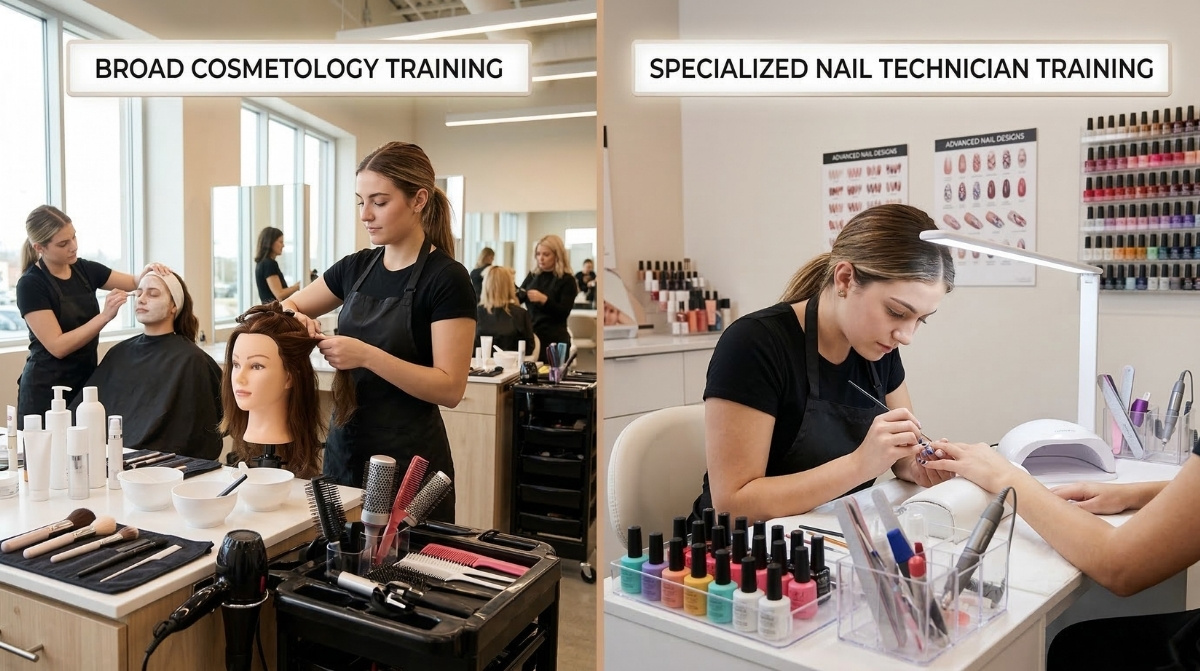
If you want the most flexibility, our Master Cosmetologist program is the way to go. It’s a 1,500-hour program that covers everything – hair cutting and coloring, manicures, pedicures, facials, waxing, and makeup. It’s the ultimate “do-it-all” license for someone who wants to work in a full-service salon.

Specialized Programs

If you already know you want to specialize, we offer focused training to get you into the workforce faster:

Take the First Step

The best way to figure out which program fits your goals is to see the school in person. I always recommend that potential students schedule a tour to see our clinic floor, meet the instructors, and get a feel for the environment.

Licensing can be confusing, but once you have the right education, the possibilities in this niche are endless. I’d love to see you find your place in the beauty world!

How a Career in Beauty Can Transform Your Life

If you’ve ever dreamed of a career that allows you to be creative, meet new people, and make a real difference in others’ lives, a career in the beauty industry might be your perfect fit. At our beauty school, we offer more than just technical training — we provide an opportunity to change your life. Here’s how pursuing a career in beauty can transform you:


  1. Creative Freedom
    Whether you’re doing hair, makeup, or skincare, the beauty industry offers endless opportunities for creativity. Every day is different, and you have the freedom to express yourself while helping others look and feel their best.


  1. A Rewarding Career
    There’s something incredibly rewarding about helping someone feel confident in their appearance. As a beauty professional, you’ll have the chance to make a real impact on your clients’ lives, boosting their self-esteem and leaving them feeling empowered.


  1. Endless Career Opportunities
    The beauty industry is vast and diverse. Whether you want to work in a salon, open your own business, or travel the world as a makeup artist for high-profile events, the possibilities are endless. Our beauty school provides the foundation for a career with opportunities for growth and advancement.


  1. Job Stability and Flexibility
    People always need beauty services, making this a recession-proof career. As a beauty professional, you’ll enjoy job stability and flexibility, with the ability to set your own hours and even work remotely as a freelance artist.


  1. Ongoing Education and Growth
    The beauty industry is constantly evolving with new trends and techniques. Our beauty school ensures that you stay ahead of the curve, offering continuous education and professional development opportunities so you can keep growing in your field.


Ready to make a change? Enroll today to start your journey toward a fulfilling and dynamic career in the beauty industry. Let us help you unlock your full potential!

Top 5 Reasons to Enroll in Our Beauty School This Fall

As the crisp autumn air settles in, there’s no better time to take a step toward a rewarding career in the beauty industry. Whether you’re looking to become a skilled cosmetologist, esthetician, or nail technician, our beauty school offers an exceptional learning experience. Here are the top five reasons why you should enroll this fall:


  1. Comprehensive, Hands-On Training
    At our beauty school, you’ll receive in-depth training in a variety of beauty disciplines. From skincare techniques to the latest in nail artistry, our hands-on approach ensures you’re not only learning the theory but also gaining real-world experience that prepares you for success.


  1. Expert Instructors with Industry Experience
    Learn from the best! Our instructors have years of experience in the beauty industry and are passionate about teaching. You’ll gain insights and tips from professionals who have worked in top salons and spas, giving you the knowledge you need to excel.
  2. Flexible Scheduling for Busy Lifestyles
    We understand that life can get busy. That’s why we offer flexible class schedules, including evening and weekend classes, so you can earn your certification while balancing work, family, or other commitments.


  1. State-of-the-Art Facilities
    Our beauty school is equipped with the latest tools and technologies to help you learn and practice your craft. Our modern classrooms and fully equipped beauty labs ensure you’re working with the best equipment in the industry.


  1. Job Placement Assistance
    We don’t just want you to graduate; we want you to succeed. That’s why we offer job placement assistance to help you secure a position in top salons, spas, or even start your own business after graduation.


Don’t wait for the new year to start your dream career! Contact us today to schedule a tour or apply for our fall semester. Space is limited, so act fast to secure your spot!

From Passion to Profession: Turning Your Love for Beauty into a Career This Fall

From Passion to Profession: Turning Your Love for Beauty into a Career This Fall

Do you love experimenting with makeup, styling hair, or creating flawless nails? If your passion for beauty lights you up, why not transform it into a career? This September, our beauty programs are open for enrollment—helping students like you take the first step toward a future in the beauty industry.

Why Choose Beauty School?

The beauty industry isn’t just about trends—it’s about building skills that empower you to earn a stable, rewarding income. At Beauty School, we provide hands-on learning, industry-standard tools, and real client experience to make sure you’re job-ready the day you graduate.

Programs Designed for Success

  • Cosmetology: Master hair cutting, coloring, and styling.

  • Esthetics: Dive into skincare treatments, facials, and spa techniques.

  • Nail Technology: Learn everything from manicures to advanced nail art.

  • Instructor Training: Take your skills further by becoming a licensed educator.

Why Start in September?

Fall is one of the best times to begin. By starting now, you’ll finish your training just as new opportunities open in salons, spas, and even self-owned businesses. The demand for licensed professionals continues to grow, giving you countless ways to build your career.

Your Future Starts Here

Choosing a career in beauty means joining a supportive, creative community where you can thrive. With the right training, your passion becomes more than a hobby—it becomes your livelihood.

👉 Enroll this September and let your beauty journey begin. Your dream career is closer than you think!

SEO Keywords: beauty school fall enrollment, cosmetology training September, esthetician career path, nail technician program, beauty industry career


Why September Is the Perfect Time to Start Your Beauty Career

Why September Is the Perfect Time to Start Your Beauty Career

September is more than just back-to-school month for kids—it’s also the perfect time for adults to invest in themselves. If you’ve been dreaming of a career in cosmetology, esthetics, or nails, there’s no better moment to take the leap.

A Fresh Start for Your Future

As summer winds down, many people feel inspired to set new goals. September offers a natural reset, making it an ideal month to begin your beauty education journey. Whether you’re just graduating high school or looking for a career change, this season gives you the momentum you need to succeed.

Build Skills That Are Always in Demand

Beauty never goes out of style. Licensed professionals in cosmetology, nails, and esthetics are consistently in demand, and the industry is growing each year. By starting in September, you position yourself to graduate right in time for the busy summer season—when salons, spas, and bridal businesses are at their peak.

Flexible Programs to Fit Your Life

At Beauty School, we understand that schedules look different for everyone. That’s why our programs offer flexible class times, hands-on training, and supportive instructors ready to guide you every step of the way.

The Career You’ve Been Waiting For

Imagine waking up every day excited to do work that inspires you and makes others feel their best. With training in cosmetology, esthetics, nails, or instructor programs, you’ll have the foundation for a lifelong career filled with opportunity.

👉 Don’t wait another year. September is your time to shine! Spots are limited, so apply now to secure your place in one of our programs.

SEO Keywords: Beauty career September, cosmetology school enrollment, esthetics program fall, nail technician training, start beauty school


From Student to Stylist: How Our Graduates Are Building Their Dream Careers

Keywords: beauty school success stories, cosmetology graduate, esthetician job, nail technician career, beauty industry jobs

Starting a new career can feel overwhelming — but at our school, we’ve seen time and time again that with the right training and support, our students thrive. This month, we’re highlighting some of our favorite beauty school success stories from recent graduates who turned their passion into purpose.

From Student to Salon Stylist

Sarah enrolled in our cosmetology program with zero salon experience but a strong love for hair color and style. With hands-on practice in cutting, coloring, and client consultations, Sarah built confidence in her craft. After passing her state board exam, she was hired at a popular local salon — and within six months, she had a fully booked schedule.

“The instructors pushed me to do better every day. I wouldn’t be where I am without them,” she says.

Building Her Esthetics Brand

Jasmine joined our esthetician program hoping to one day open her own spa. While in school, she learned everything from facials and waxing to ingredient knowledge and skincare protocols. Today, Jasmine is a licensed esthetician with her own skincare studio, where she offers custom facials and skin consultations.

“The business tips and client experience training helped me more than I expected. Now I’m doing what I love every day.”

The Nail Tech Everyone Talks About

After graduating from our nail technician program, Miguel quickly stood out for his eye-catching nail art and precise technique. He now works in a high-end salon and has gained a loyal Instagram following for his custom nail designs.

“The program gave me the skills, and the confidence followed. Now I’m living my dream job.”

Your Story Starts Here

Whether you’re interested in becoming a cosmetology graduate, licensed esthetician, or launching a nail technician career, our school provides the tools, support, and training to make it happen. We combine professional instruction with real-world practice so that when you leave, you’re job-ready.

CTA: Inspired by their stories? Yours could be next. Contact us today to schedule a tour or speak to an admissions advisor. The beauty industry is waiting — and your future is bright.