

The Realistic Path to Becoming an Esthetician: Schooling, Costs, and Getting Your License
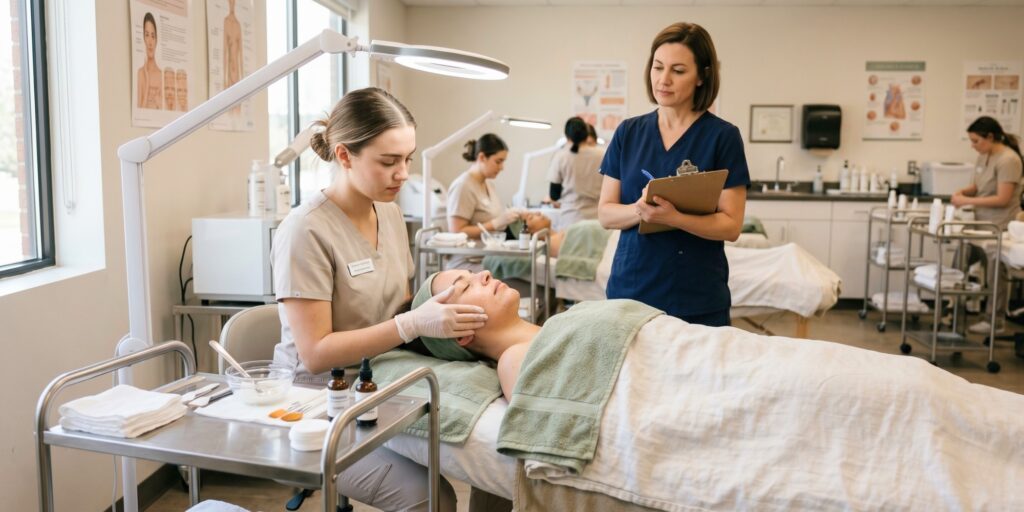
I’ve always found that the most fulfilling careers are the ones where you get to help people feel confident every single day. Stepping into the world of professional skincare is a big move, and I want to make sure you have a clear map of what to expect before you dive in. Transitioning from a beauty enthusiast to a skin health professional requires a solid grasp of the biology and chemistry that make this trade work.
If you are curious about how to become an esthetician, the path involves much more than just a love for products. I’ve put together this guide to walk you through the education for an esthetician, the requirements for an esthetician license, and the reality of the average esthetician school cost.
Key Takeaways
- Speed to Career: In Georgia, students in a state-approved esthetician program complete 1,000 hours of training, and some schools structure that timeline in about 9 months.
- Job Growth: The Bureau of Labor Statistics projects a 7% growth rate through 2034, showing strong demand for new pros.
- Income Potential: While the average salary is around $45,374, Master Estheticians can often earn over $66,900.
- New Standards: The Modernization of Cosmetics Regulation Act (MoCRA) has recently raised the bar for professional accountability in the industry.
Defining the Modern Professional: Scope of Practice
The beauty industry in 2026 has shifted toward what Mintel analysts call "Metabolic Beauty." This means clients expect you to understand how their internal health reflects on their skin. As a professional, your legal scope of practice centers on the lipid barrier, which acts as the skin's natural shield.
You will use clinical-grade exfoliation and advanced technology to support cellular repair. Understanding this chemistry is what separates a hobbyist from a pro. Modern clients are moving toward "Bio-intelligent actives," which are ingredients that react to the skin’s metabolic state in real-time. Choosing a program that emphasizes skin biotechnology will help you stay ahead of the curve.
The Academic Path to be an Esthetician
You need to check off a few boxes before you can enroll. At Dalton Institute, applicants must be at least 18 years old and hold a high school diploma or GED. If you have ever wondered, "can you be an esthetician with a GED?" you will be happy to know that this credential is accepted for enrollment.
The path for how to become an esthetician after high school is fairly straightforward:
- Research reputable schools with esthetician programs.
- Complete your required training for an esthetician.
- Pass your state board exams.
- Apply for your official license.
The Reality of Esthetician School: Online vs. In-Person
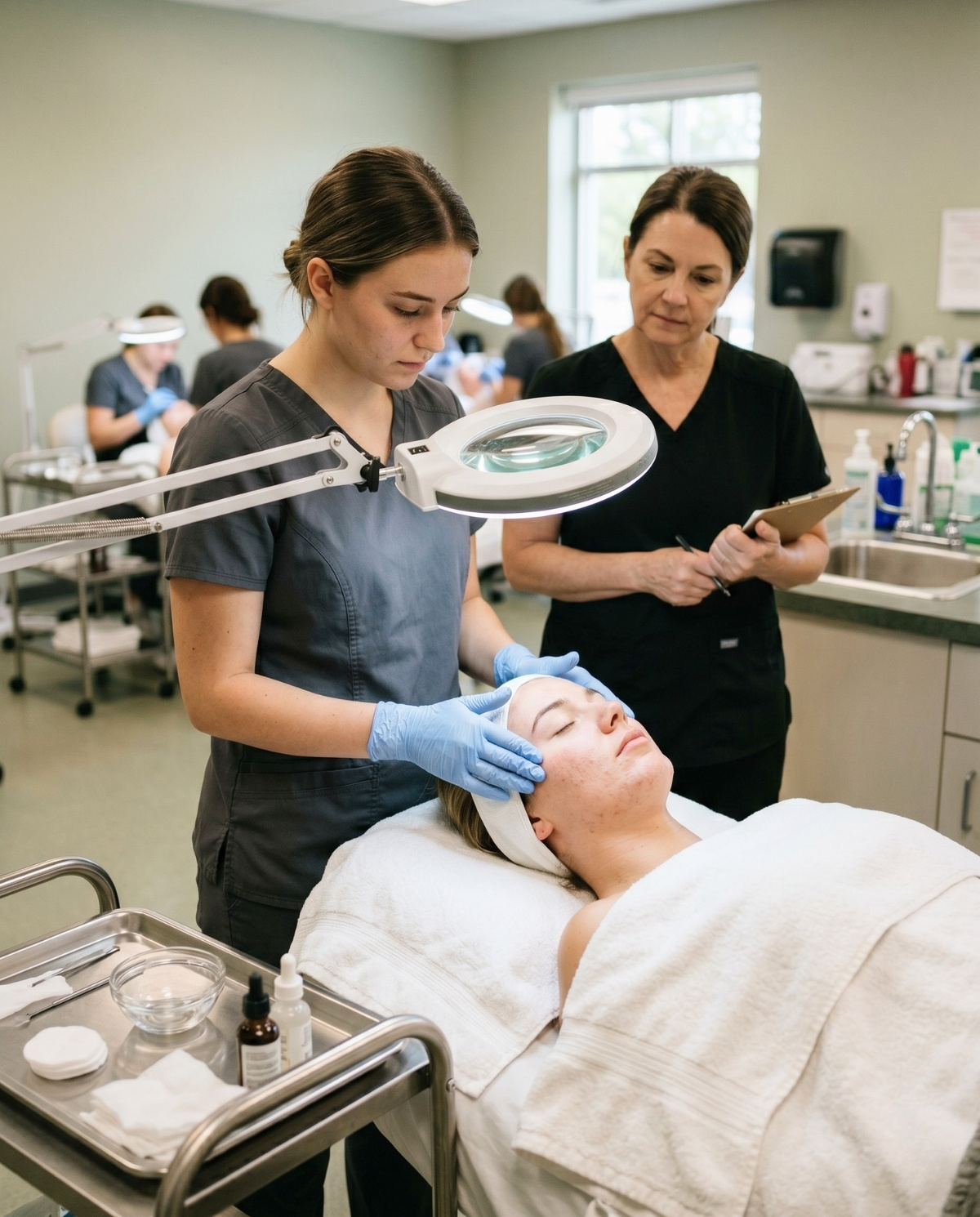
When you search for the quickest way to become an esthetician, you might see ads for an online esthetician course. I want to be realistic here. You can take online classes for an esthetician to learn anatomy or chemistry, but you cannot learn how to safely perform a chemical peel through a screen.
Most states require hundreds of hands-on hours in a supervised student clinic. If a program claims you can do esthetician school online without any in-person training, they are likely not accredited. A lack of accreditation would prevent you from getting a license for an esthetician, making that "quick" route a dead end.
How Long to Become an Esthetician?
If you are wondering how many years of school for an esthetician are required, the answer is usually measured in months. While the Bureau of Labor Statistics highlights that you must complete a state-approved program, the specific hour requirements are set by your local state board.
In Georgia, you are required to complete 1,000 hours of documented training. At Dalton Institute, the esthetician program is structured around 1,000 hours / 9 months. Here is how that usually looks in practice:
- Program requirement: Georgia esthetician licensure requires 1,000 hours of approved training.
- Dalton Institute timeline: Dalton Institute lists its esthetician program as a 9-month program.
This fast-paced schedule allows for a rapid transition into a new career. You spend less time in a classroom and more time building the hands-on confidence you need to be "Salon Ready" by graduation.
Price for Esthetician School and Financial Planning
The esthetician school cost is a major investment in your professional future. You should expect to see tuition range from $3,000 at a community college with an esthetician program to over $15,000 at specialized private institutions.
Many students worry about the upfront cost, but there are several ways to manage this:
- FAFSA for esthetician school: You can apply for federal student aid through FAFSA if your school participates in Title IV programs.
- Grants for esthetician school: Some schools provide money that does not need to be paid back.
- VA Benefits: If you or a family member served in the military, the VA pays for esthetician school at many qualifying locations.
When calculating the cost to become an esthetician, remember to include "kit fees." These are the professional tools and products you will use during your training and often take with you into your first job.

How to Get Your Esthetician License
Once you finish your esthetician program, you enter the final phase before starting your career. This is the official recognition of your skills by the state board.
Licensing exams vary by state, and many require both a written and a practical exam. In states that utilize the two-part system, the process looks like this:
- Theory Exam: A written test that covers skin biology, sanitation protocols, and state laws.
- Practical Exam: A hands-on demonstration where you perform services on a model or mannequin to prove your technique is safe.
While states like California have recently moved away from the practical portion to simplify the process, Georgia still maintains rigorous testing standards to ensure every licensed esthetician is prepared for the field.
How much does it cost to get an esthetician license? You will need to pay for the application and the testing fees, which usually total between $100 and $250 depending on your state.
Careers After Esthetician School: Where Can You Work?
The question "what can you do with an esthetician license?" has many answers today. Common workplaces include:
- Medical Spas: Performing advanced treatments like micro-needling alongside doctors.
- Resort Spas: Working in high-end luxury environments.
- Freelance/Self-Employment: Managing your own books and specializing in niche services like lash extensions.
Data from ZipRecruiter in early 2026 shows the average salary for an esthetician is currently around $45,374. Focusing on a specialty can increase your earning potential significantly. For example, a Master Esthetician averages over $66,900 annually. Your esthetician yearly salary will grow as you build a loyal client base and master high-ticket services.
Ready to Master Your Craft?
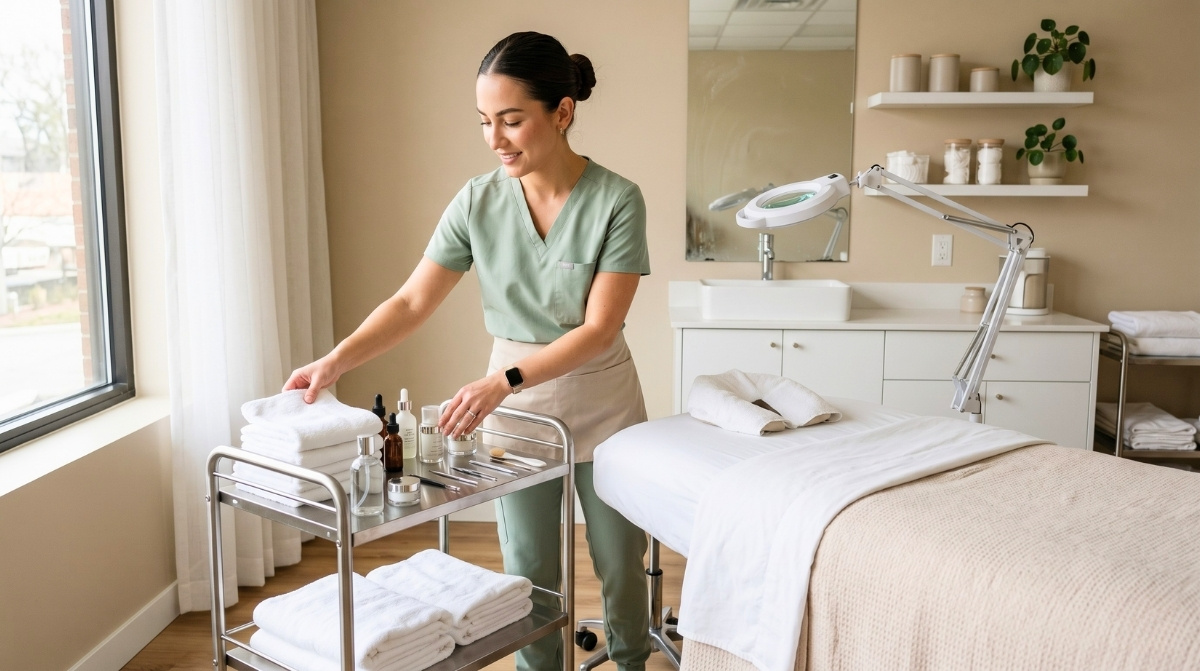
I truly believe that choosing where you learn is just as important as what you learn. Finding a school that takes a "Salon Ready" approach ensures that your first day on the job feels like your hundredth. You want to learn from instructors who can guide you from beginner to professional while helping you build confidence, teamwork, and career-ready skills.
I encourage you to find out more on our Enrollment page. Our goal is to help you take the next step toward becoming a trained, professional esthetician in Georgia.
Your future in skin health is waiting, and I am here to help you navigate every step of the journey. Please fill out the contact form below this article to learn more about how we can help you start building your own legacy.
FAQ: What You Need to Know Before Starting
Is it hard to get a job as an esthetician? The demand for skin health experts is high. Employers are looking for graduates who understand modern safety regulations and have strong hands-on skills. Choosing a reputable school makes the job hunt much easier.
Can you be an esthetician without going to school? No. Every state requires a specific number of educational hours from an approved school before you can sit for the licensing exam.
Do you need a degree to be an esthetician? You do not need a college degree. You need a diploma or GED and the completion of a state-approved esthetician course.