

The Ultimate Nail Tech Skills Checklist: Essential Core Procedures and Professional Tools
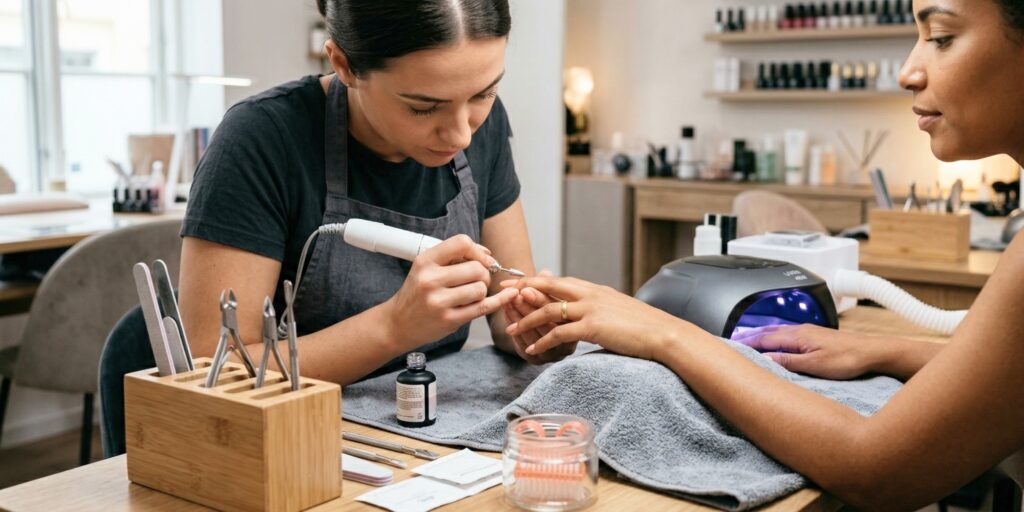
Transitioning from a beauty hobbyist to a professional is about more than just painting pretty designs. In 2026, the industry is increasingly focused on nail technology procedures that prioritize structural integrity and chemical safety. When I see beginners struggling with their first sets, it is usually because they are missing the foundational motor skills and technical knowledge that separate an enthusiast from a licensed expert.
The modern landscape has shifted toward a more medical-grade approach to manicuring. If you are still deciding how to start your professional journey, looking at this beginner guide to launch your professional journey can help you decide which path fits your goals. Data from Business Research Insights suggests that nearly a third of clients now deal with chemical sensitivities, which means there is a huge demand for technicians who understand the science behind the products they use.
Key Takeaways
- Market Trends: The sector is on track to become a $122.7 billion industry by 2035, with a massive push toward skin-safe and clinical-grade services in 2026.
- Legal Requirements: Under the latest MoCRA guidelines, you need to understand product chemistry to stay compliant with FDA safety and recall standards.
- Modern Skills: The current gold standard in the industry focuses on precision e-filing and the use of Builder-in-a-Bottle (BIAB) systems.
- Clinical Science: Using bioactive ingredients like calcium silicate has been shown to boost nail thickness by 39%, turning the technician into a true health consultant.
The 2026 Starter Kit Checklist
I know that the initial investment and the time required to get licensed can feel like a lot to take in. To help you plan your budget and your education, I suggest reviewing the certificate vs license requirements so you have a clear roadmap. Once you are ready to put together your nail technology kit, I find it helpful to group your items into four specific categories:
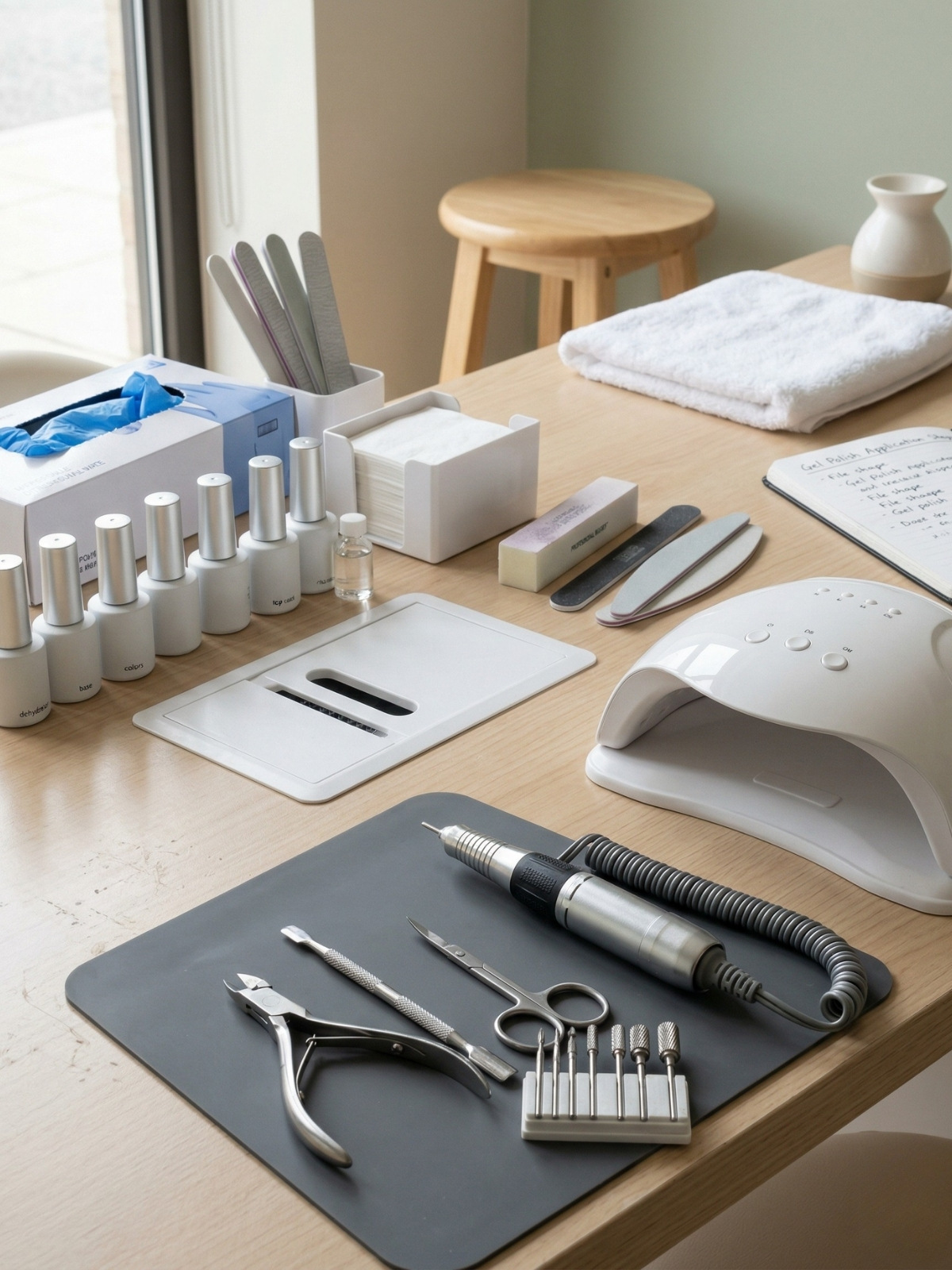
- Equipment: These are your permanent investments, such as high-torque E-files and professional UV/LED lamps.
- Implements: Your reusable steel items, including pushers and nippers.
- Materials: The everyday consumables like lint-free wipes, buffers, and files.
- Professional Products: The actual chemistry you work with, from dehydrators and primers to structured gels.
When I’m asked what do beginner nail techs need, I always emphasize that things for nail techs should include safety gear. A HEPA-filtered dust extraction system is a non-negotiable nail technology tools requirement in 2026 if you want to protect your health over a long career.
The Architecture of Professional Tools
One of the most common mistakes I see is spending too much on trendy colors while ignoring the high-quality tools that actually do the hard work. When we look at what nail techs use, we have to separate your daily operating supplies from your long-term capital investments.
Defining "Permanent Items" in the Salon
In a professional setting, you might hear the question: what are permanent items utilized in nail technology known as? These are officially classified as Equipment and Multi-use Implements.
Unlike disposable items, these represent your long-term business overhead. High-quality stainless steel nippers and 48W+ UV/LED lamps are the true infrastructure of your station. I always recommend buying autoclave-ready steel to ensure you can meet the high clinical sanitation standards required today.
Hygiene and Professionalism
Modern sanitation is about more than just a quick soak. High-performance tools like the salmon hygiene technology nail brush have become standard because their bristles are built to resist bacterial growth while providing a deep clean. Using these types of technology-backed tools is a great way to show your clients that their safety is your top priority.
The Regulatory Shift (MoCRA 2026)
According to the latest FDA MoCRA updates, knowing your brands is now a legal requirement. In 2026, the FDA has the authority to issue mandatory recalls. If the products used in nail technology at your station are linked to health issues, they can be removed immediately. This makes your education in product chemistry a vital part of your professional legal standing.
The Geometry of Structural Mastery
Advanced Procedures: Building the Apex
In 2026, a top-tier technician is expected to create extensions that are strong but look natural. This requires a deep understanding of the C-curve and the Apex, which are the foundations of all nail technology procedures.
- The C-curve is the arch you see when looking at the nail from the front. A proper curve provides the structural strength needed to keep the nail from being too flat and brittle.
- The Apex is the highest point of the enhancement when viewed from the side. This is the stress point of the nail. By placing your product correctly here, you ensure the extension can handle daily use without cracking.
The Secret to Custom Extensions: Nail Forms
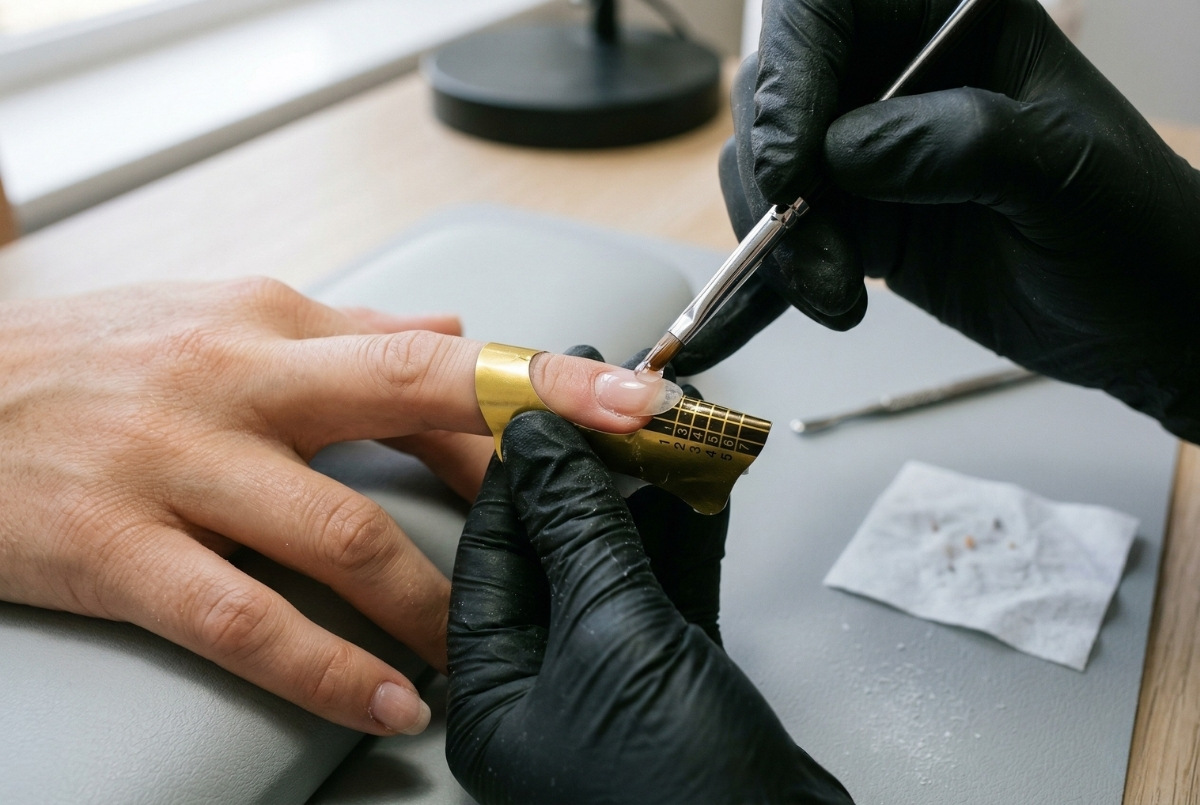
Learning how to put nail form templates on correctly is one of the most important skills a student can master. I prefer these over plastic tips because they allow you to create a custom extension based on the actual shape of the client's finger. If you want to know how do you put on a nail form for the best results, you have to ensure it sits flush against the skin to prevent the structural gaps that lead to breaks.
Using Structured Gels
Once your form is in place, your choice of material matters. Many professionals now prefer products like DIVA nail technology builder gel or other BIAB systems. These structured manicures are very popular because they protect the nail's lipid barrier while being extremely durable. As noted in recent industry reports, these services often allow you to charge 20-30% more because of the value they provide to the client.
Precision Tech and Bioactive Care
Mastery of the E-File
The e-file is often misunderstood as a "drill," but in a professional nail technology kit, it is a precision instrument. When you learn how to use an e nail, you are actually performing micro-exfoliation. Using high-quality diamond bits at low speeds allows you to clean up non-living tissue with incredible accuracy, which helps your gel applications last much longer.
The Science of Healthy Nails
We are currently in a skin-first era of beauty. This means we prioritize the health of the nail plate and the surrounding skin over just the aesthetic look. I have seen great results with systems like OPI Nail Envy with Tri-Flex Technology. This product uses a triple-layer reinforcement that mimics the natural keratin structure of the nail.
By understanding how OPI Nail Envy original strengthener with triflex technology and nail matrix technology treatments support the growth center of the nail, you can help clients recover from damage. This kind of expertise is what allows you to transition from a service provider to a true nail health consultant.
The Evolution of Press-Ons
Don't confuse professional sets with cheap alternatives. In 2026, press-on nail technology is used to create custom, hand-painted gel sets for high-end clients. Knowing what are nail press-ons in a professional context allows you to build a brand and earn income even when you aren't physically in the salon.
Expert Insight: Clinical Data
A 2025 clinical study in MDPI showed that bioactive formulas with calcium silicate can increase nail strength by 64% in less than a month. When you can explain the science behind the nail technology products you choose, your value as a professional skyrockets.

Aftercare and Professional Growth
Your service isn't finished once the top coat is cured. The most successful technicians always provide detailed after care advice for nail technology to their clients. Educating them on how to manage mechanical stress - like not using their nails as tools - ensures your work stays perfect and leads to the positive reviews that grow your business.
The global market is expanding rapidly and is expected to hit $122.7 billion by 2035. However, the industry is splitting between budget salons and high-end specialists. By mastering these nail tools and uses early on, you are positioning yourself for the most profitable side of the market.
Ready to Start Your Career?
The shift toward clinical beauty and bioactive health is a huge opportunity for new specialists. At Dalton Institute, we focus on a salon-ready philosophy to ensure you are prepared for the real world from day one. You will work with the same nail technology tools and professional products used in nail technology that are required by the best boutiques in the industry.
If you are ready to see where your career can take you, I invite you to find out more in Enrollment. You can also reach out to us through the contact form we leave at the end of this article to schedule a tour or get your questions answered. We look forward to helping you build your future.
FAQ: Navigating Professional Tools
What tools do you need to do nails at a professional level?
Professional tools used in nail technology require more power and precision than what you usually find for home use. In school, you will learn to use high-torque e-files and LED lamps with specific outputs to prevent allergies caused by uncured gel.
What do nail techs use to ensure their kits are high quality?
I always recommend focusing on system consistency. This means using the base, color, and top coat from the same brand to ensure the chemicals bond correctly. It is the best way to prevent peeling and lifting.
What are the 4 types of nail technology tools beginners should know?
Generally, a professional nail technology products list is broken down into Equipment, Multi-use Implements, Materials (disposables), and Professional Chemical Products.
What tools do you need to be a nail technician in a medical-grade setting?
You will need specialized nail technology tools like an autoclave for sterilization, medical-grade bits for your e-file, and a kit filled with hypoallergenic products to protect your clients from sensitivities.